



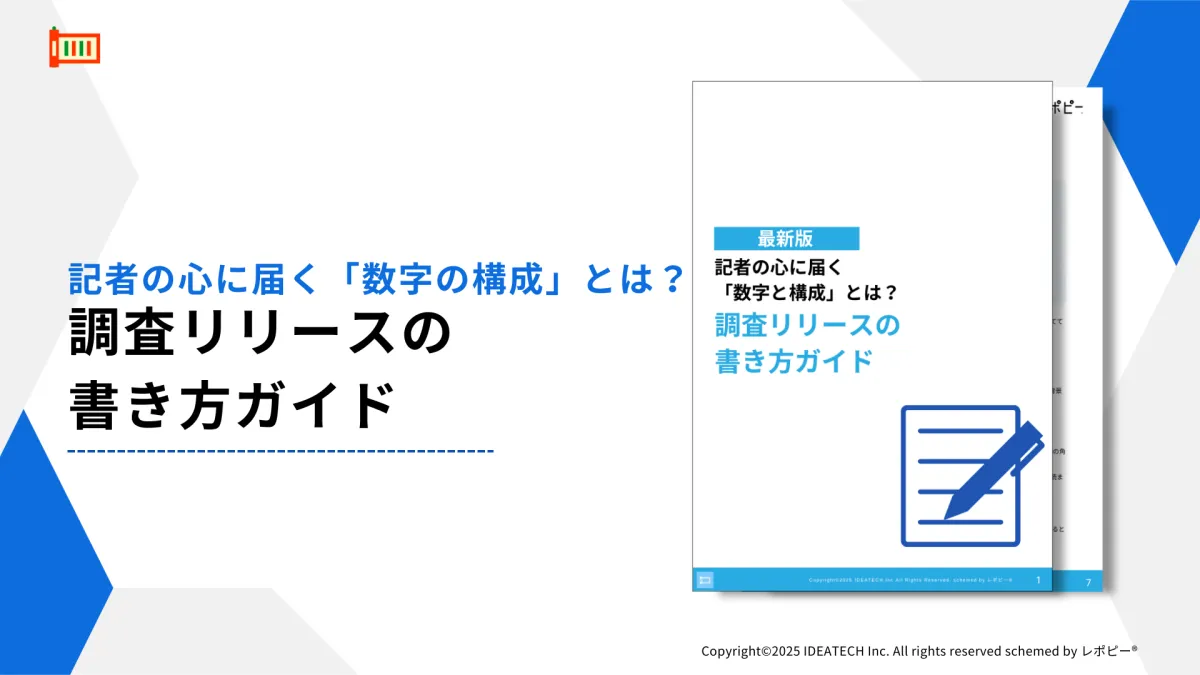
IDEATECH Unveils Free Guide to Crafting Effective Survey Releases for PR Professionals
IDEATECH's Free Guide to Survey Releases
IDEATECH, a company specializing in one-stop report marketing solutions through its service "Report PR®️" (https://ideatech.jp/service/report-pr), has recently unveiled a complimentary guide on how to craft effective survey releases. This guide aims to assist PR professionals in navigating the complexities of reporting research findings to the media.
What is a Survey Release?
A survey release does not merely summarize results. Instead, it serves as a vital communication tool that captures societal changes and public opinions through data. The purpose is to expand awareness by effectively engaging journalists who cover news.
Many professionals, however, face challenges in turning numbers into newsworthy articles. There's often a disconnect in understanding that a survey release is seen as "raw material" for articles rather than something to be read in isolation.
Just to illustrate how fast-paced the media environment is: journalists typically spend only 6 to 8 seconds reviewing a release. Therefore, what they see first—how well the data is structured and articulated—is crucial for grabbing their attention. This is why the ability to choose relevant numbers and design a coherent structure goes beyond merely stringing together words.
The guide provided by IDEATECH organizes crucial insights into survey releases from a journalist's perspective, detailing what truly matters, structured in an easy-to-follow format. It discusses various elements such as titles, lead sentences, main bodies, and data presentations that can be utilized in everyday practices.
Key Takeaways from the Guide
The guide includes systematic insights and actionable tips on producing survey releases that catch the attention of journalists, focusing on the following areas:
1. Title Crafting: Discover ten effective types of titles (such as impact numbers, rankings, contrasts, trends, questions) and tips to steer clear of poor titles, complete with examples.
2. Lead Sentence Techniques: Learn the four vital elements to include in a lead sentence under 200 characters: who and when conducted the survey, the strongest results, background meaning, and a prompt that invites more reading.
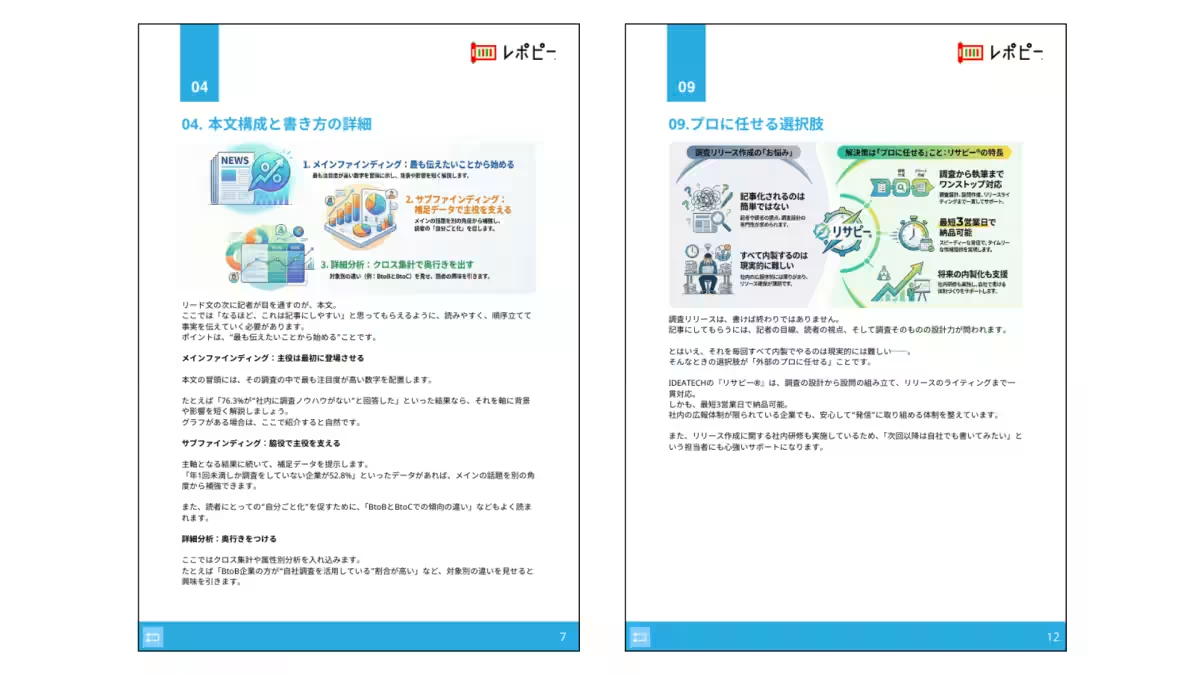
3. Body Structure and Writing Tips: Understand the three-tiered approach of presenting findings: main findings, secondary findings, and detailed analyses, aiding journalists in creating articles efficiently.
4. Effective Data Presentation: Explore creative techniques to present data engagingly, such as using relatable comparisons like “1 in 3” instead of “33.3%,” and telling stories of changes through competition.
Benefits of the Guide
What You Will Learn
- - Ten effective title formats and improvement case studies to draw a journalist's interest.
- - A golden pattern for lead sentences that encourages article creation within 200 characters.
- - Techniques for making data relatable to everyday life that bolster trust in your findings.
- - Guidelines on how to write a compelling survey overview that guarantees credibility.
Ideal for:
- - PR and marketing professionals looking to enhance the impacts of their survey releases.
- - Marketers aiming to create releases that are more likely to be picked up by journalists.
- - Operational staff wishing to effectively communicate research findings.
Guide Structure
- - Chapter 1: Fundamental Knowledge on Survey Releases
- - Chapter 2: Comprehensive Guide to Title Creation
- - Chapter 3: Techniques for Writing Lead Sentences
- - Chapter 4: Detailed Body Structure and Writing
- - Chapter 5: Data Presentation Techniques
- - Chapter 6: Writing Research Overviews
- - Chapter 7: Company Information and Contact Details
- - Chapter 8: Practical Writing Exercises
- - Chapter 9: Hiring Professionals for Assistance
For those who want to access the full guide, it can be downloaded via this link:
Download the Guide
Frequently Asked Questions (FAQ)
Q1: What is the most important aspect of survey release creation?
A: Structuring your release and relying on primary data is key. Clarifying your content through headlines and bullet points aids journalists in understanding the information quickly. Including original findings or trusted public data enhances credibility.
Q2: What are the key conditions for a title that gets read by journalists?
A: A concise expression of "what happened" and valid "facts" integrated with concrete numbers is essential. Using appealing formats like impact numbers, rankings, and contrasts can allow journalists easily to create headlines.
Q3: What should be included in the lead sentence?
A: The ideal lead should encompass four elements in under 200 characters:
1. Who and when conducted it?
2. The strongest or most compelling result.
3. Background or significance.
4. A closing that makes readers wish to know more.
Q4: How can data be presented effectively?
A: Utilizing relatable expressions (e.g., “1 in 3” instead of “33.3%”), showcasing both the best and worst, and indicating changes in Before/After formats help to engage readers better.
Q5: Can professionals assist in creating survey releases?
A: Yes, IDEATECH offers comprehensive services from designing surveys to writing releases through its
Topics Other)
【About Using Articles】
You can freely use the title and article content by linking to the page where the article is posted.
※ Images cannot be used.
【About Links】
Links are free to use.