




Unraveling the Mutation Mechanism of Thioredoxin in Neurological Diseases
Unraveling the Mutation Mechanism of Thioredoxin in Neurological Diseases
In a significant breakthrough, a collaborative research team comprising researchers from RIKEN, Okayama University, the Japan Atomic Energy Agency, and the National Institutes of Natural Sciences has uncovered the molecular basis of how mutations in thioredoxin can lead to neurodegenerative diseases and chronic kidney disorders. The team, which included notable researchers like Kohei Takeshita and Iori Omori, employed functional analysis, X-ray crystallographic techniques, and molecular dynamics simulations to illuminate this critical health issue for the first time.
Thioredoxin is a vital redox protein responsible for regulating oxidative-reduction reactions within the body, thereby playing a key role in various biological processes. Previous studies indicated that slight mutations in thioredoxin could result in neurodegeneration during the youthful stages in rats, as well as kidney impairment associated with aging. However, the underlying mechanisms of these mutations were poorly understood until now.
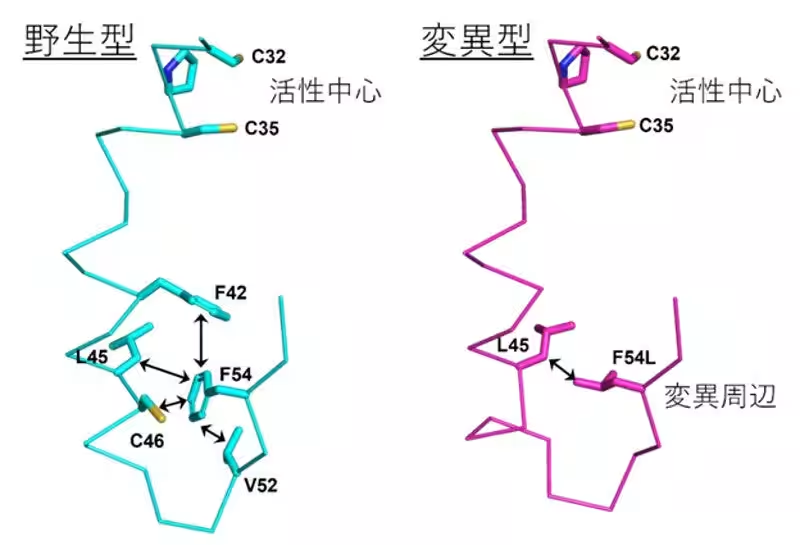
The researchers discovered that certain mutations within thioredoxin significantly increase local structural fluctuations, leading to a destabilization of the protein’s overall structure. This destabilization severely compromises the protein's intrinsic redox activity, providing a direct pathway for the onset of neurological decline and chronic kidney issues. The findings underscore the importance of thioredoxin not merely as a participant in biological processes but as a potential marker or target for developing therapeutic strategies against oxidative stress-related diseases.
Published on September 19, 2025, in the journal Biochimica et Biophysica Acta - General Subjects, this research adds a vital layer to our understanding of diseases exacerbated by oxidative stress. The publication's DOI is 10.1016/j.bbagen.2025.130860.
This remarkable study was supported by significant funding from the Japan Society for the Promotion of Science (JSPS) and the Japan Agency for Medical Research and Development (AMED), which enabled the exploration of the intricate interrelations between oxidative stress, cell death, and complex diseases like epilepsy.
For those interested in the detailed findings, the full research paper can be accessed here.
The implications of this research extend beyond academic inquiry; it paves the way for novel treatment modalities that could potentially mitigate the impacts of oxidative stress on human health. As the world increasingly grapples with aging-related diseases, understanding the mechanisms behind such detrimental mutations in critical proteins like thioredoxin becomes imperative. The collaborative effort reflects a commitment to advancing medical science and improving health outcomes globally.
This advancement also aligns with ongoing global initiatives towards sustainable development, as reflected in the support of the United Nations' Sustainable Development Goals (SDGs) by institutions like Okayama University, which is committed to fostering innovative education and research in a collaborative ecosystem.
In summary, this pivotal research illuminates how genetic mutations can precipitate disease processes, reinforcing the relevance of ongoing studies in redox biology's implications for health and disease. As research in this arena continues to evolve, we can expect further breakthroughs that may unlock new therapeutic pathways for managing neurodegenerative and chronic kidney diseases.



Topics Health)
【About Using Articles】
You can freely use the title and article content by linking to the page where the article is posted.
※ Images cannot be used.
【About Links】
Links are free to use.