



Empowering Women: Redefining Self-Care During Menopause
Changing the Narrative on Menopause Self-Care
As societal norms evolve, the concept of self-care is becoming increasingly significant, particularly for women navigating through menopause. Recently, a survey conducted by TOKYO PLACENTA aimed to illuminate the experiences of 541 women aged between 30 and 60 living in Japan. The findings underscore the need for women to embrace self-care as an essential part of managing menopause.
Survey Highlights: The Reality of Menopause Care
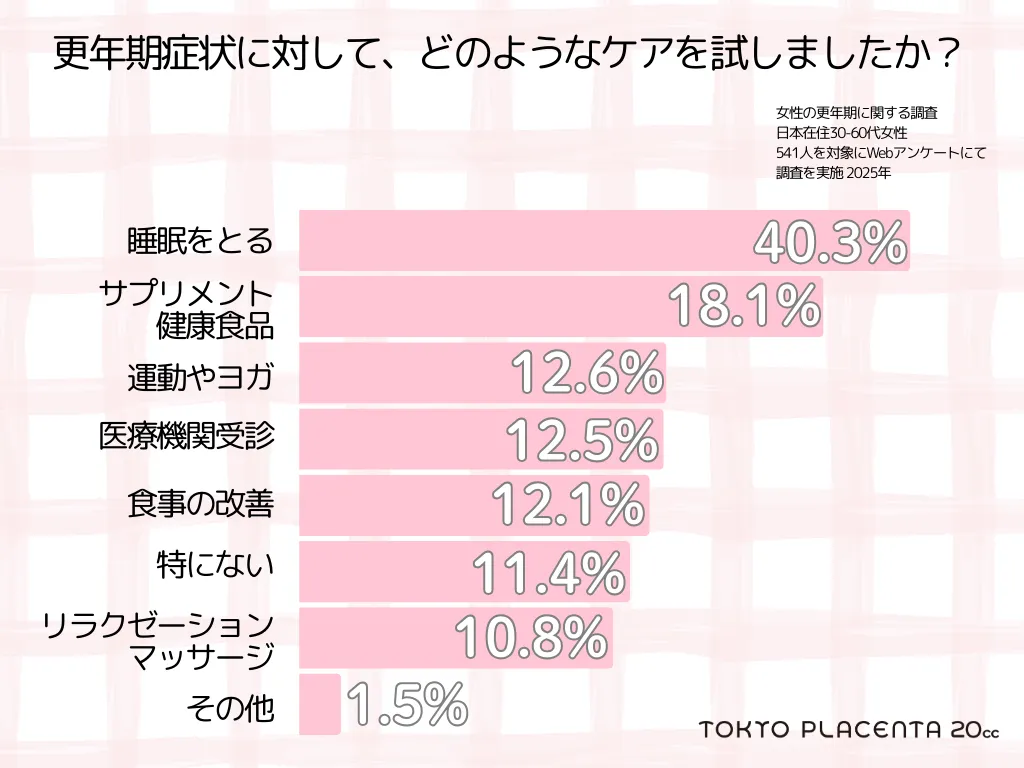
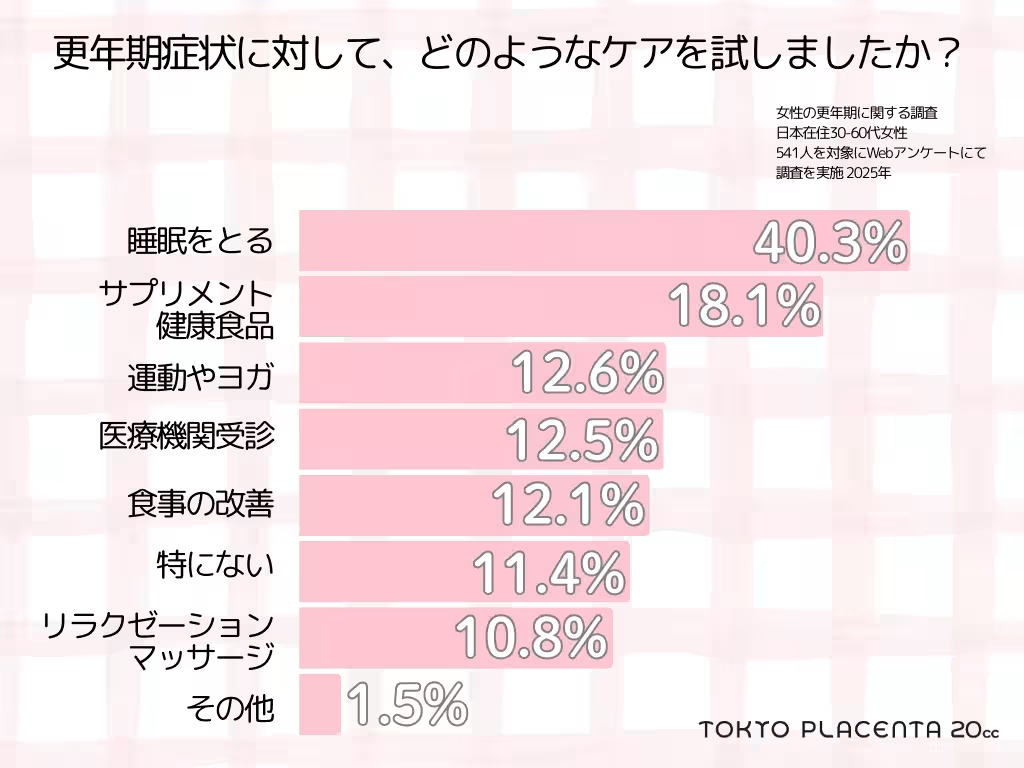
On Mother’s Day, the survey asked participants about their self-care practices related to menopause. The results revealed that the most common strategy was prioritizing sleep, with 40.3% of respondents endorsing this choice. This suggests a tendency to rely on rest rather than adopting active strategies to manage symptoms. Following sleep, 18.1% of respondents reported taking supplements or health foods. Interestingly, the responses indicated a diverse array of care methods, highlighting the lack of a one-size-fits-all solution.
Significant Improvement Using Appropriate Care Methods
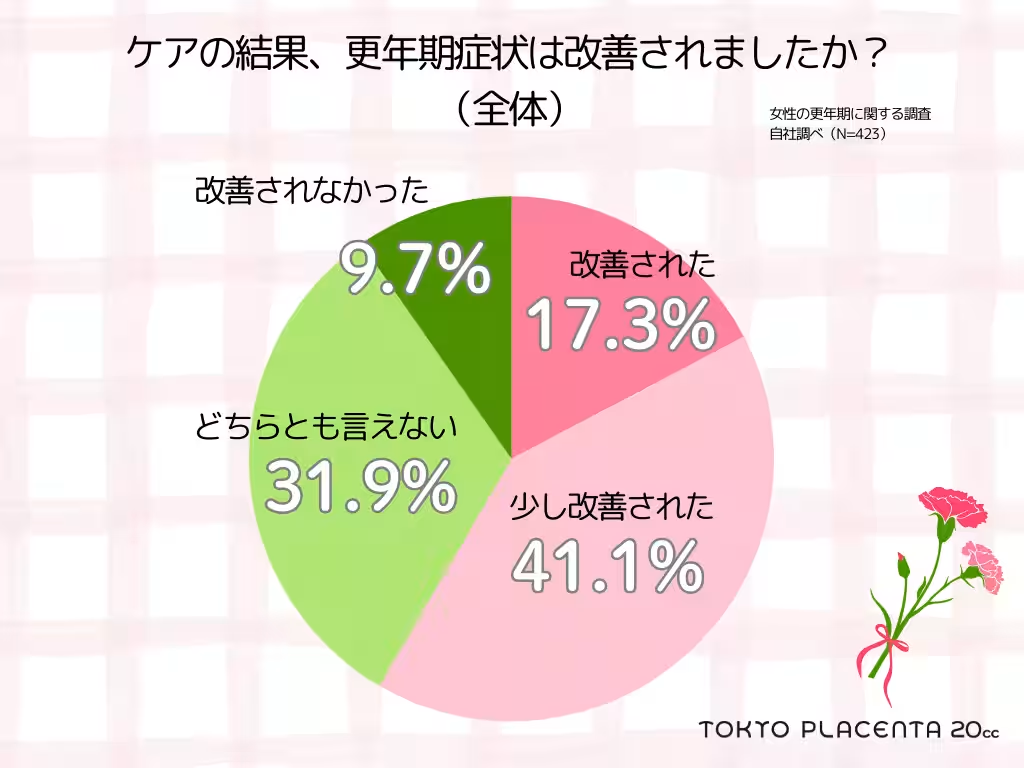
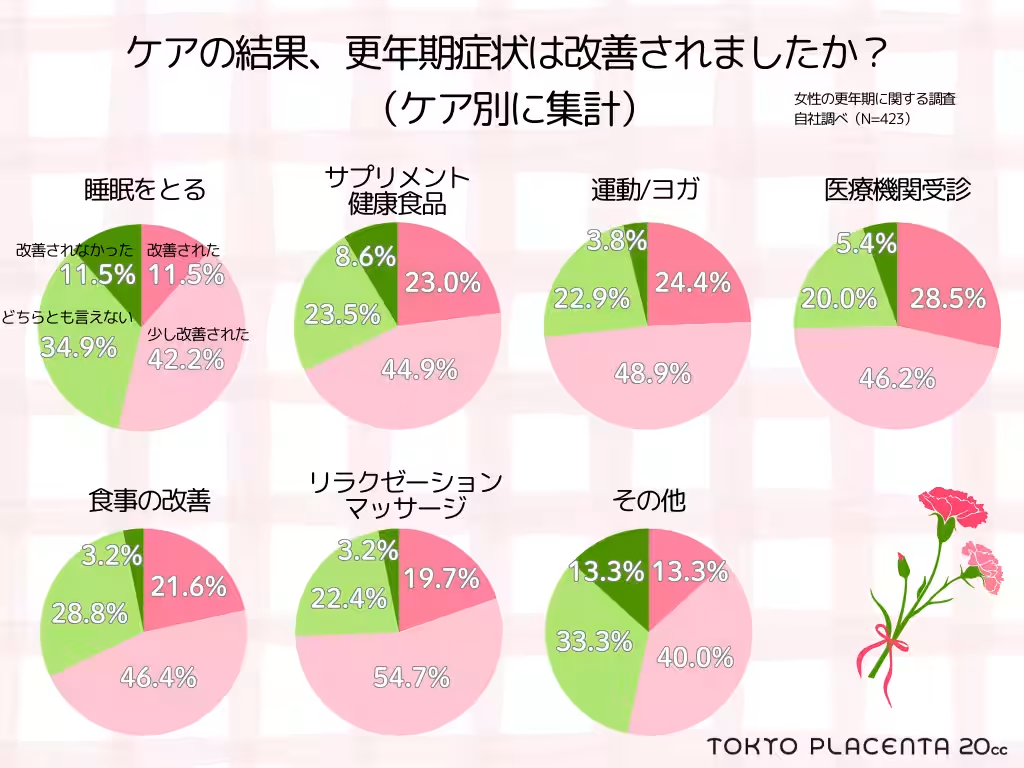
Those who had attempted core self-care strategies were further questioned about their effectiveness. More than half reported some degree of improvement, with 41.1% acknowledging slight improvements and 17.3% confirming noticeable benefits. Notably, the highest improvement rates were reported among those who sought medical advice, with 28.5% experiencing significant relief. Thus, while sleep is a popular coping mechanism, it may not provide the same relief as other methods.
Attitudes Toward Care: The Stigma of Endurance
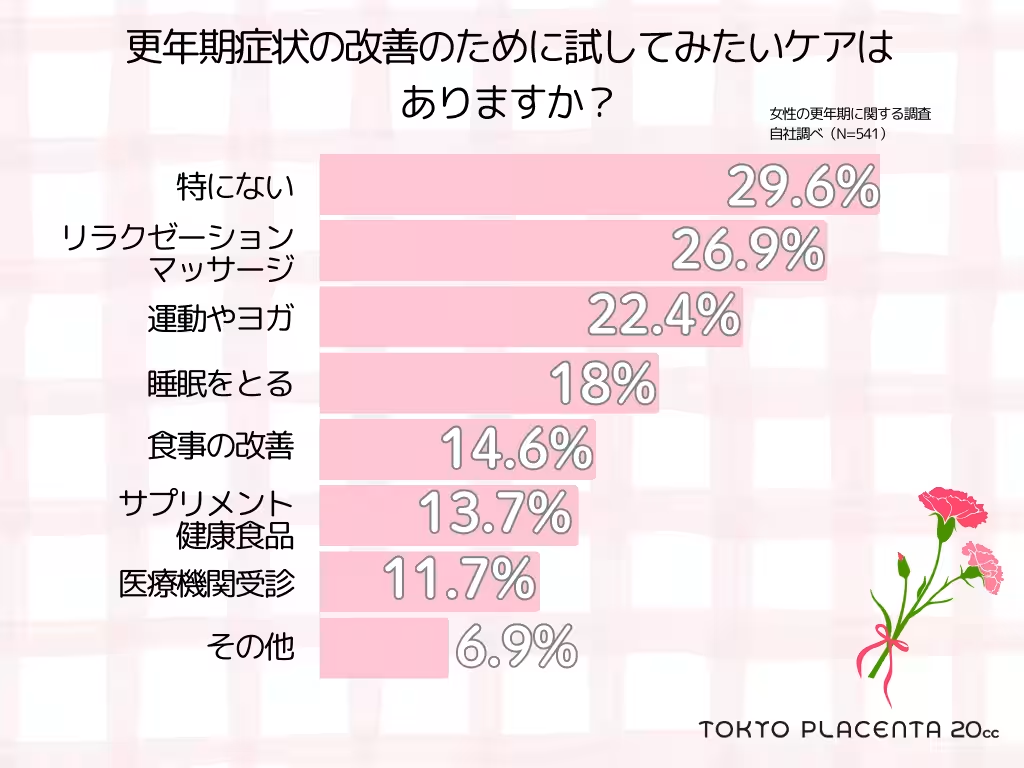
Despite the positive outcomes associated with certain care methods, a concerning number—29.6%—expressed that they weren’t interested in pursuing new care options. This insight hints at a prevailing mindset that enduring menopause symptoms is the norm. Such values might be deeply rooted in traditional beliefs that encourage women to tolerate discomfort rather than seek out relief, further complicating the narrative around menopause.
Key Factors in Selecting Care Products
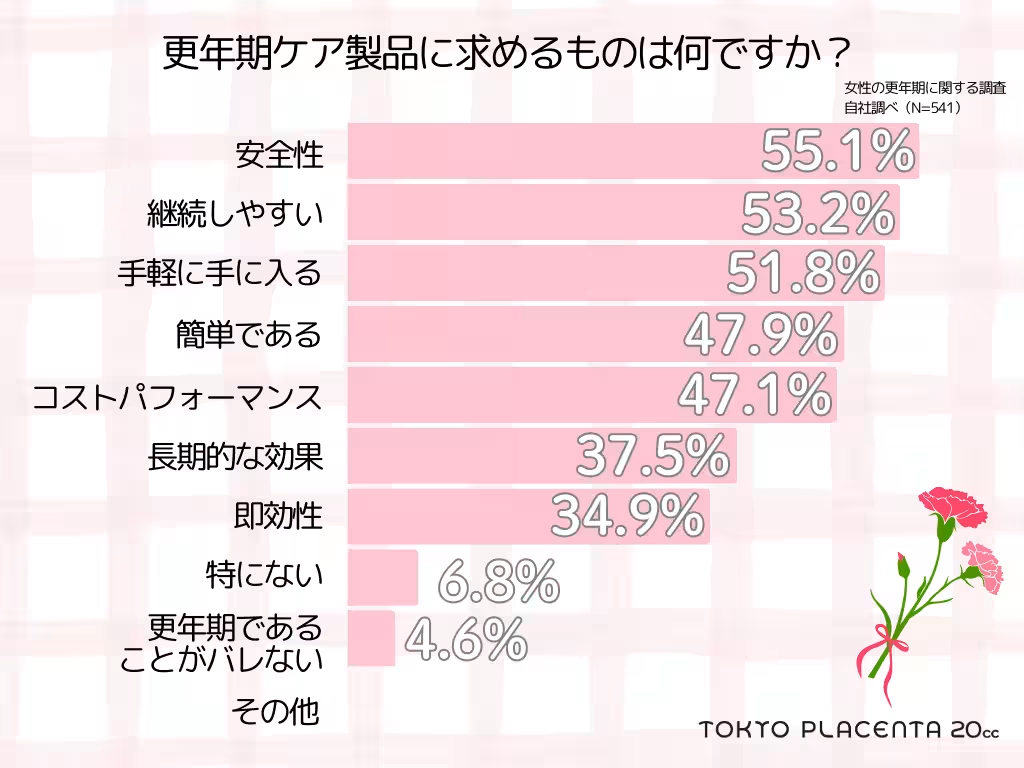
The survey also inquired about what respondents look for when selecting menopause care products. The overwhelming consensus was a preference for safety (55.1%), followed by ease of continuation (53.2%) and accessibility (51.8%). These results reveal that women desire solutions that can seamlessly fit into their daily lives, emphasizing a need for practicality in their care choices.
Mother’s Day: A Shift from Giving to Self-Care
Mother’s Day traditionally centers around celebrating maternal figures, but an emerging trend among women in their 40s and 50s is to take this opportunity for self-gifting. Rather than solely receiving or giving, there’s a growing practice of indulging in personal wellness and trying out new care products. This year, women are encouraged to focus on themselves, allowing them to explore self-care opportunities that go beyond mere endurance. It’s crucial for those who have normalized self-sacrifice to occasionally prioritize their wellness and engage in care tailored to their personal needs.
TOKYO PLACENTA aims to support women through menopause, encouraging them to face their journey positively. By promoting a shift in mindset from 'enduring' to 'caring for oneself,' it’s possible to create a more empowering atmosphere for women's health today. As we redefine self-care, it's essential to recognize that taking time for oneself is not only beneficial but necessary for well-being.
Topics Health)
【About Using Articles】
You can freely use the title and article content by linking to the page where the article is posted.
※ Images cannot be used.
【About Links】
Links are free to use.