



Identifying Walking Indicators for Early Detection of Sarcopenia in Elderly Patients with Type 2 Diabetes
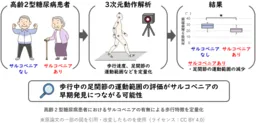
Recent research from the National Institute of Advanced Industrial Science and Technology (AIST) has shed light on the distinctive walking characteristics indicative of sarcopenia in elderly patients with type 2 diabetes. Collaborators included Dr. Toshihiro Kobayashi and Dr. Koji Murao from Kagawa University’s medical school. They utilized 3D motion analysis to scrutinize the physical functionality of senior-type 2 diabetes patients, particularly focusing on the differences in gait patterns related to the presence of sarcopenia.
Sarcopenia, characterized by a decline in skeletal muscle mass, strength, and overall physical functionality, can arise from aging, nutritional deficiencies, and various diseases. The risk of developing sarcopenia is notably heightened among elderly individuals suffering from type 2 diabetes, primarily due to its adverse effects on muscle metabolism and function. Not only does a diminished physical activity level exacerbate glucose metabolism complications, but it also heightens the risk of severe diabetic conditions. Consequently, the early detection and intervention for sarcopenia in diabetic patients are crucial for improving health outcomes.
In the study, the researchers employed advanced 3D motion capture technology to evaluate not only basic walking speed and stride length but also the specific patterns of joint movements during walking. Their analysis revealed that patients with sarcopenia exhibited notable reductions in walking speed and stride length, along with a significant decrease in the ankle's range of motion - crucial for effective movement coordination. Particularly striking was the finding that even after isolating walking speed's influence through statistical methods, the decline in the range of motion at the ankle joint within the sagittal plane remained significant in the sarcopenia group. This suggests that ankle joint mobility may serve as a new digital biomarker for physically functional degradation in diabetic patients, independent of speed variations.
These findings can potentially transform clinical practices, providing a straightforward method to facilitate early detection of sarcopenia in aging individuals. The study's outcomes are set to be published in the journal Scientific Reports on May 27, 2025.
The global population is aging, and the number of type 2 diabetes patients is slated to reach an alarming 1.27 billion by 2050. Studies have increasingly pointed towards a strong interrelationship between diabetes and sarcopenia; considering factors such as insulin resistance, chronic inflammation, and muscle fiber disturbances associated with elevated blood glucose levels, diabetes accelerates muscular decline. Therefore, diabetic patients face a heightened risk of sarcopenia, which tends to progress rapidly compared to non-diabetic individuals. The decrease in physical activity associated with sarcopenia further deteriorates glucose metabolism, creating an adverse cycle threatening patients' health.
To accurately diagnose sarcopenia, assessments typically include measuring muscle strength, skeletal mass, and evaluating physical functionality. Often, costly and specialized diagnostic equipment is required, alongside expert knowledge to perform necessary assessments like grip strength and walking speed. Thus, simple and practical methods for early detection are imperative. Recent trends have started to focus on analyzing basic physical activities such as walking, emphasizing the examination of joint movements and motion patterns as diagnostic indicators for sarcopenia.
The AIST has pioneered 3D motion analysis technologies to quantify human movement patterns and connections between physical activity and health outcomes. Research has focused on everyday activities, notably walking, interpreting these movements to enhance health quality and longevity. In this study, they utilized these advanced computational techniques to systematically evaluate walking action in elderly type 2 diabetes patients previously diagnosed in accordance with standard diagnostic criteria for the existence of sarcopenia.
The research team carried out an experiment involving 38 elderly patients diagnosed with type 2 diabetes, who were treated at Kagawa University’s medical hospital. Using an optical motion capture system, their gait was recorded while they walked barefoot along a straight path of approximately 15 meters at a comfortable pace. Through analyzing the spatial coordinates gathered, the researchers calculated the average range of motion in the pelvis and lower limb joints throughout the walking cycle.
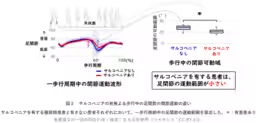
Results indicated that patients with sarcopenia exhibited lower walking speeds and shorter strides, combined with a notably reduced range of ankle joint motion during ambulation. Importantly, even after adjustments were made for walking speed influences statistically, the reduced range of ankle motion persisted prominently among patients with sarcopenia. This indicates a profound deterioration in functional capabilities for individuals with this condition, placing joint motion range as a significant determinant of physical functionality, hinting towards its potential as a digital biomarker to assess sarcopenia.
The outcomes from this study clearly delineate the variances in walking characteristics between elderly patients with and without sarcopenia in type 2 diabetes. Moving forward, the researchers plan to utilize the data collected on walking patterns to develop systems capable of evaluating joint movements and gait characteristics via simpler devices, such as smartphones. This advancement would provide a means for early detection of sarcopenia in a variety of settings, including healthcare facilities and home environments, devoid of specialized equipment.
Journal: Scientific Reports
Title: Spatiotemporal and kinematic gait characteristics in older patients with type 2 diabetes mellitus with and without sarcopenia
Authors: Tomotaka Manabe, Wakako Tsuchida, Toshihiro Kobayashi, et al.
DOI: 10.1038/s41598-025-00205-0


Sarcopenia, characterized by a decline in skeletal muscle mass, strength, and overall physical functionality, can arise from aging, nutritional deficiencies, and various diseases. The risk of developing sarcopenia is notably heightened among elderly individuals suffering from type 2 diabetes, primarily due to its adverse effects on muscle metabolism and function. Not only does a diminished physical activity level exacerbate glucose metabolism complications, but it also heightens the risk of severe diabetic conditions. Consequently, the early detection and intervention for sarcopenia in diabetic patients are crucial for improving health outcomes.
In the study, the researchers employed advanced 3D motion capture technology to evaluate not only basic walking speed and stride length but also the specific patterns of joint movements during walking. Their analysis revealed that patients with sarcopenia exhibited notable reductions in walking speed and stride length, along with a significant decrease in the ankle's range of motion - crucial for effective movement coordination. Particularly striking was the finding that even after isolating walking speed's influence through statistical methods, the decline in the range of motion at the ankle joint within the sagittal plane remained significant in the sarcopenia group. This suggests that ankle joint mobility may serve as a new digital biomarker for physically functional degradation in diabetic patients, independent of speed variations.
These findings can potentially transform clinical practices, providing a straightforward method to facilitate early detection of sarcopenia in aging individuals. The study's outcomes are set to be published in the journal Scientific Reports on May 27, 2025.
Societal Context of the Research
The global population is aging, and the number of type 2 diabetes patients is slated to reach an alarming 1.27 billion by 2050. Studies have increasingly pointed towards a strong interrelationship between diabetes and sarcopenia; considering factors such as insulin resistance, chronic inflammation, and muscle fiber disturbances associated with elevated blood glucose levels, diabetes accelerates muscular decline. Therefore, diabetic patients face a heightened risk of sarcopenia, which tends to progress rapidly compared to non-diabetic individuals. The decrease in physical activity associated with sarcopenia further deteriorates glucose metabolism, creating an adverse cycle threatening patients' health.
To accurately diagnose sarcopenia, assessments typically include measuring muscle strength, skeletal mass, and evaluating physical functionality. Often, costly and specialized diagnostic equipment is required, alongside expert knowledge to perform necessary assessments like grip strength and walking speed. Thus, simple and practical methods for early detection are imperative. Recent trends have started to focus on analyzing basic physical activities such as walking, emphasizing the examination of joint movements and motion patterns as diagnostic indicators for sarcopenia.
Study Background
The AIST has pioneered 3D motion analysis technologies to quantify human movement patterns and connections between physical activity and health outcomes. Research has focused on everyday activities, notably walking, interpreting these movements to enhance health quality and longevity. In this study, they utilized these advanced computational techniques to systematically evaluate walking action in elderly type 2 diabetes patients previously diagnosed in accordance with standard diagnostic criteria for the existence of sarcopenia.
Research Methodology and Findings
The research team carried out an experiment involving 38 elderly patients diagnosed with type 2 diabetes, who were treated at Kagawa University’s medical hospital. Using an optical motion capture system, their gait was recorded while they walked barefoot along a straight path of approximately 15 meters at a comfortable pace. Through analyzing the spatial coordinates gathered, the researchers calculated the average range of motion in the pelvis and lower limb joints throughout the walking cycle.
Results indicated that patients with sarcopenia exhibited lower walking speeds and shorter strides, combined with a notably reduced range of ankle joint motion during ambulation. Importantly, even after adjustments were made for walking speed influences statistically, the reduced range of ankle motion persisted prominently among patients with sarcopenia. This indicates a profound deterioration in functional capabilities for individuals with this condition, placing joint motion range as a significant determinant of physical functionality, hinting towards its potential as a digital biomarker to assess sarcopenia.
Future Directions
The outcomes from this study clearly delineate the variances in walking characteristics between elderly patients with and without sarcopenia in type 2 diabetes. Moving forward, the researchers plan to utilize the data collected on walking patterns to develop systems capable of evaluating joint movements and gait characteristics via simpler devices, such as smartphones. This advancement would provide a means for early detection of sarcopenia in a variety of settings, including healthcare facilities and home environments, devoid of specialized equipment.
Publication Details
Journal: Scientific Reports
Title: Spatiotemporal and kinematic gait characteristics in older patients with type 2 diabetes mellitus with and without sarcopenia
Authors: Tomotaka Manabe, Wakako Tsuchida, Toshihiro Kobayashi, et al.
DOI: 10.1038/s41598-025-00205-0
Research Team
- - AIST: Wakako Tsuchida, Masahiro Fujimoto, Takuma Inai, Kohei Kido, Shoma Kudo
- - Kagawa University: Toshihiro Kobayashi, Koji Murao, Tomotaka Manabe, among others.
Topics Health)
【About Using Articles】
You can freely use the title and article content by linking to the page where the article is posted.
※ Images cannot be used.
【About Links】
Links are free to use.