



United Nations Launches Fifth Year of 1.5°C Climate Campaign with 132 Organizations
United Nations Commences Fifth Year of 1.5°C Campaign
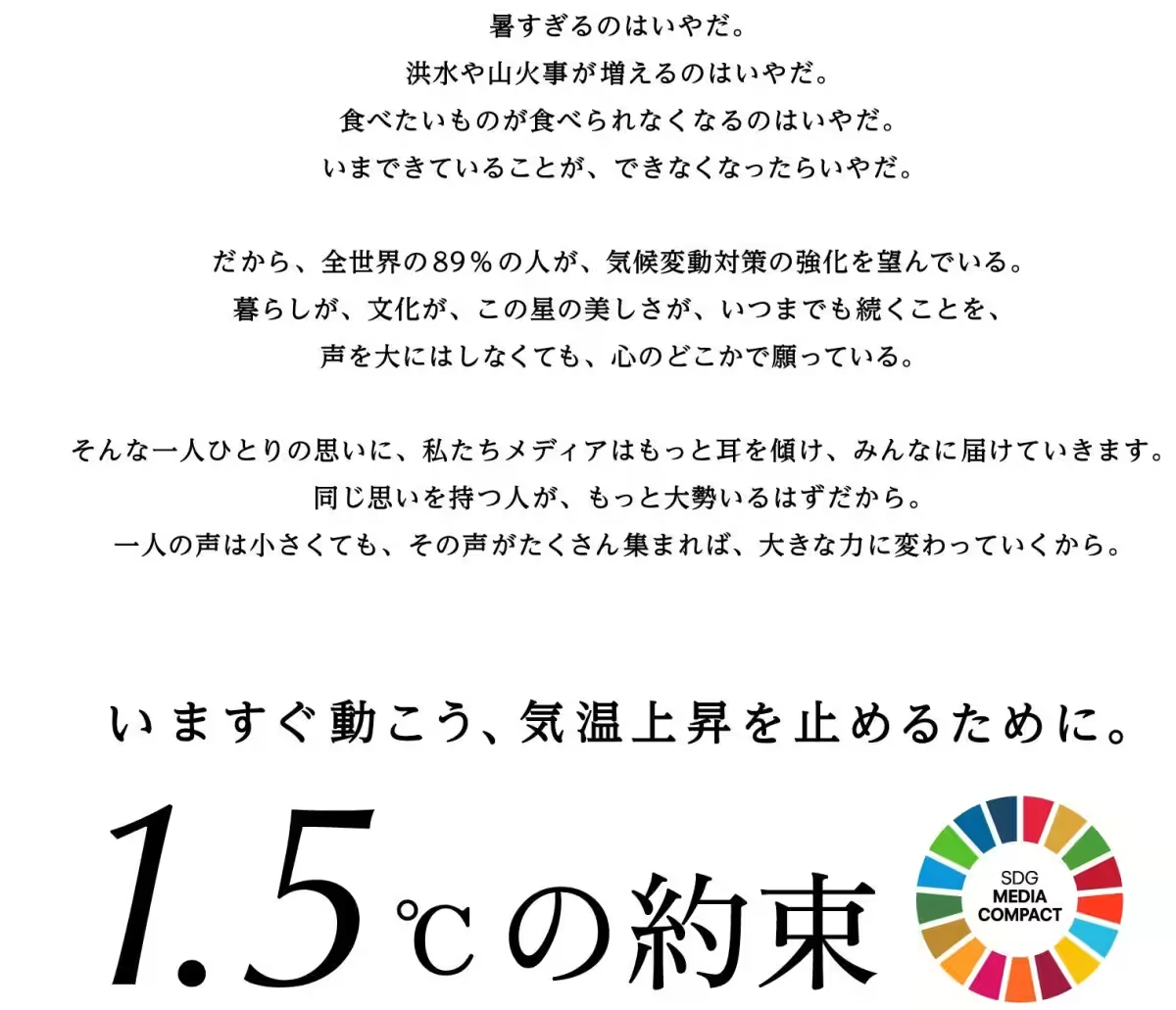
On February 1, 2026, the United Nations Public Information Centre officially announced the commencement of the fifth year of the "1.5°C Pledge - Act Now to Halt Temperature Rise" campaign. This year, 132 companies and organizations are participating, with expectations for further expansion. One of the key supporters, Hakuhodo DY Holdings, has conducted an impact survey for the campaign, revealing significant findings regarding public awareness and actions.
The campaign underscores the urgent need to limit global average temperature rise to 1.5°C above pre-industrial levels, as highlighted in the 2015 Paris Agreement. This goal was reaffirmed during the 2021 UN Climate Change Conference, where UN member states, including Japan, expressed their commitment to its realization.
Recent reports from the World Meteorological Organization (WMO) indicated that 2025 is projected to be among the three hottest years since records began, surpassing the average temperatures of 1850-1900 by 1.44°C. In Japan, the Japan Meteorological Agency reported that 2025's deviation from the annual average temperature is expected to reach +1.23°C, placing it among the top three hottest years since recording began in 1898.
The current campaign, which will run through December 31, 2026, aims to spread awareness more broadly across all seasons. This includes enhancing media outreach through various formats, such as reports, events, social media, and collaboration with businesses, local governments, influencers, and other stakeholders to promote climate actions.
The findings from the campaign reveal that 28.7% of the public engaged with information about limiting temperature rise to 1.5°C over the last six months, maintaining rates similar to those from the previous year. Moreover, while the awareness among campaign participants regarding the climate crisis is significant—with 83.5% expressing concern—the overall public sentiment has shown a decline over time.
As the campaign aims to energize individuals and communities toward participating in climate action, it emphasizes the necessity of directly linking climate change with everyday interests to encourage involvement. For all age groups, providing relatable and engaging messaging is vital, with a clear preference for messaging that feels accessible and manageable.
The campaign's strategy highlights that 2026 will be pivotal, demonstrating the potential of concerted media efforts to boost public concern and reinforce the importance of sustainable actions. United Nations Public Information Centre's director, Kaoru Nemoto, emphasized the importance of voicing public perspectives in promoting climate action.
With climate change fears still fluctuating, this year's efforts strive to awaken shared responsibilities among citizens and organizations to combat the climate crisis, reinforcing the need for creative and straightforward messaging to promote climate-conscious actions throughout society. By rallying stakeholders together, the campaign aims to make tangible recommendations that individuals and organizations can adopt, aligning with the collective goal of sustaining our planet for future generations.
The list of participating media as of this announcement reflects a diverse range of organizations committed to spreading the word further, including major broadcasting corporations and digital platforms. Together, they stand as a testament to the integrated efforts called upon by the United Nations to challenge the climate crisis in our contemporary world.
Key Insights from Hakuhodo DY Group's Impact Survey
Climate Crisis Awareness
Research conducted by Hakuhodo DY Group confirms that campaign awareness has a positive effect on the perception of climate risks. Those who encounter campaign-related information exhibit stronger environmental concerns compared to those who do not.
Actionable Insights
Identifying effective approaches to capture public interest, such as linking climate action to personal interests, has emerged as a critical insight from the survey. The need for media messages that resonate personally with the audience has never been clearer for galvanizing communal involvement in climate initiatives.
The impact of the 1.5°C campaign stands not only as an initiative but as a rigorous reminder of the shared goals we pursue in securing a sustainable future amidst ongoing climate challenges. As this campaign enters its significant fifth year, the call for persistent action and engagement rings louder than ever.
Topics Policy & Public Interest)
【About Using Articles】
You can freely use the title and article content by linking to the page where the article is posted.
※ Images cannot be used.
【About Links】
Links are free to use.