



Fora Launches Innovative Teacher Training Program for Sustainable Inquiry Learning in High Schools
Understanding the SCOPE Program for Sustainable Inquiry in High Schools
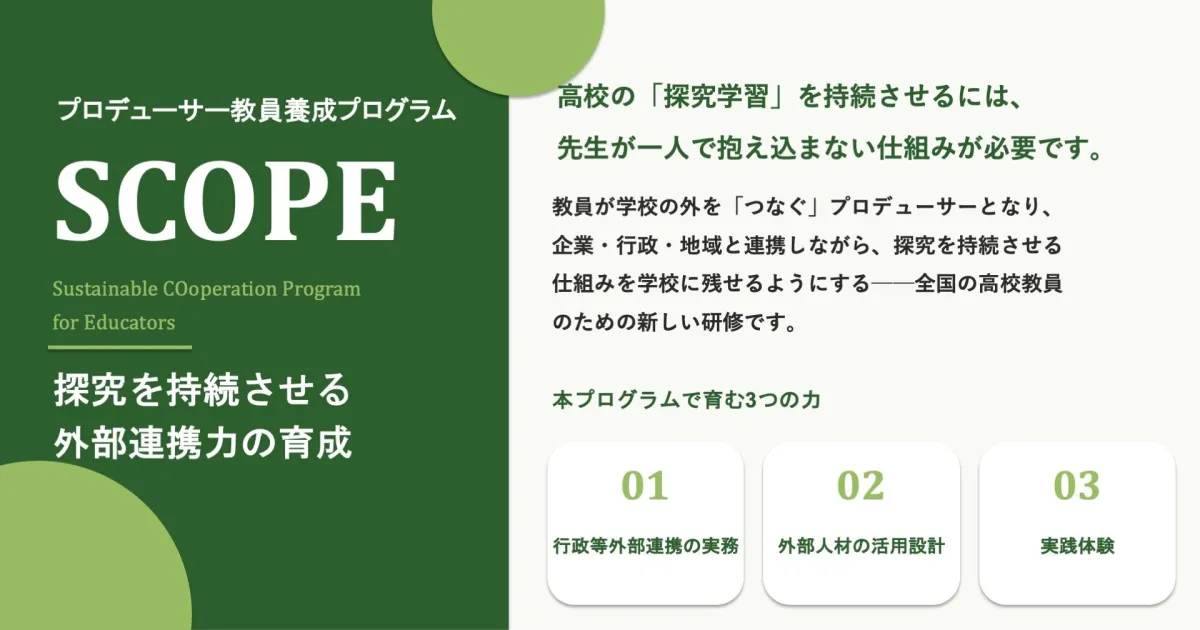
In response to the critical challenges faced in continuous inquiry-based learning within Japanese high schools, the general incorporated association Fora has launched a new teacher training initiative known as the SCOPE program. This innovative program aims to empower educators by enabling them to design sustainable inquiry learning systems that leverage partnerships with private organizations, local governments, and communities.
Background of Inquiry-Based Learning
The introduction of comprehensive inquiry periods in high schools, initiated in 2022, has made significant strides in enhancing the materials and teaching methods available for this type of learning. However, a persistent issue has emerged: teachers often shoulder the entire burden, and the discontinuation of these programs is common whenever a teacher is reassigned. This challenge highlights the need for a more systemic approach to inquiry learning that involves the entire school community.
The SCOPE program addresses these structural issues by equipping teachers with the skills to maintain and promote inquiry learning in collaboration with external stakeholders. It has garnered the support of the Mitsubishi Mirai Education Foundation, which has chosen it as part of its 2026 fiscal year funding initiatives. This partnership signifies a commitment to fostering proactive and collaborative learning within educational environments.
The Three-Year Framework of the SCOPE Program
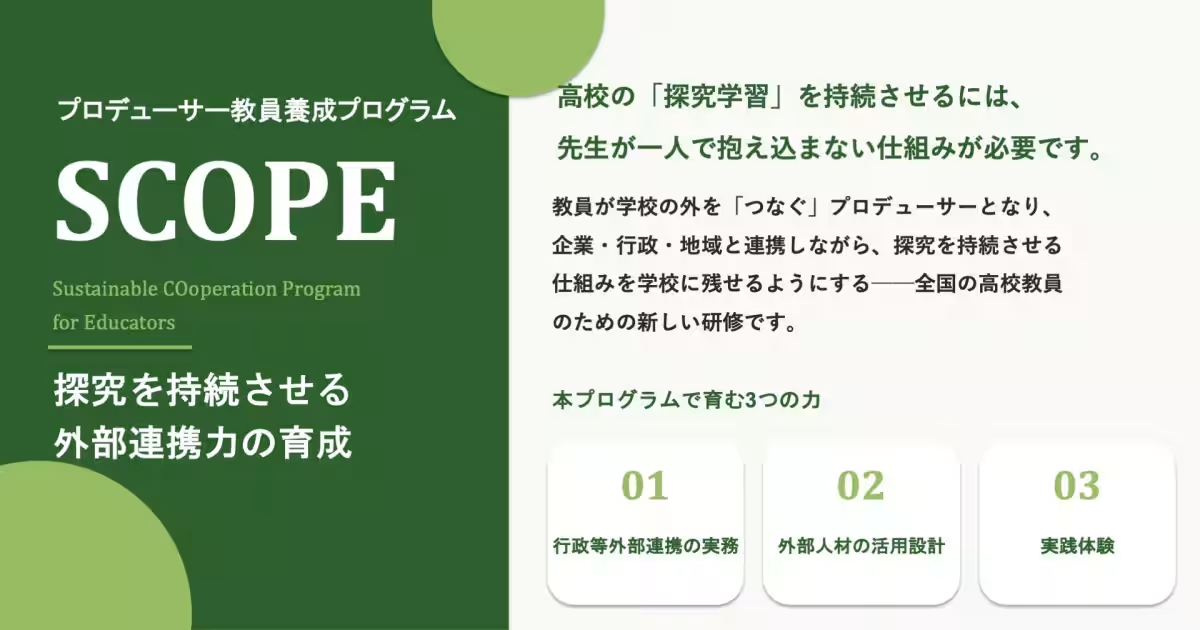
Fora plans for the SCOPE program to run for three years, aiming to establish a robust framework that supports inquiry learning systematically across school systems. The program will focus on three main pillars:
1. Practical Skills for Administrative Collaboration: Teachers will learn how to engage effectively with educational boards and develop frameworks for partnership.
2. Designing Integration with External Resources: This includes negotiating with private companies, non-profits, and universities to enhance curriculum integration.
3. Hands-on Experience: By observing integrated lessons in partner schools facilitated by Fora, educators will develop actionable insights for their own institutions.
Proven Success and Support Structures
The foundations of the SCOPE program stem from over four years of collaborative experiences in schools in Tokyo. Notably, the feedback from teachers participating in these trials has been overwhelmingly positive, highlighting the benefits of continued external support. One participant, teacher Naomi Iijima from Jūmonji Junior High School, noted how the guidance from Fora transformed both student and teacher perceptions about inquiry learning. The teachers realized that inquiry is a communal endeavor rather than an isolated activity.
This approach allows the program to not only sustain existing efforts but also expand them across entire school years, promoting a consistent and enriching inquiry experience. The stability provided by Fora's support means that even as teachers transition, the vision and practice of inquiry learning remain intact.
Community Building and Ongoing Collaboration
A standout feature of the SCOPE program is its dedication to building a nationwide community for participating teachers. Through a series of online meetings, teachers from across the country can share their experiences, challenges, and insights. This supportive platform mitigates the solitude that can accompany innovative teaching practices and reinforces the collective mission of elevating inquiry learning.
As teachers plan for the inaugural cohort commencing in August 2026, there is an emphasis on attracting educators who are committed to establishing long-lasting inquiry mechanisms in their schools, regardless of their personal job changes. The SCOPE program represents both a professional development opportunity and an avenue to strengthen educational communities.
Future Goals and Aspirations
In the next three years, the SCOPE program strives to produce over 80 graduating producer teachers who will lead inquiry initiatives in schools across the nation. Documentation of the program's successes will pave the way for wider access to valuable teaching resources and further collaborative endeavors with educational authorities.
With the dynamic shift toward including student experiences in real-world contexts and fostering direct connections with
Topics Other)
【About Using Articles】
You can freely use the title and article content by linking to the page where the article is posted.
※ Images cannot be used.
【About Links】
Links are free to use.