



Dentsu Research Institute and JFC: Insights from Information Integrity Survey 2026
Key Findings from the Dentsu Research Institute and JFC's Information Integrity Survey 2026
On April 2, 2026, the Dentsu Research Institute, in collaboration with the Japan Fact-Check Center (JFC), released significant findings from their latest quantitative research titled "Information Integrity Survey 2026". This survey, part of the Dentsu Institute Compass series, is designed to gauge public consciousness and the societal implications of information integrity. Under the supervision of Professor Shinichi Yamaguchi from the International University’s Global Communication Center, this 17th iteration continues the discourse on how the integrity of information shapes public perceptions and reality.
Background and Objectives
Information integrity refers to the accuracy, consistency, and reliability of information—an increasingly crucial theme in today's world, affecting everything from everyday life to national security. With the surge of misinformation, hate speech, and discriminatory content online, understanding public attitudes toward information integrity has become imperative. The survey aimed to highlight current societal viewpoints while identifying potential pathways towards improving information integrity across platforms.
Main Findings
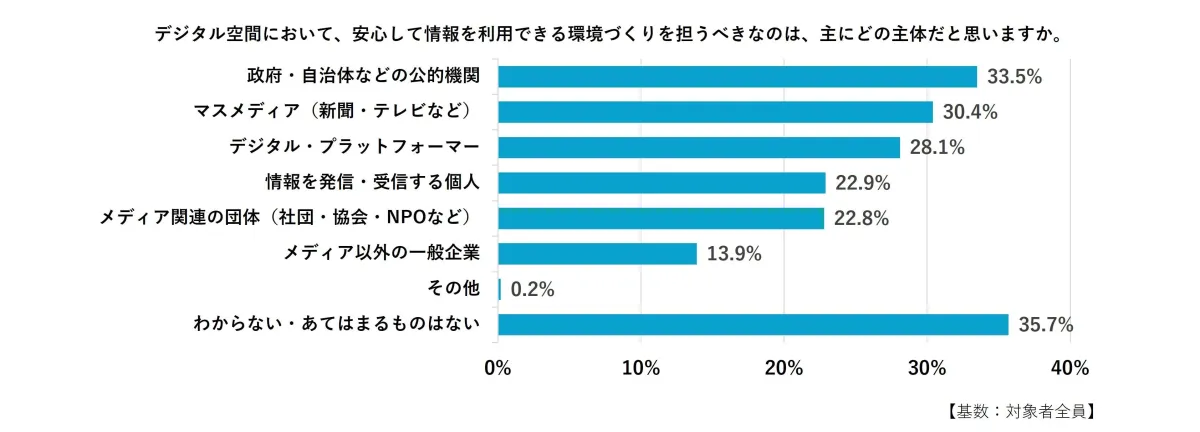
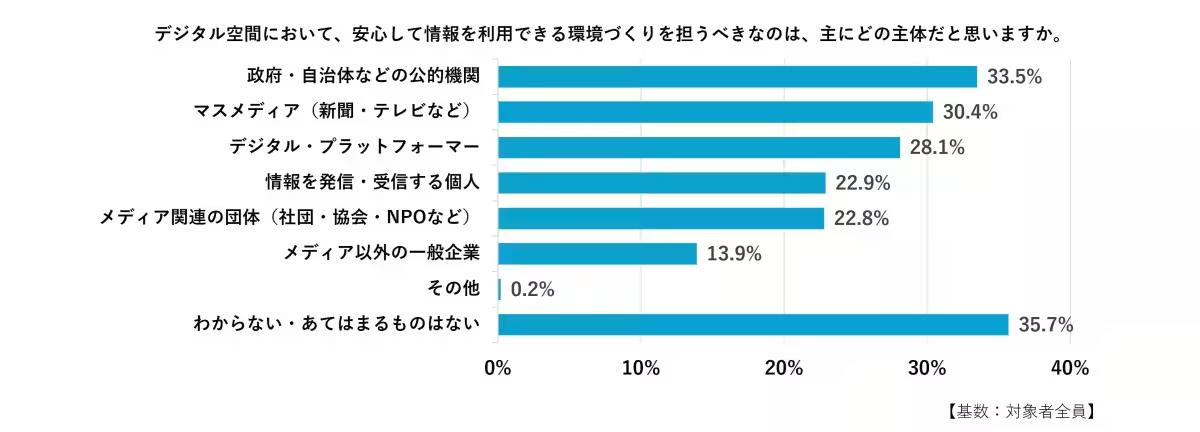
1. Stakeholders Responsible for Creating a Safe Digital Space
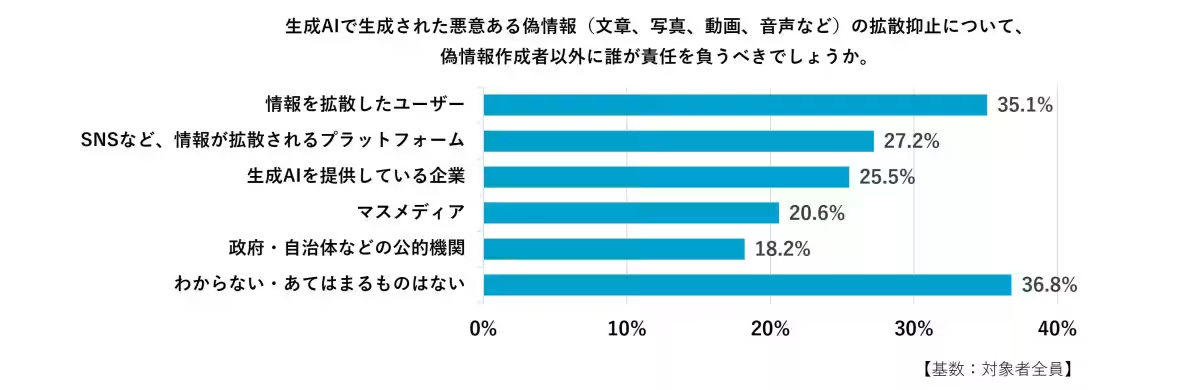
Public institutions such as government agencies (33.5%), mass media (30.4%), and digital platforms (28.1%) were identified as key players in fostering a secure digital environment. However, a notable 35.7% of respondents expressed uncertainty, indicating a lack of consensus on accountability in curbing misinformation.
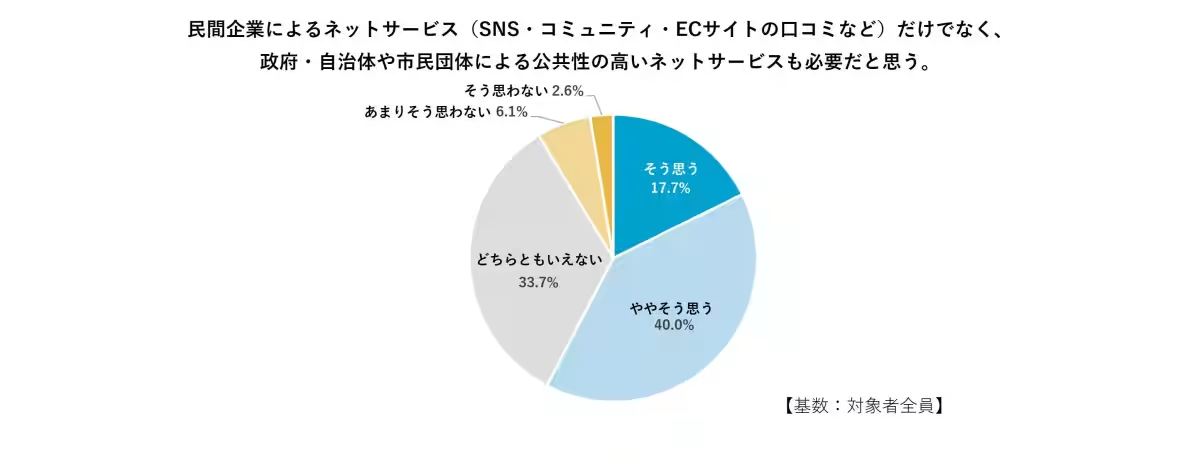
2. Demand for High-Publicity Internet Services
An overwhelming 57.7% of respondents agreed on the necessity for high-publicity internet services provided not just by private enterprises but also by public institutions and civic organizations. This suggests a strong public interest in accountability and credibility online.
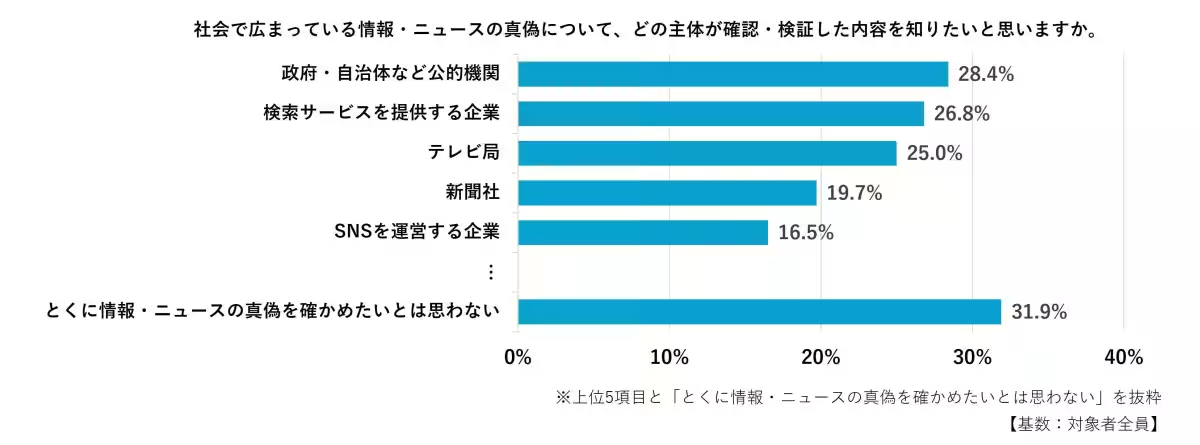
3. Verification Responsibility for Fake and False Information
When it comes to the accountability for verifying information, the ranking of stakeholders included public institutions (28.4%), search service companies (26.8%), and television networks (25.0%). Alarmingly, 31.9% expressed indifference, showing a worrying apathy towards verifying the accuracy of the news and information circulating.
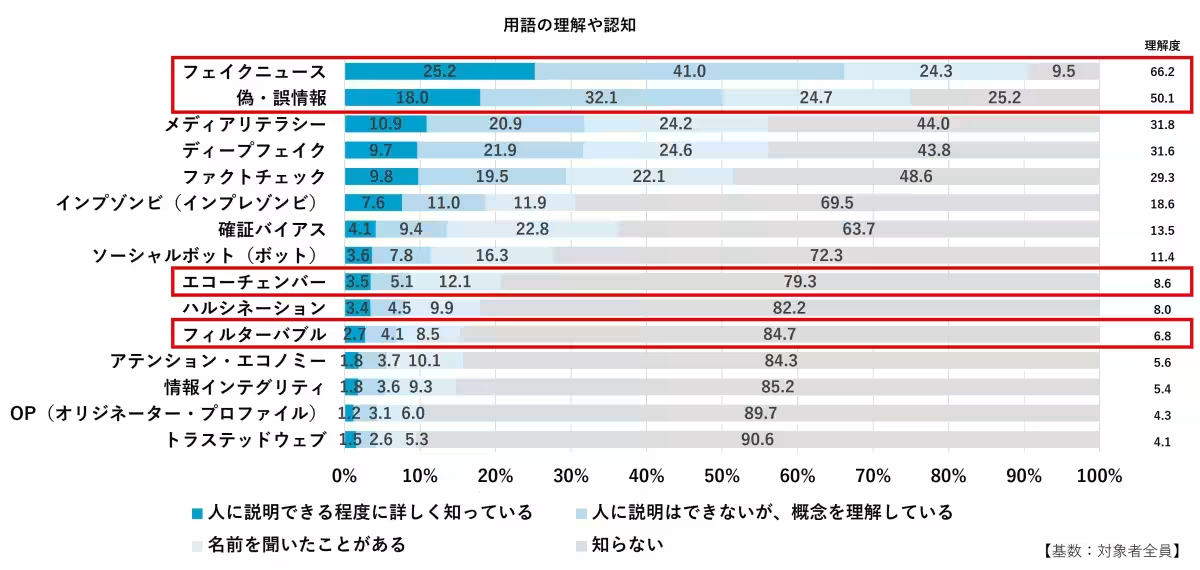
4. Low Understanding of Digital Concepts
Less than 10% of respondents demonstrated a deep understanding of concepts like
Topics Other)
【About Using Articles】
You can freely use the title and article content by linking to the page where the article is posted.
※ Images cannot be used.
【About Links】
Links are free to use.