



Revolutionizing Metabolomics: Rapid Plasma Analysis for Cancer Patient Stratification
Introduction
In a groundbreaking step for medical diagnostics, a research team led by Daisuke Miura from the National Institute of Advanced Industrial Science and Technology, alongside collaborators from Kyushu University and Tokyo Science University, has unveiled a revolutionary method to analyze low molecular weight metabolites in human plasma. This innovative approach combines ion mobility separation with matrix-assisted laser desorption/ionization mass spectrometry (MALDI-MS), achieving rapid and reproducible results within one second per sample. This method not only enhances the analytical efficiency but also allows for the stratification of cancer patients based on metabolic profiles.
The Need for Rapid Analysis
Low molecular weight metabolites, such as amino acids and sugars, fluctuate in response to lifestyle factors and diseases. As these metabolites hold valuable information regarding an individual’s health state and pathophysiology, their comprehensive analysis has become crucial. However, traditional analysis methods often suffer from inefficiencies and challenges in reproducibility, making it difficult to analyze large-scale samples—ranging from thousands to hundreds of thousands—under the same standards.
Innovative Approach
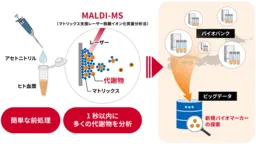
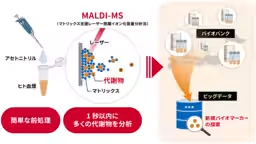
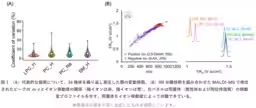
The research team introduced an exceptionally simple preprocessing method using just acetonitrile for dilution combined with MALDI-MS paired with ion mobility separation technology. This new method drastically reduces analysis time without compromising accuracy, managing to discern results comparable to existing techniques while achieving analyses in under one second per sample.
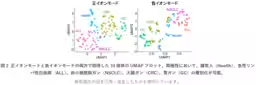
Furthermore, this method can distinguish metabolic patterns between healthy individuals and patients suffering from various types of cancer, including gastric and colorectal cancer. The ability to precisely identify and analyze multiple metabolites from blood plasma opens up exciting prospects for the discovery of new biomarkers crucial for precision medicine.
Methodology Details
The ability to analyze metabolites quickly was made possible by integrating two key technologies: MALDI-MS, which utilizes lasers to ionize sample molecules, and ion mobility (IM) separation, which identifies molecular shape and size in the gas phase. They developed a unique approach that minimizes the interference typically faced when analyzing low molecular weight metabolites, thus enabling a more accurate assessment.
Using this method, researchers further confirmed the quantifiable differences in metabolites across various cancer types through pilot testing with a small set of plasma samples from cancer patients. The research employed advanced data visualization techniques like Uniform Manifold Approximation and Projection (UMAP), which helped delineate distinct metabolic patterns associated with specific cancers.
Implications for Precision Medicine
The implications of this work extend beyond just cancer research. The novel metabolomics approach has the potential to be a game-changer in clinical research and biobank analyses, allowing for the rapid generation of big data from human specimens. The ability to quickly capture metabolic changes associated with diseases ensures a robust foundation for precision medicine, paving the way for tailored treatment strategies based on individual patient profiles.
Future Applications
Looking ahead, the developed technique exhibits a broad range of potential applications, not only in rapid blood analysis but also in assessing food and agricultural product components, monitoring microbial fermentation processes, and analyzing environmental samples. It offers a promising avenue for advancements across various scientific fields.
Conclusion
By significantly improving the speed and efficiency of metabolomics analyses, this groundbreaking method underscores the ongoing advances in the fields of precision medicine and biomarker discovery. The research team continues to explore new avenues to expand the utility of these findings, with a commitment to improving healthcare outcomes through innovative approaches to diagnostics.
References
The detailed results of this research have been documented in the March 9, 2026, edition of the Microchemical Journal, further highlighting the importance of this novel analytic method in facilitating large-scale clinical studies.
For further details, revisit the original research publication here.
Topics Health)
【About Using Articles】
You can freely use the title and article content by linking to the page where the article is posted.
※ Images cannot be used.
【About Links】
Links are free to use.