



Raising Disabled Employment Rates: Challenges and Opportunities Ahead
Introduction
As the legal employment rate for disabled individuals in Japan is set to rise to 2.7% by July 2026, a new survey by General Partners highlights significant challenges facing companies in the recruitment process. Launched from March 2 to March 11, the survey gathered insights from 1,020 HR and recruitment personnel in private firms about their current state of hiring disabled individuals.
Employment Rate Challenges
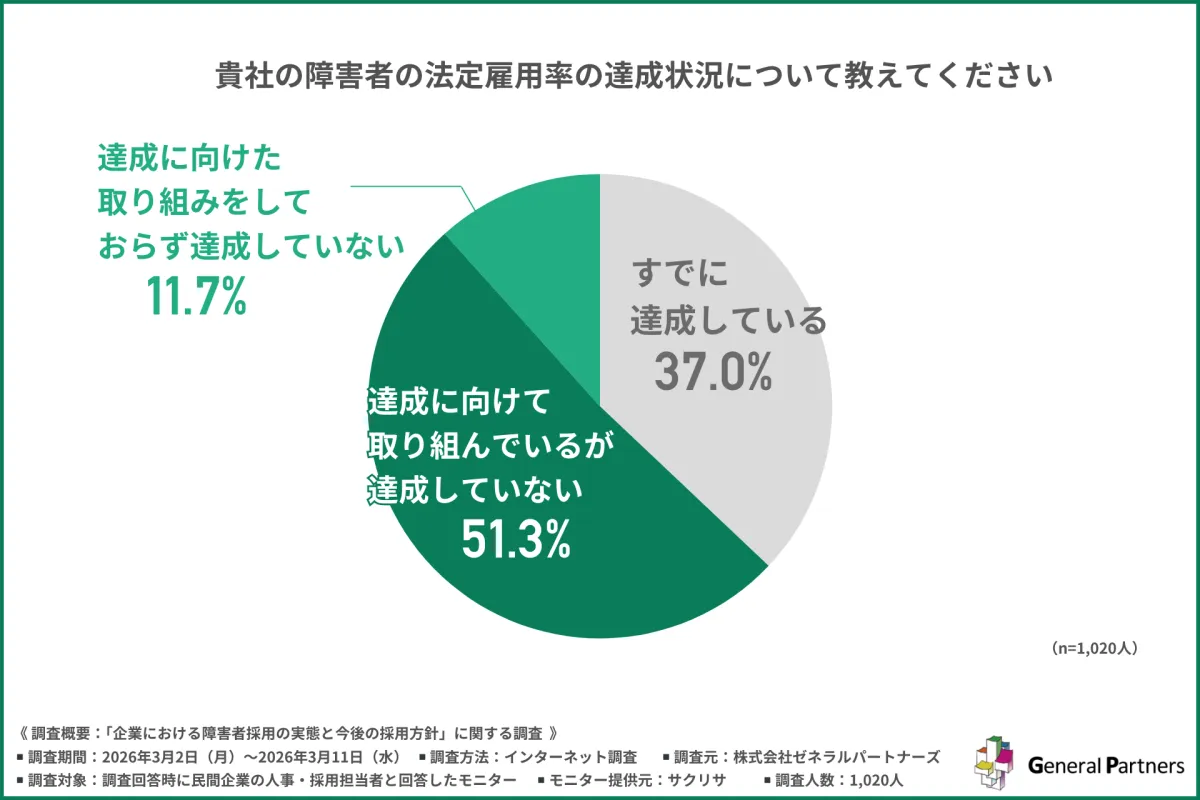
The survey revealed that around 37% of companies have achieved the current legal employment rate for disabled individuals. However, a staggering 51.3% of companies are struggling to meet the requirements, and about 11.7% have not taken any actions to improve their hiring processes. This implies that while there is an openness toward hiring disabled individuals, numerous barriers prevent companies from achieving compliance.
One major issue is that many firms find it challenging to match job seekers’ profiles to their specific roles. Additionally, the necessary internal support systems to accommodate disabled employees are frequently inadequate. The lack of resources, as well as a shortage of expertise, further complicates hiring efforts, as nearly 10% of companies reported not yet starting any initiatives in this direction.
Regional Disparities in Hiring Practices
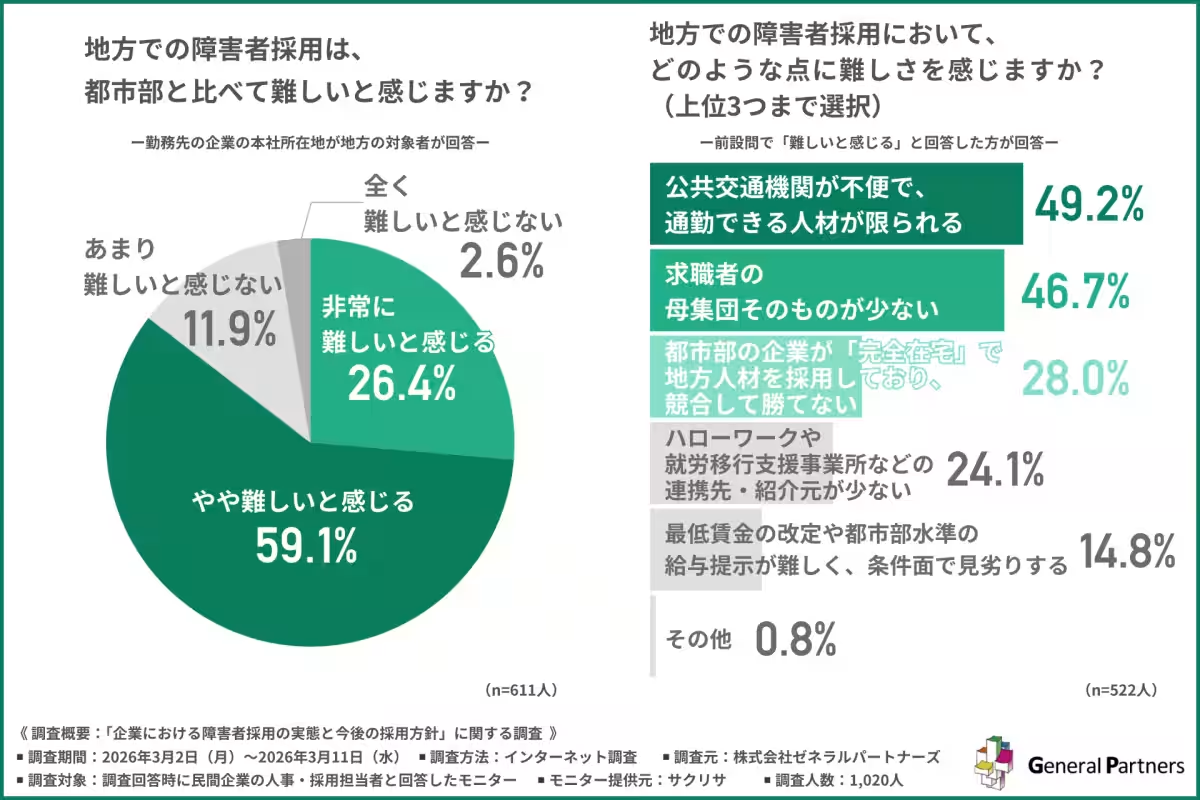
The survey also highlighted significant differences in perceptions about hiring disabled individuals between regional and urban companies. When asked whether they found recruiting disabled individuals more challenging in rural areas compared to urban ones, nearly 90% of respondents from regional firms felt it was 'very difficult' or 'somewhat difficult'.
Obstacles unique to rural areas, such as limited public transportation and small labor pools, further contribute to this disparity. A notable 49.2% indicated that inconvenient commuting options greatly restrict their pool of applicants. Other reasons included a low number of job seekers (46.7%) and competition from urban companies offering fully remote positions (28%).
Transformation in Recruitment Strategies
The long-standing model that primarily focused on physical disabilities and clerical roles is rapidly becoming obsolete. Companies must now expand their focus to include those with mental and developmental disabilities and shift their hiring strategies to account for specialized skills through new job creation.
When asked about the types of disabilities represented in their workforce, findings illustrated that 52.5% employed individuals with physical disabilities, while 34.6% reported employing individuals with mental disabilities, and 32.2% reported hiring those with developmental disabilities.
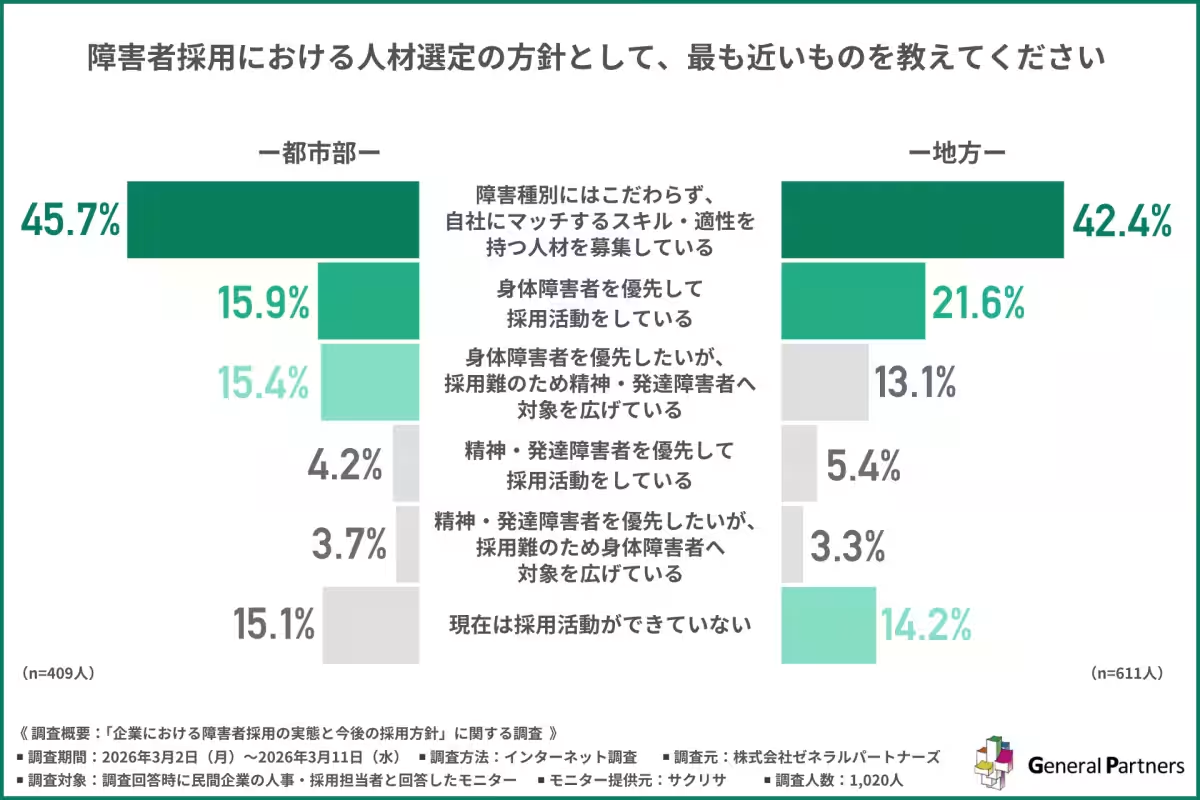
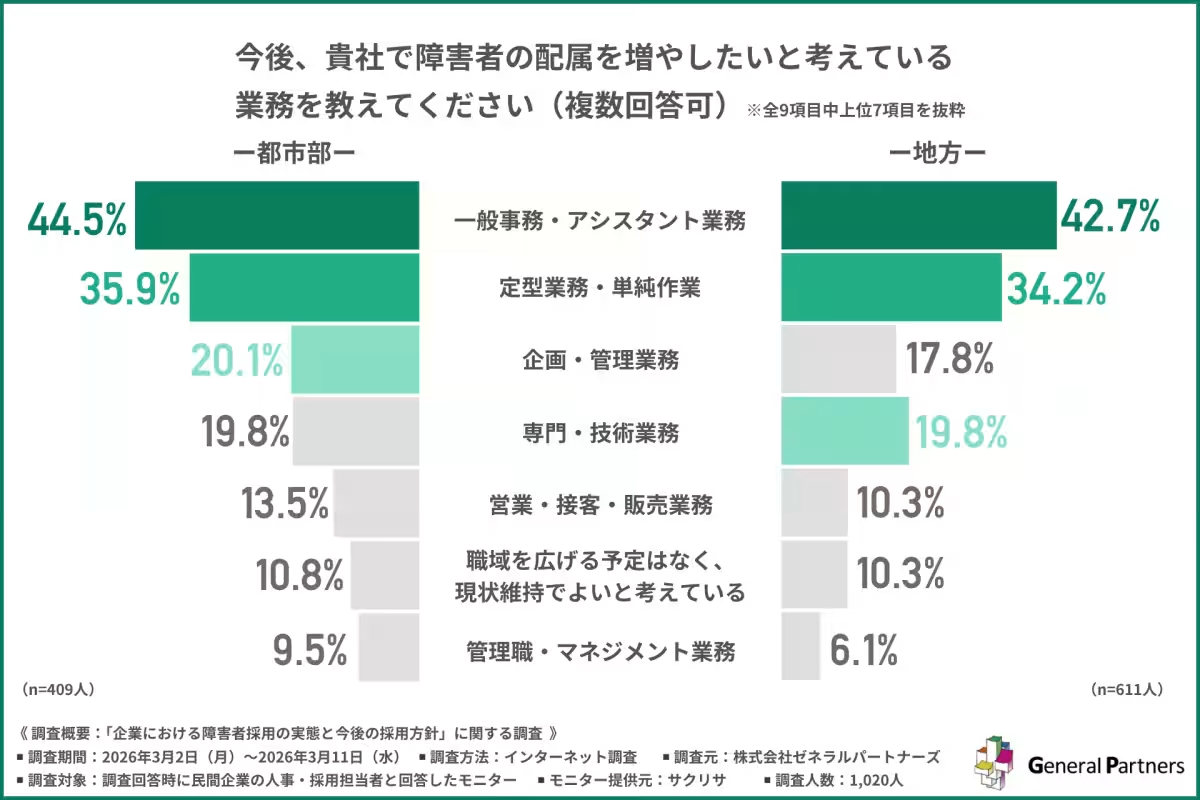
Both regions indicated that their approach prioritizes skills and suitability over disability type, with approximately 45.7% of urban firms adopting this philosophy, compared to 42.4% of rural firms. However, a more considerable number of rural firms still prioritize hiring individuals with physical disabilities.
Looking Forward: The Path Ahead
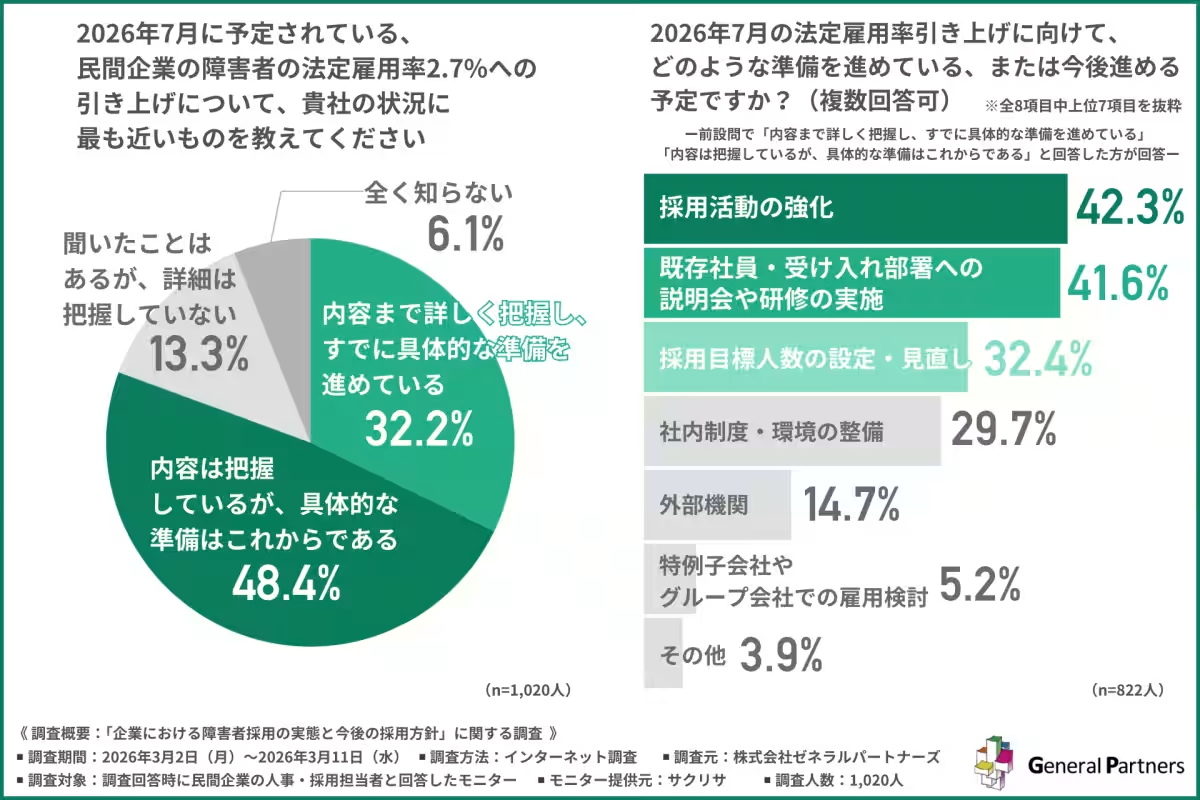
Given the impending deadline for compliance with the new employment rate, about 80% of the surveyed companies were aware of the upcoming changes. However, only 32.2% indicated they've already begun specific preparations. Most companies reported plans to enhance hiring activities and conduct training sessions for existing staff to improve their accommodating capacities.
Summary
In summary, companies are at a crucial crossroads regarding hiring individuals with disabilities. As the date for the updated legal employment rate looms closer, businesses are faced with the pressing need to adapt their hiring practices diligently, considering both internal capability and the external landscape. The shift from merely meeting quotas to fostering a truly inclusive environment can serve as an opportunity to enrich the workforce dynamically. The efforts made in the coming months will determine not only compliance success but also the broader implications for workplace diversity and inclusion in Japan.

Topics People & Culture)









【About Using Articles】
You can freely use the title and article content by linking to the page where the article is posted.
※ Images cannot be used.
【About Links】
Links are free to use.