



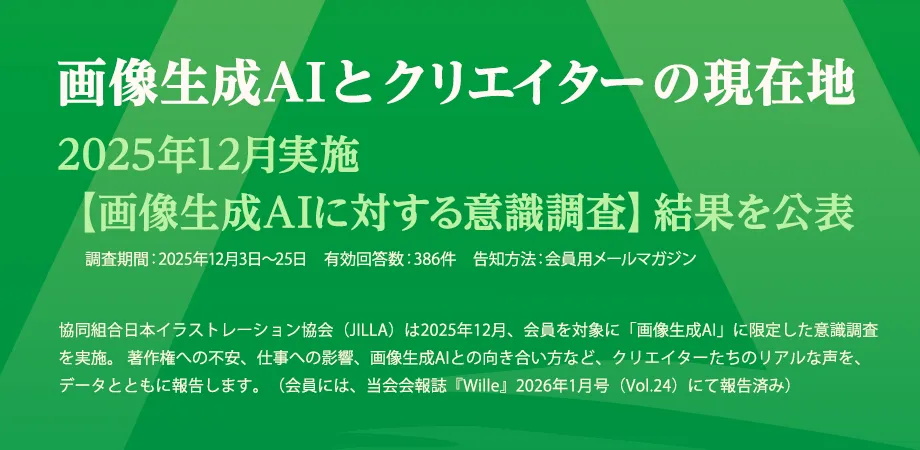
The Current Landscape of Image Generation AI and Creators' Insights on Benefits and Concerns
Exploring the Current Landscape of Image Generation AI and its Impact on Creators
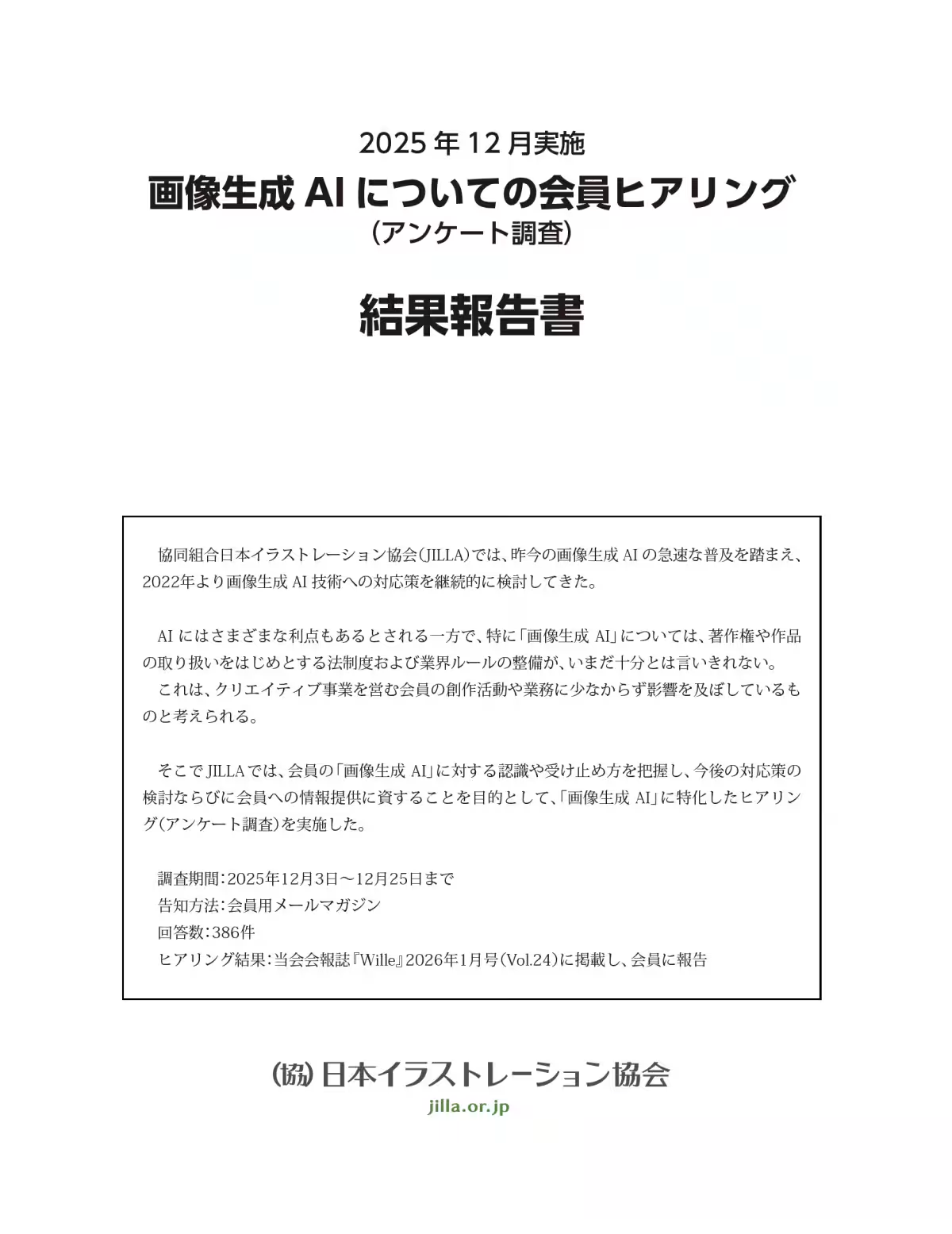
In December 2025, the Japan Illustration Association (JILLA) conducted a thorough survey focused on the perceived impacts of image generation AI among its members. Over a span of 23 days, the survey gathered a total of 386 valid responses from its members, thereby shining a light on various perspectives regarding this rapidly evolving technology. The comprehensive findings of the survey were subsequently published on JILLA’s official blog, inviting a wider audience to engage with these vital insights.
Survey Objectives
The primary aim of this survey was to identify concrete challenges that creators are currently encountering in relation to image generation AI. Issues concerning copyright infringement risks, potential disputes with clients, and the effects on professional reputations were just a few of the central themes explored. Members had already received insights in the January 2026 issue of the association’s newsletter, Wille, but the decision to publicly share the results was made to foster a broader discussion within the industry and beyond.
Key Findings of the Survey
Divergent Views on Image Generation AI
The survey results revealed a significant divide in opinions on the utilization of image generation AI, with 46.4% of respondents expressing a negative stance (either very or somewhat negative). Conversely, only 32.4% viewed it positively (very or somewhat positive), while 21.2% remained neutral.
When broken down by profession, around 76% of manga artists and approximately 59% of illustrators held a negative viewpoint, indicating a profound concern among those whose core value lies in the act of creation. In contrast, web designers exhibited a more positive perspective, with about 61% endorsing the technology. Additionally, age played a role in these perceptions; about 66% of respondents in their 30s were particularly skeptical, whereas 53% of those in their 50s were more appreciative of AI’s benefits, suggesting that younger generations are cautious while older groups adopt a more pragmatic viewpoint.
Utilization of AI as a Tool
Across genders and professions, the most frequently cited advantages of image generation AI were its potential for improving workflow efficiency (254 mentions) and aiding in brainstorming ideas (199 mentions). Notably, only 65 respondents viewed AI as a solution to labor shortages, favoring a perception of AI as a supportive tool rather than a direct replacement for human labor.
Concerns Over Copyright Issues
The survey highlighted a considerable concern regarding copyright infringements, which was cited by 358 respondents as the primary worry. This was followed by moral considerations from clients (275 mentions) and the accuracy of information (271 mentions). A noticeable trend emerged indicating that respondents with negative perceptions of image generation AI harbored heightened concerns regarding talent development and the sustainability of industry structures.
Realized Issues: Experienced Troubles
Among the respondents, 82 individuals reported experiencing troubles related to image generation AI, with illustrators and manga artists making up around 65% of these cases. Common issues included unauthorized learning of styles and techniques, the unauthorized creation and distribution of LoRA models using personal names, unapproved AI alterations of client works, and incidents where hand-drawn artworks were mistaken for AI-generated pieces, impacting negotiations and final approvals.
Appeals to JILLA
Respondents expressed a demand for JILLA to enhance efforts in protecting copyrights, which topped the list of requests with 299 mentions. Other notable demands included proposals to government bodies (248 mentions) and initiatives for trial operations of AI usage marks (174 mentions). A widespread recognition emerged: addressing these challenges requires a systematic response that transcends individual actions.
JILLA’s Perspective
In light of the survey findings, JILLA emphasized the dual-edged nature of image generation AI, noting that while it offers certain conveniences, it also raises specific challenges concerning copyright, workforce development, and structural industry concerns. JILLA stressed the necessity of continuous dialogue among stakeholders, as well as systematic improvements from governmental entities to ensure the safeguarding of creator rights while enabling the beneficial use of technology.
Conclusion
As the digital landscape evolves, creators find themselves at a crossroads with emerging technologies like image generation AI. It is incumbent upon organizations like JILLA to facilitate the conversation and champion necessary reforms for the protection and enhancement of the creative industry.
For those interested, more details regarding the survey findings can be found on JILLA’s official blog.
About JILLA
The Japan Illustration Association (JILLA), comprises over 4,000 members including illustrators and designers, is one of the largest cooperatives in the industry recognized by the Ministry of Economy, Trade and Industry. Established in 2008, it aims to create a safe and supportive environment for creators through seminars, interactions, and insurance against cyber threats.

Topics People & Culture)






【About Using Articles】
You can freely use the title and article content by linking to the page where the article is posted.
※ Images cannot be used.
【About Links】
Links are free to use.