



Innovative CO2 Conversion: Collaborative Bench-Scale Verification Begins
New Horizons in Carbon Management
Introduction
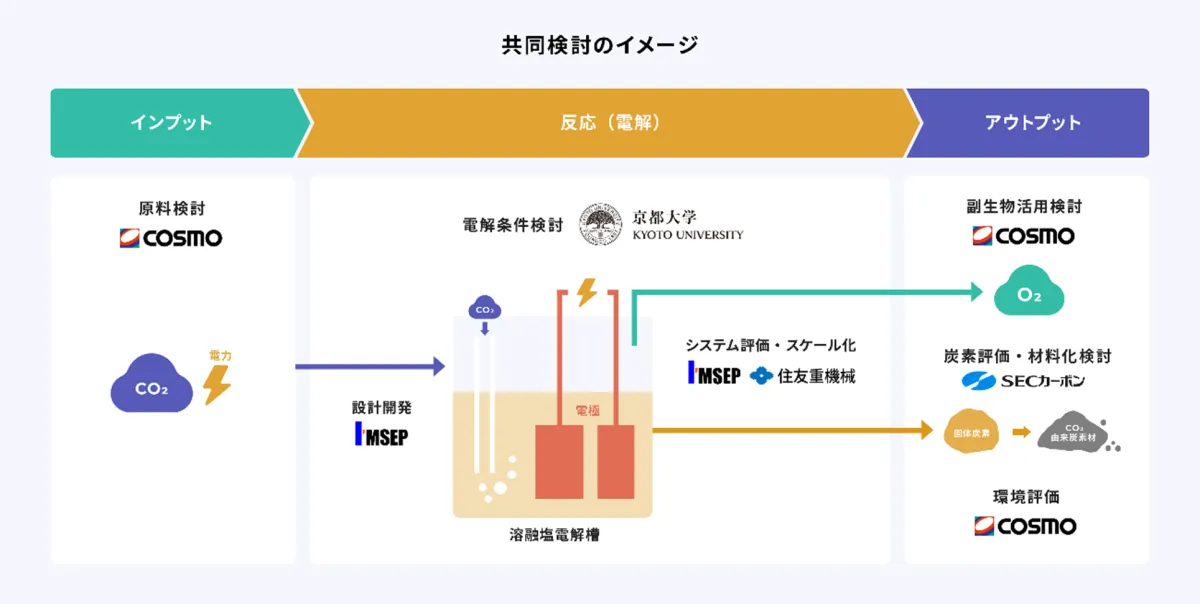
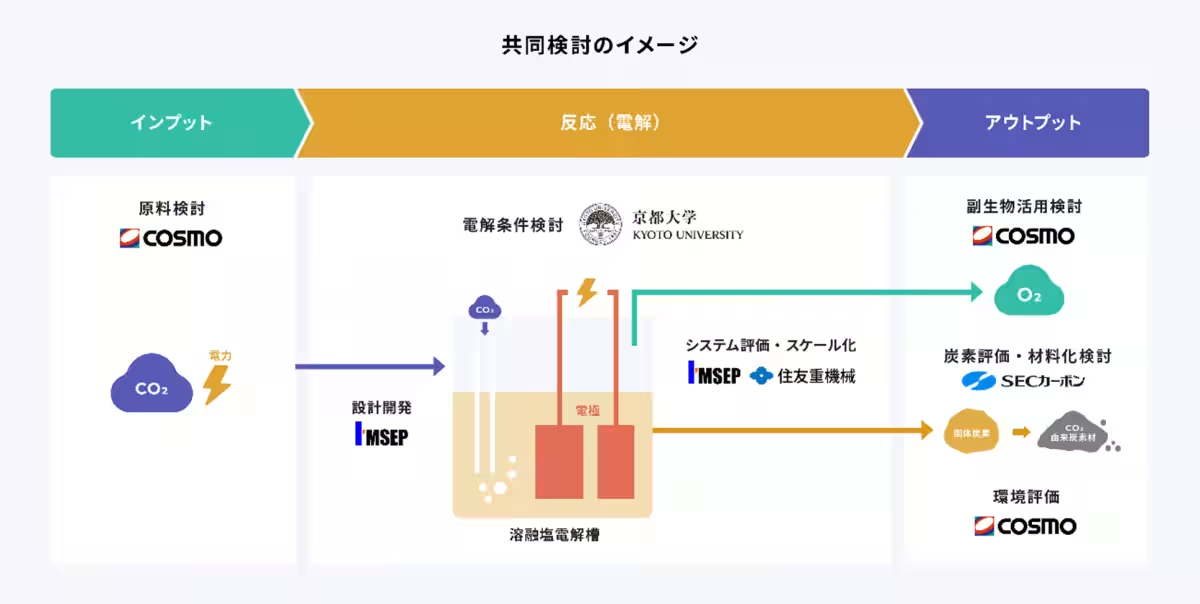
In a significant move towards achieving carbon neutrality, Cosmo Energy Group's subsidiary Cosmo Oil, in collaboration with Kyoto University, I’msep Co., Ltd., Sumitomo Heavy Industries, and SEC Carbon, has initiated bench-scale verification of CO2-derived solid carbon production utilizing molten salt electrolysis technology. This collaboration aims to explore the feasibility of converting CO2 into solid carbon as part of a comprehensive approach to carbon capture and utilization (CCU).
Background
With the growing emphasis on creating a carbon-neutral society, the effective capture and utilization of CO2 have garnered attention as critical technology domains. Molten salt electrolysis, in particular, stands out for its ability to transform CO2 into solid carbon without relying on high-cost clean hydrogen, often required in alternative CCU technologies. By integrating renewable energy, this approach presents a future-oriented, low-carbon solution with minimal environmental impact.
Furthermore, carbon materials such as graphite and carbon nanomaterials are indispensable across various industries, including next-generation energy sectors. However, reliance on international supply chains can pose geopolitical risks, highlighting the importance of developing domestic carbon sourcing solutions. Producing carbon materials from CO2 not only contributes to decarbonization but also aids in diversifying and stabilizing the domestic carbon materials supply chain.
Project Overview
The collaborative effort will focus on several key areas:
- - Technical feasibility verification for CO2-derived carbon material production using molten salt electrolysis.
- - Comprehensive examination of the supply chain from raw material sourcing to manufacturing and utilization.
- - Identification of challenges and discussions aimed at future societal implementation.
Participants and Roles
1. Cosmo Energy Group: Committed to accelerating efforts towards carbon neutrality, Cosmo Energy's Vision 2030 underscores the importance of enhancing competitiveness and decarbonization within the oil business. This initiative marks an important step toward realizing future commercialization and societal implementation.
2. Kyoto University: Leveraging its extensive expertise in molten salt chemistry and electrochemistry, Kyoto University will be leading the verification of molten salt electrolysis technology as a pivotal academic contributor, bridging research and social implementation.
3. I’msep Co., Ltd.: With a focus on promoting paradigm shifts towards an SDGs-compliant society, I’msep views this initiative as vital for advancing its unique carbon-neutral technology. Their goal is to utilize molten salt technology for creating new industries domestically and internationally.
4. Sumitomo Heavy Industries: Aiming for environmental impact reduction and enhanced product sustainability, Sumitomo Heavy Industries brings its extensive experience in energy plants and chemical processes to the table, contributing to the establishment of a technological foundation for future carbon recycling efforts.
5. SEC Carbon: Specializing in the production and evaluation of carbon materials, SEC Carbon will utilize its expertise to assess and develop the carbon produced from CO2, aligning with its long-term goals of promoting CO2 resource utilization technologies.
Conclusion
As the project progresses, the collaborative team will continue to adapt to technological and policy developments, creating a synergy that advances both decarbonization and the establishment of new value creation initiatives. This multifaceted approach aims to align scientific research with practical applications, securing a sustainable future for the industry and society alike.
Topics Environment)
【About Using Articles】
You can freely use the title and article content by linking to the page where the article is posted.
※ Images cannot be used.
【About Links】
Links are free to use.