



A Resource Circulation Project Connecting Urban Areas and Regions at Akasaka Intercity AIR
Connecting Urban Areas and Regions: The Megunegi Resource Circulation Project
In July 2023, a groundbreaking initiative was launched at Akasaka Intercity AIR in Minato, Tokyo, aiming to connect urban environments and rural areas through a unique resource circulation project. Spearheaded by major players in the real estate and environmental sectors, including Nippon Steel Kowa Real Estate Co., Urban Environmental Engineering, Bioenergy Co., and Kitamoto Agri, this project transforms food waste generated within the building into valuable resources.
What is the Megunegi Project?
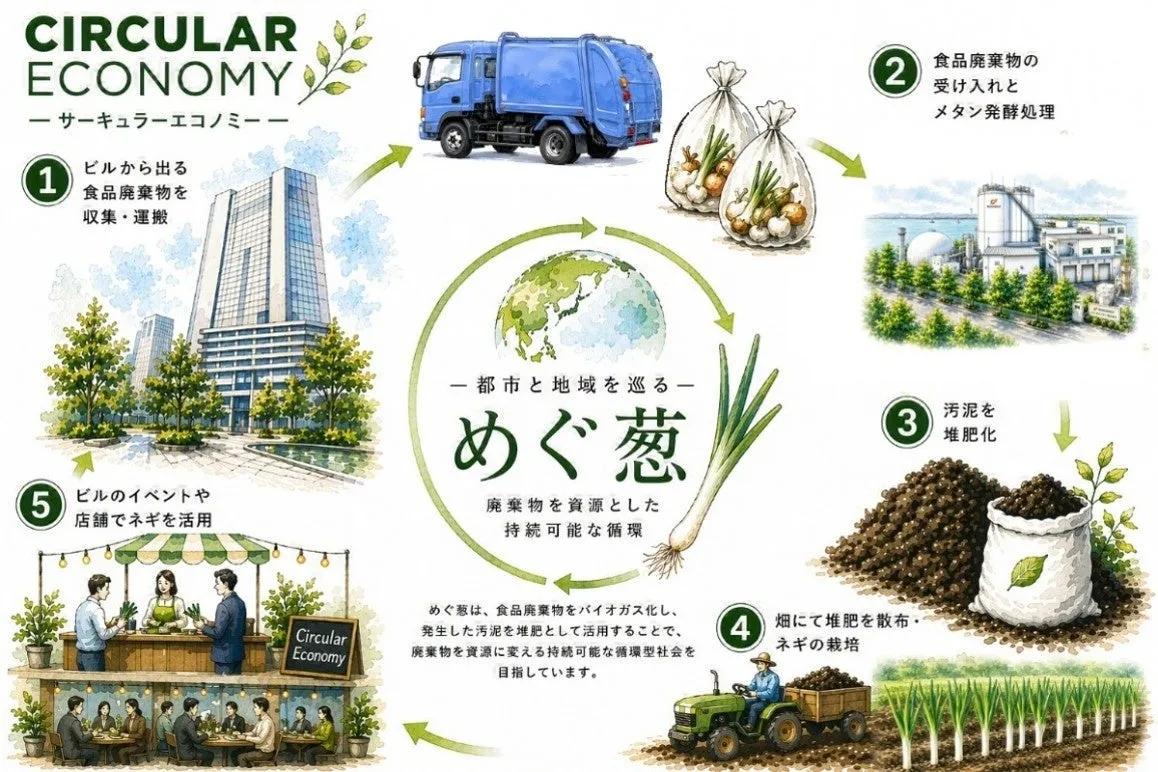
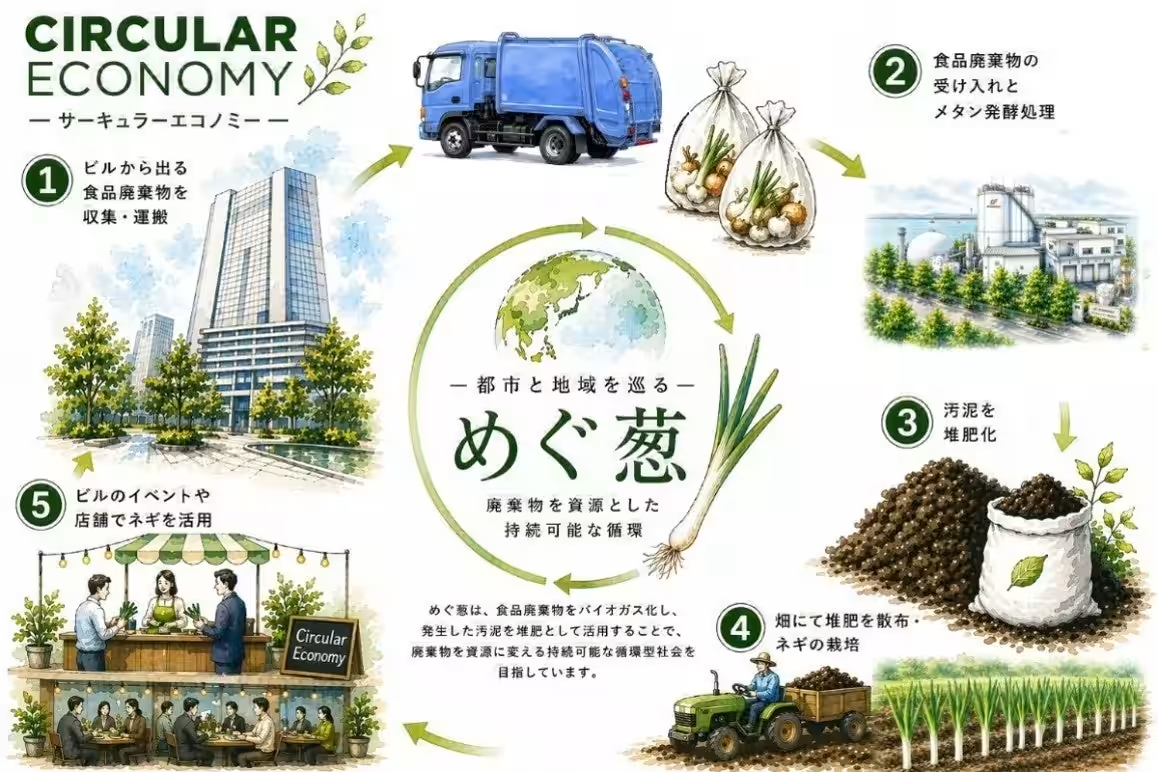
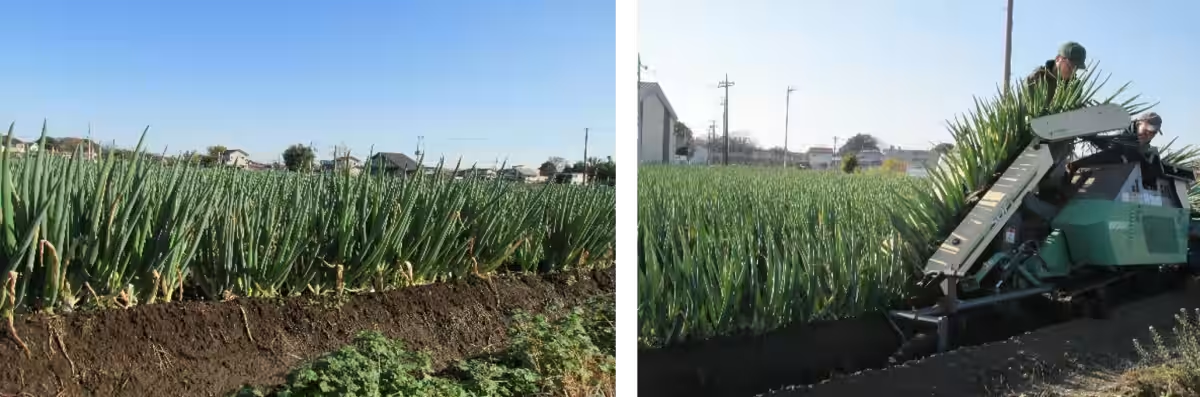
The essence of the Megunegi initiative lies in a sustainable cycle: food waste produced by restaurants and food establishments at Akasaka Intercity AIR is collected and directed to a processing facility where it undergoes anaerobic digestion. This not only helps in reducing waste but also produces biogas, contributing to renewable energy generation. The remaining sludge is then turned into compost, which is used to grow leeks known as “Megunegi” in fields located in Kitamoto City, Saitama Prefecture. The harvested leeks will be served at local events and in the employee cafeteria of Nippon Steel Kowa Real Estate.
The name 'Megunegi' reflects both the cyclical nature of resource management and the connection between urban areas and rural communities, emphasizing the shared blessings of food and agriculture.
Steps Towards Resource Circulation
The project's workflow is designed intricately to ensure a seamless exchange of resources:
1. Waste Collection: Food waste from various dining outlets within Akasaka Intercity AIR is collected.
2. Compost Production: The waste is processed to produce compost through anaerobic digestion, yielding valuable nutrients for agriculture.
3. Cultivation: This compost is employed in the cultivation of Megunegi leeks in local farmlands.
4. Consumption: The harvested leeks are utilized in meals served at Akasaka Intercity AIR, closing the loop between urban waste and local consumption.
Significance of the Initiative
1. Environmental Sustainability
The Megunegi project significantly reduces the environmental burden by converting food waste into a renewable resource. By minimizing landfill contributions and CO₂ emissions, and generating biogas from the digestion process, the initiative enhances both waste management and energy sustainability.
2. Building a Circular Economy through Food
This initiative fosters collaboration between various stakeholders, including waste management companies, processing facilities, and farmers, constructing an innovative circular economy framework. As urban food waste returns to agricultural production, new relationships between producers and consumers are formed, enriching local economies while demonstrating a model for sustainable urban-rural synergy.
3. Promoting Sustainable Building Operations
By adopting a resource circulation model at office buildings, the Akasaka Intercity AIR project emphasizes sustainability in its core operations. Engaging tenants, visitors, and service providers in environmental initiatives, Nippon Steel Kowa aims to extend these practices throughout its property portfolio, paving the way for industry-wide change.
Overview of Participating Organizations
- - Nippon Steel Kowa Real Estate Co.: A comprehensive firm involved in building offices and commercial facilities, focused on waste reduction and resource recycling to foster sustainability in urban landscapes.
- - Urban Environmental Engineering: A member of the Kajima Corporation group, specializing in providing reliable waste collection and recycling services to urban areas.
- - Bioenergy Co.: Experts in converting food waste into renewable energy, driving the agenda for a low-carbon society through recycling initiatives.
- - Kitamoto Agri Co.: A farming entity committed to utilizing compost made from food waste to cultivate fresh leeks, aiming to invigorate local agricultural practices.
Akasaka Intercity AIR: A Modern Urban Hub
Akasaka Intercity AIR is designed as a smart wellness environment, marrying urban living with ecological responsibility. Located in the heart of Tokyo with easy access via the subway, the facility aims to create a comfortable, sustainable space for workers, residents, and visitors alike. With advanced energy management practices and a focus on environmental integration, it stands out as a model for future developments.
In Conclusion
The Megunegi project at Akasaka Intercity AIR stands as a compelling example of how urban centers can effectively collaborate with rural regions to create a sustainable resource cycle. By effectively managing food waste while also promoting local agriculture, this initiative not only enhances environmental health but also fosters community relationships and economic growth. As it expands, this project could pave the way for similar models in urban sustainability around the globe.

Topics Environment)
【About Using Articles】
You can freely use the title and article content by linking to the page where the article is posted.
※ Images cannot be used.
【About Links】
Links are free to use.