



Surprising Findings from AI Adoption Survey Reveal Challenges Faced by Enterprises
The Current State of AI Adoption in Enterprises
A new survey conducted by Frontier Inc. has shed light on the current state of AI adoption among businesses, particularly indicating that almost half have yet to integrate AI into their operations. With the increasing interest in generative AI and automation, many companies express concerns that they are not obtaining the desired results from their AI implementations, often stuck at the proof of concept (PoC) stage. What are the reasons behind this stagnation and what obstacles are companies facing?
Survey Overview
The survey focused on business executives interested in AI adoption and uncovered critical insights about their challenges. Conducted between July 17 and July 20, 2025, the research involved over 1,021 participants, all from companies considering AI integration.
Key Findings
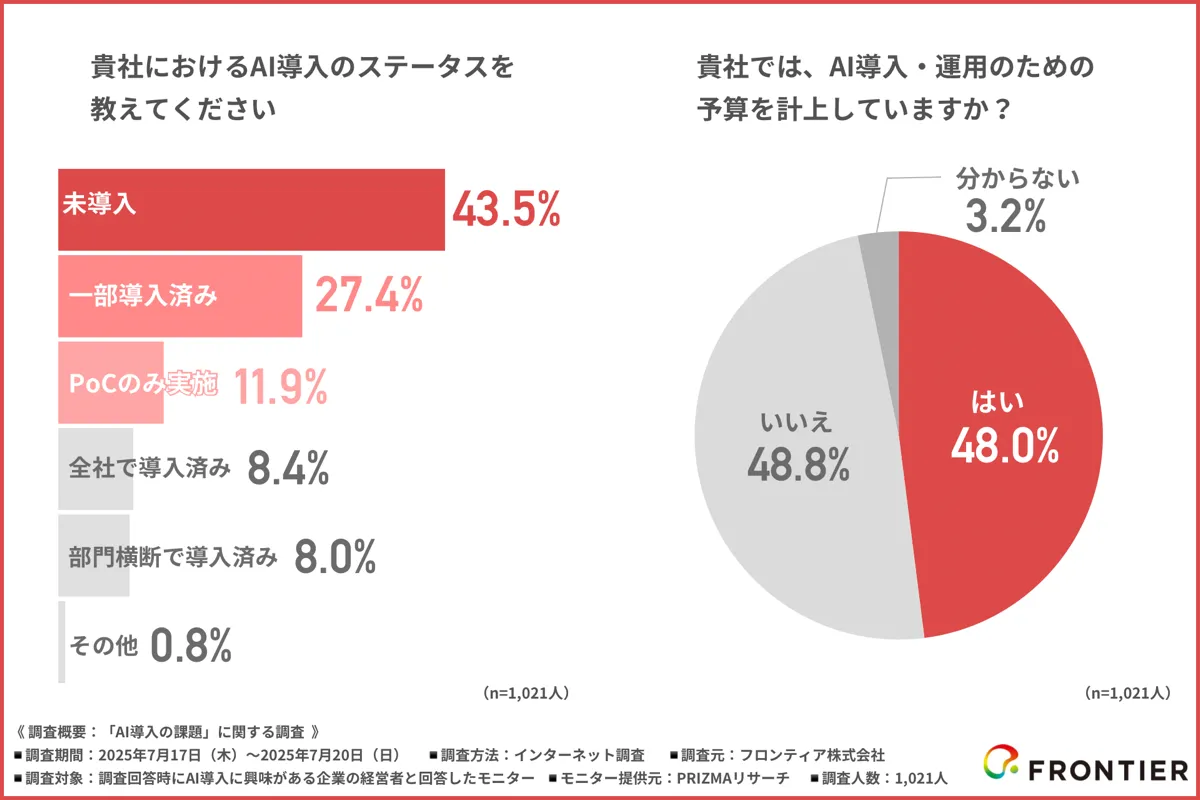
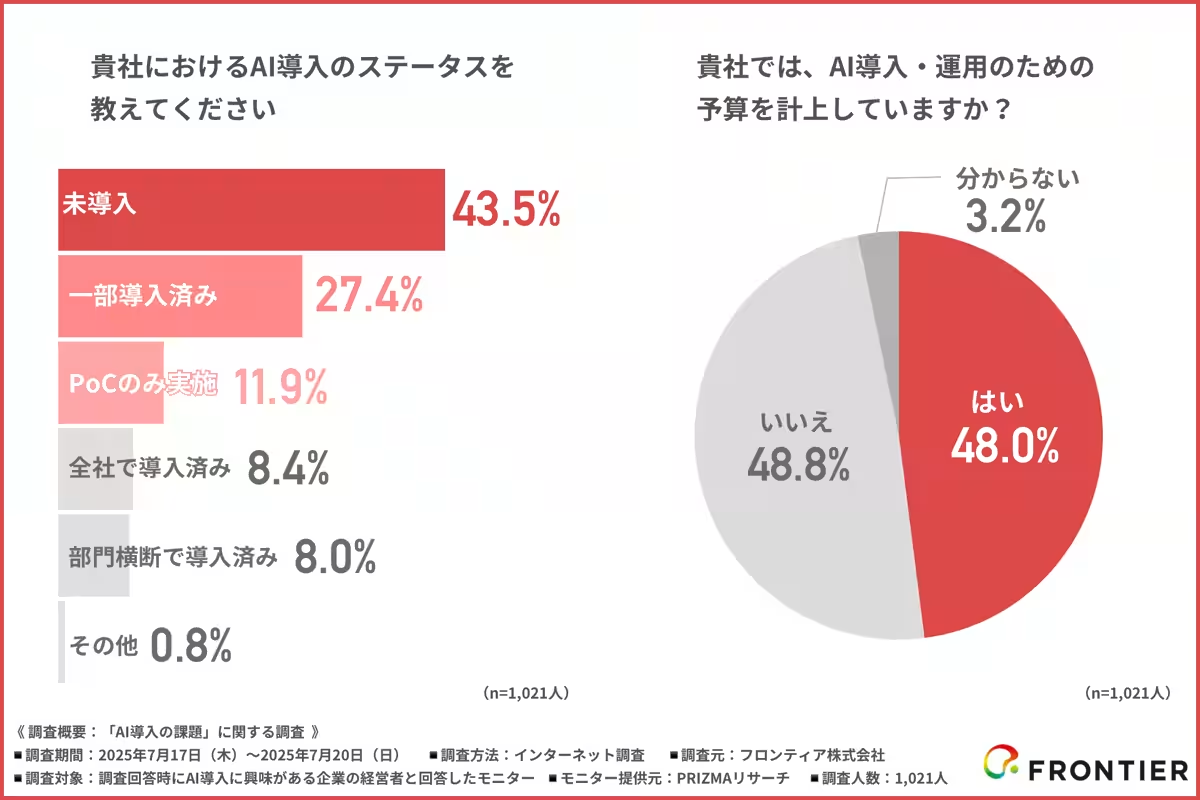
When asked about their current AI adoption status, 43.5% of respondents indicated that they have not adopted AI at all, while 27.4% reported partial adoption and 11.9% are still in the PoC phase. This indicates that while 80% of companies are considering AI or have initiated the introduction process, actual full-scale deployment remains a challenge, with only about 40% having implemented AI to any significant degree.
Interestingly, less than 10% of total respondents have achieved complete company-wide AI integration, highlighting the hurdles that remain on the path to AI's widespread use. This situation emphasizes the need for ongoing support and time to overcome significant barriers to effective AI implementation.
Budget Considerations for AI Adoption
Regarding budget planning for AI, approximately 48% of respondents confirmed they have allocated funds for the initiative. However, an equal share of businesses has not planned a budget for AI, indicating a gap between interest and concrete action towards implementation. This highlights a substantial divide between companies aware of the benefits of AI and those ready to execute plans.
Core Objectives for AI Implementation
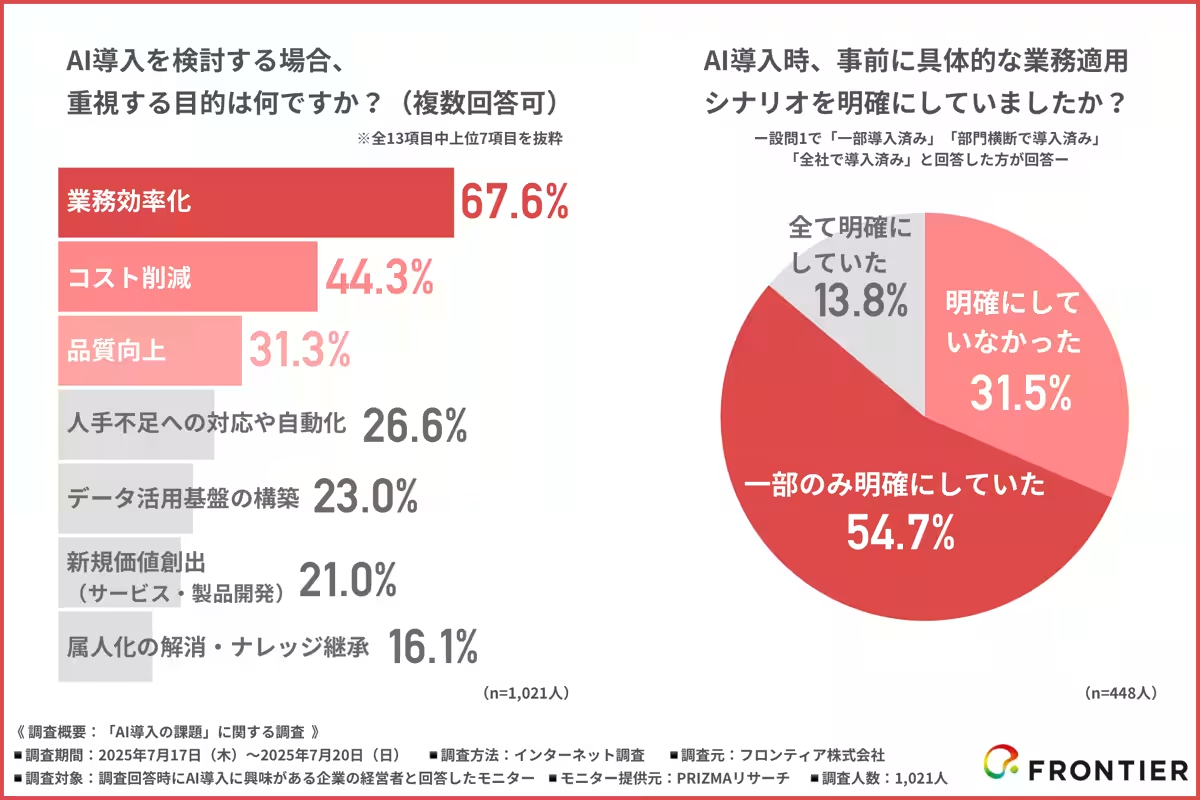
Respondents were also asked about their motivation for adopting AI, with the most common reason being operational efficiency (67.6%), followed by cost reduction (44.3%) and quality improvement (31.3%). This suggests that many companies prioritize alleviating the daily burden through automation before exploring strategic innovations or new value creation, which are less frequently cited as primary goals.
Clarity in Business Applications of AI
Among the enterprises that have partially adopted AI, opinions varied significantly on whether they had articulated specific business applications during implementation. While 31.5% admitted they had not defined any application clearly, 54.7% had only established some parameters, indicating that many organizations are still in the early stages of conceptualizing AI's role in their operations. This lack of clarity may contribute to the disjointed and often isolated AI efforts that remain prevalent in the market.
Understanding ROI and Budget Challenges
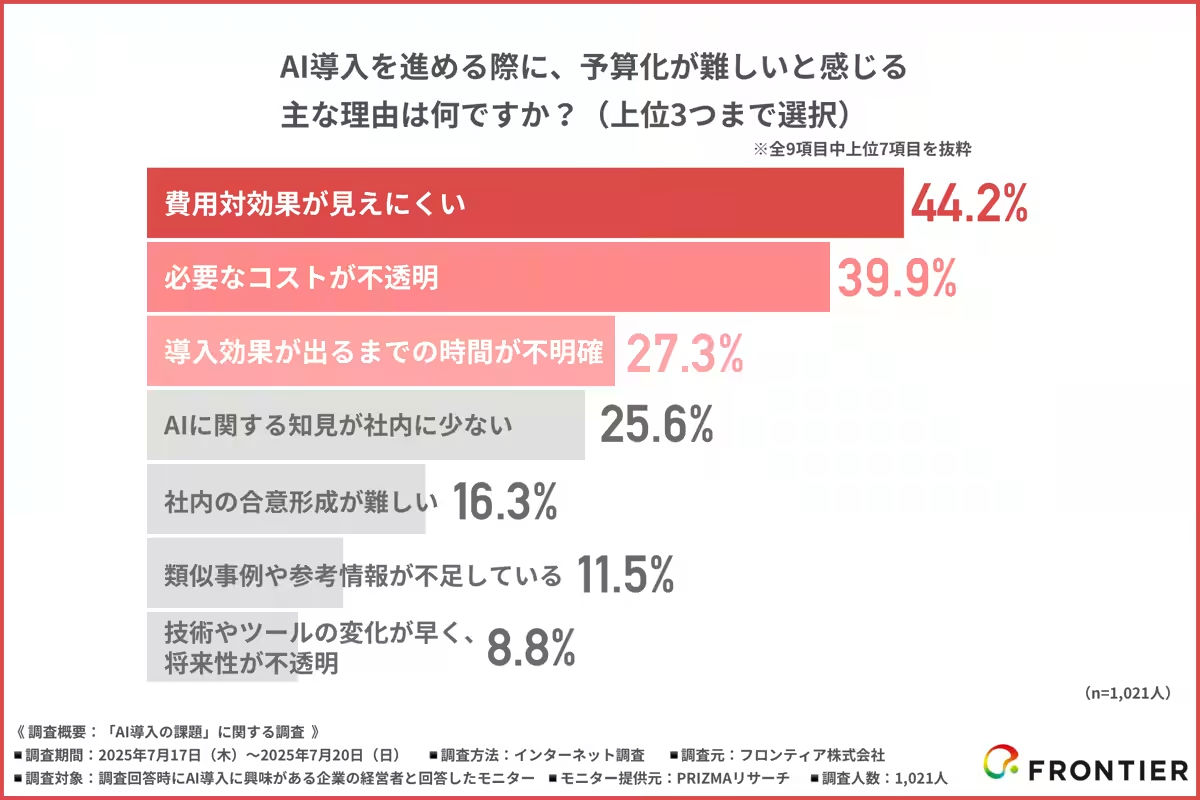
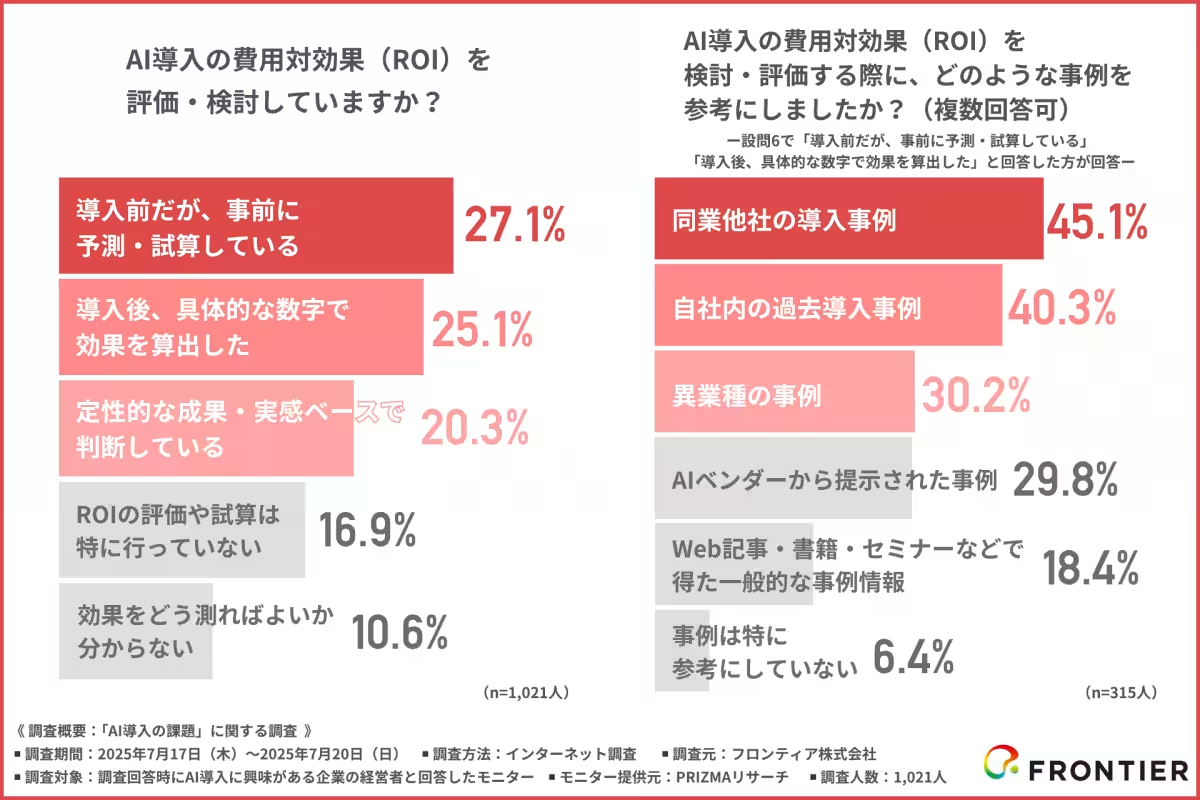
A significant hurdle for many companies remains the challenge of evaluating the cost-effectiveness of AI initiatives. When asked about their difficulty in allocating budgets, a notable 44.2% of respondents cited challenges in seeing a clear return on investment (ROI) as a primary barrier. A further 39.9% reported that the costs needed for implementation remain unclear, while 27.3% felt that the timeline for realizing benefits was uncertain.
Indeed, many organizations face a critical issue in justifying the investment in AI without concrete data on expected benefits. This ambiguity around costs and timelines makes it challenging for companies to gain stakeholder buy-in.
Internal Data and Talent Readiness for AI
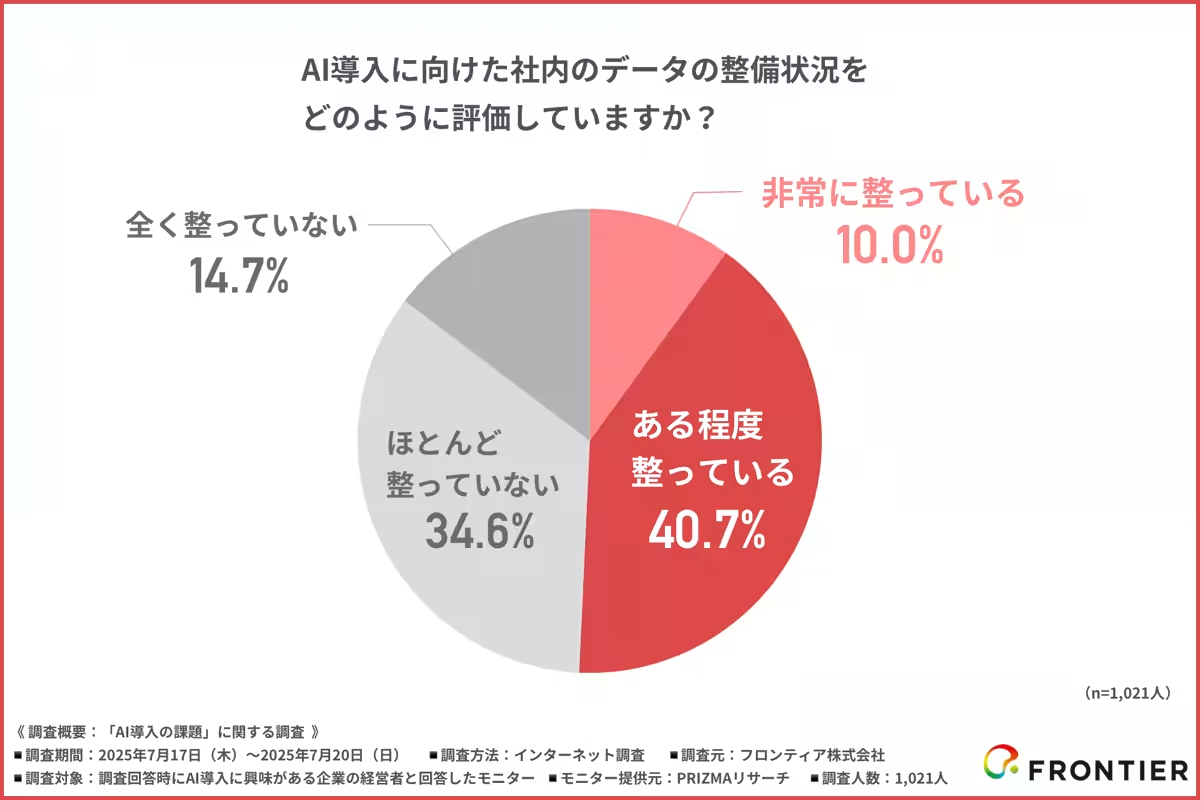
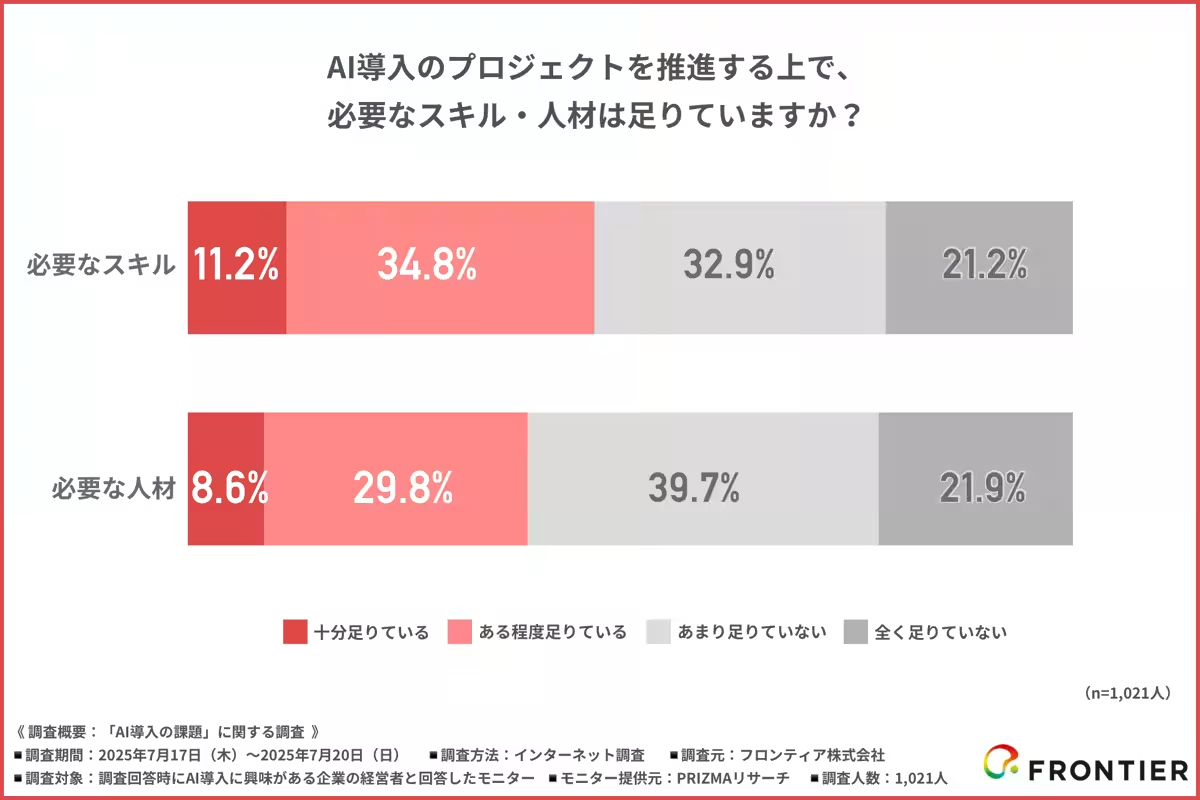
An investigation into the readiness of internal data for AI showed that about half of all respondents believe their data is 'somewhat organized,' suggesting a growing number of businesses are establishing foundational data structures necessary for AI to thrive. However, when it comes to necessary skills and human resources, companies reported significant deficiencies. Only 11.2% said they had sufficient skills, with 21.1% stating that they lack resources entirely, creating a critical gap that could hinder AI initiatives moving forward.
Security and Privacy Concerns
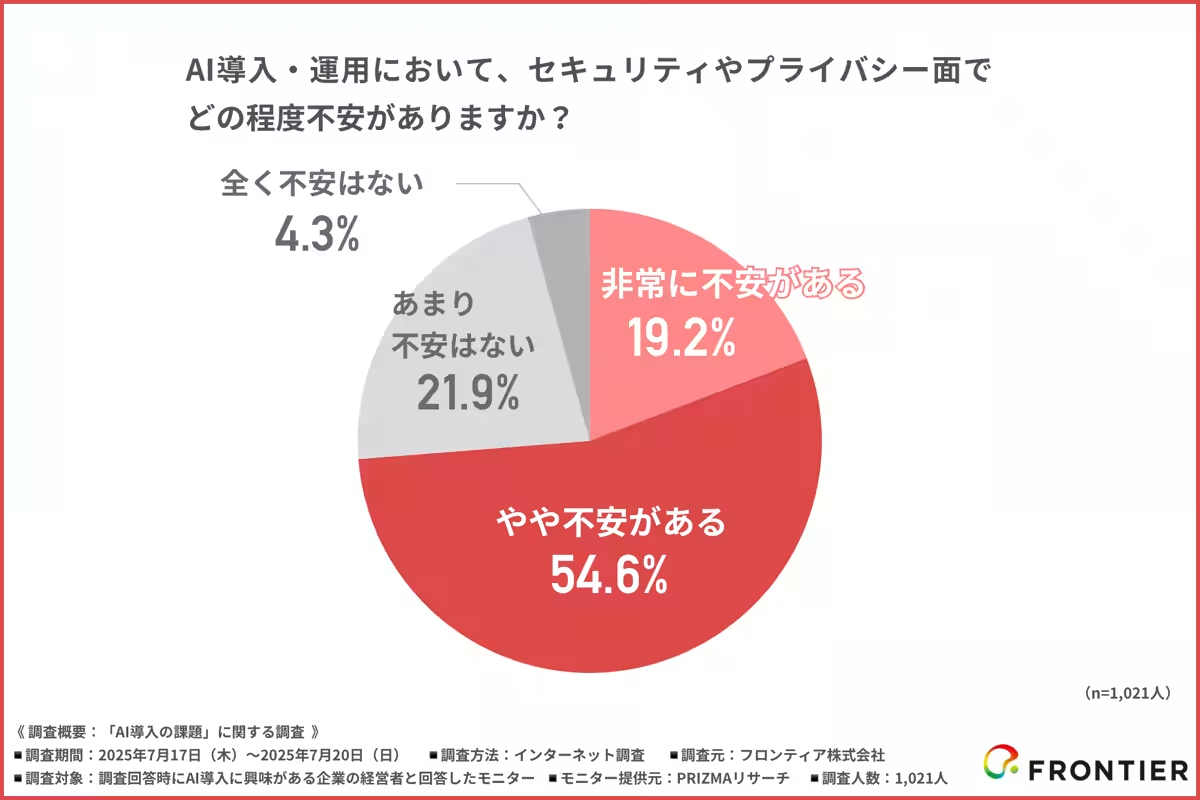
A staggering 73.8% of executives indicated significant concerns regarding security and privacy risks associated with AI adoption. This heightened anxiety primarily stems from the potential for data breaches and the misuse of sensitive information, particularly for businesses handling customer data or proprietary information.
Conclusion
The survey conducted by Frontier Inc. underscores that while interest in AI adoption is palpable, significant challenges persist, particularly concerning budget, clarity in application, and resource sufficiency. For businesses aiming to leverage AI effectively, addressing these barriers is essential to transition from mere interest to substantive impact.
To overcome these challenges, businesses need to refine their objectives for AI, develop a clear roadmap for its implementation, and actively cultivate a skilled workforce to drive these initiatives. As the conversation about AI evolves, so too must the strategies businesses employ to harness its transformative potential.
About Frontier Inc.
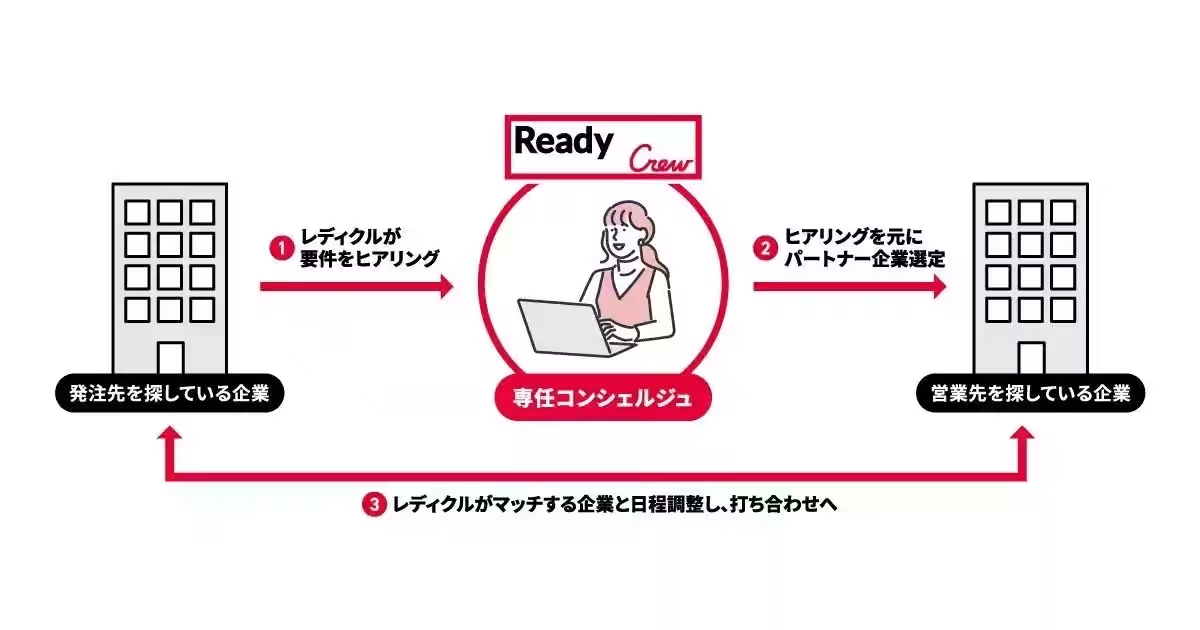
Frontier Inc. is a business matching service provider operating the Ready Crew platform, which connects enterprises with AI solutions and resources. Offering insights into the challenges faced in AI integration, Frontier is positioned to assist companies at all stages of AI implementation.
Topics General Business)
【About Using Articles】
You can freely use the title and article content by linking to the page where the article is posted.
※ Images cannot be used.
【About Links】
Links are free to use.