




Transforming Pain into Joy: VR Rehab Developed for Pediatric Cancer with Okayama University
Transforming Rehabilitation for Pediatric Cancer Patients
In an innovative partnership, the Nippon Electronic College and Okayama University have developed a groundbreaking virtual reality (VR) rehabilitation program tailored for pediatric cancer patients. This collaborative effort aims to address the physical and psychological challenges faced by children undergoing prolonged hospital stays due to cancer treatment, notably muscle weakness and emotional stress.
The VR program offers two engaging types of content that combine entertainment and rehabilitation, thereby motivating young patients to continue their physical therapy journeys. The initiative is strategically designed to reduce the burdens associated with traditional rehabilitation, helping kids reclaim their vitality while having fun.
The Development Team
A cross-disciplinary team of students from various departments has made this project a reality. Participants include students from game design, animation, computer graphics, and electronic engineering programs at Nippon Electronic College. By merging the college’s expertise in gaming technology with demanding clinical requirements presented by Okayama University, they focused on creating a ‘fun and continuous rehabilitation’ experience for patients.
The VR Content: A Closer Look
The rehabilitation program consists of two primary content offerings, each designed to cater to specific rehabilitation needs:
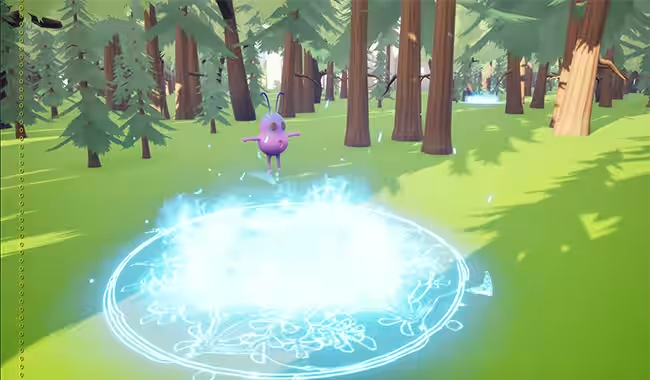
1. Magician Content (Upper Limb Training)
This VR setup enables users to cast spells by performing arm movements, enhancing upper limb motion. Utilizing motion sensors, it captures the users' actions accurately, presenting a game-like interface with elements such as score displays and thematic performances that keep users engaged.
2. Bicycle Content (Lower Limb and Endurance Training)
This interactive experience is paired with a stationary bicycle ergometer, allowing patients to cycle through beautifully rendered virtual environments. The incorporation of varying landscapes and speed indicators enriches the immersive feel, encouraging users to challenge themselves during their rehabilitation sessions.
Both content types are engineered to adjust the intensity and responsiveness of the exercises according to each patient's condition, allowing for a tailored rehabilitation experience. Furthermore, the training data can be visualized, ensuring a secure and efficient rehabilitation process.
Aiming for Social Impact
The overarching goal of this project is to utilize the power of gaming to resolve societal challenges, thus transcending mere entertainment to create 'useful games.' This collaborative research project has fostered a unique opportunity for students and faculty to realize a prototype guided by actual medical needs, paving the way for future developments in healthcare applications of VR technology.
In their pursuit of advancing social value through technology and creativity, Nippon Electronic College is committed to creating experiences that engender smiles and joy for all, highlighting their dedication to community-driven initiatives.
Upcoming Showcase
Mark your calendars: these innovative VR rehabilitation tools will be showcased at the Tokyo Game Show 2025 in the newly established “All Accessibility Corner,” aimed at presenting games that everyone can enjoy, regardless of physical abilities. This event promises to be an exciting platform to unveil a transformative approach to rehabilitation, by blending joy with the healing process for pediatric cancer patients.
About Nippon Electronic College
- - Institution: Nippon Electronic College
- - Location: 1-25-4 Hyakunincho, Shinjuku-ku, Tokyo
- - Established: 1951
- - Programs: Game Design, CG & Animation, AI, Network Security, among others.
About Okayama University
- - Institution: Okayama University
- - Location: Tsushima-naka 1-1-1, Kita-ku, Okayama
- - Established: 1870
- - Programs: Extensive offering including Medicine, Engineering, and Global Programs.


Topics Health)
【About Using Articles】
You can freely use the title and article content by linking to the page where the article is posted.
※ Images cannot be used.
【About Links】
Links are free to use.