



Exploring the Resurgence of Hands-On Hobbies for Adults in the AI Age
Exploring the Resurgence of Hands-On Hobbies for Adults in the AI Age
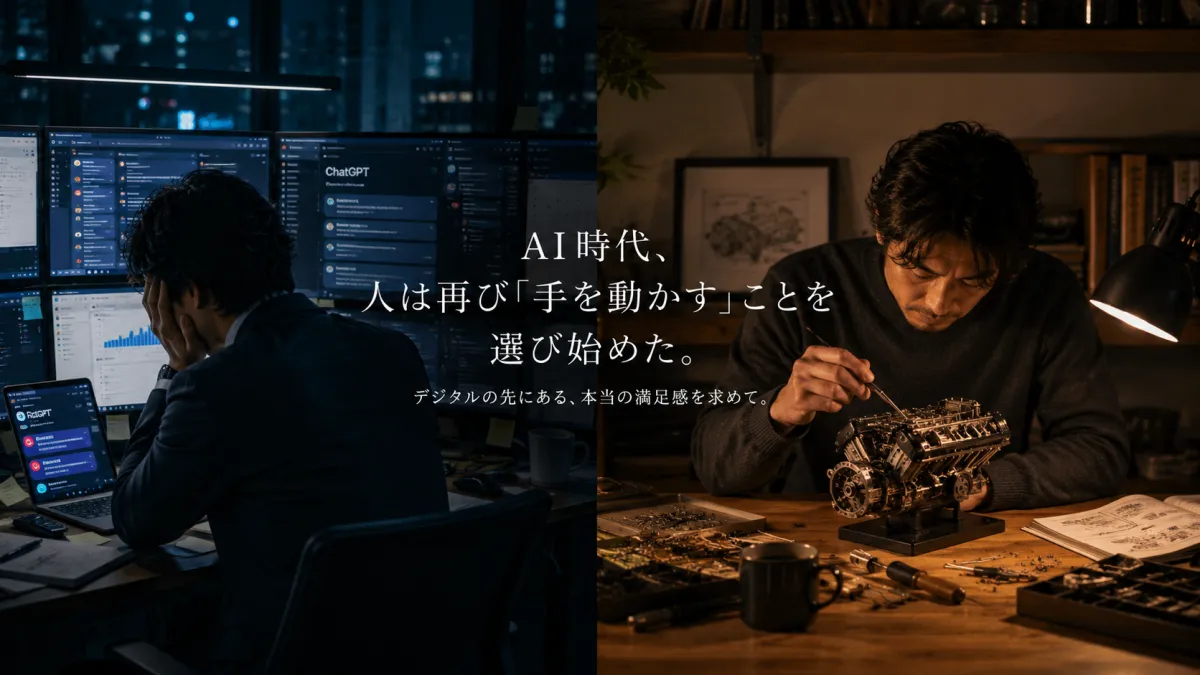
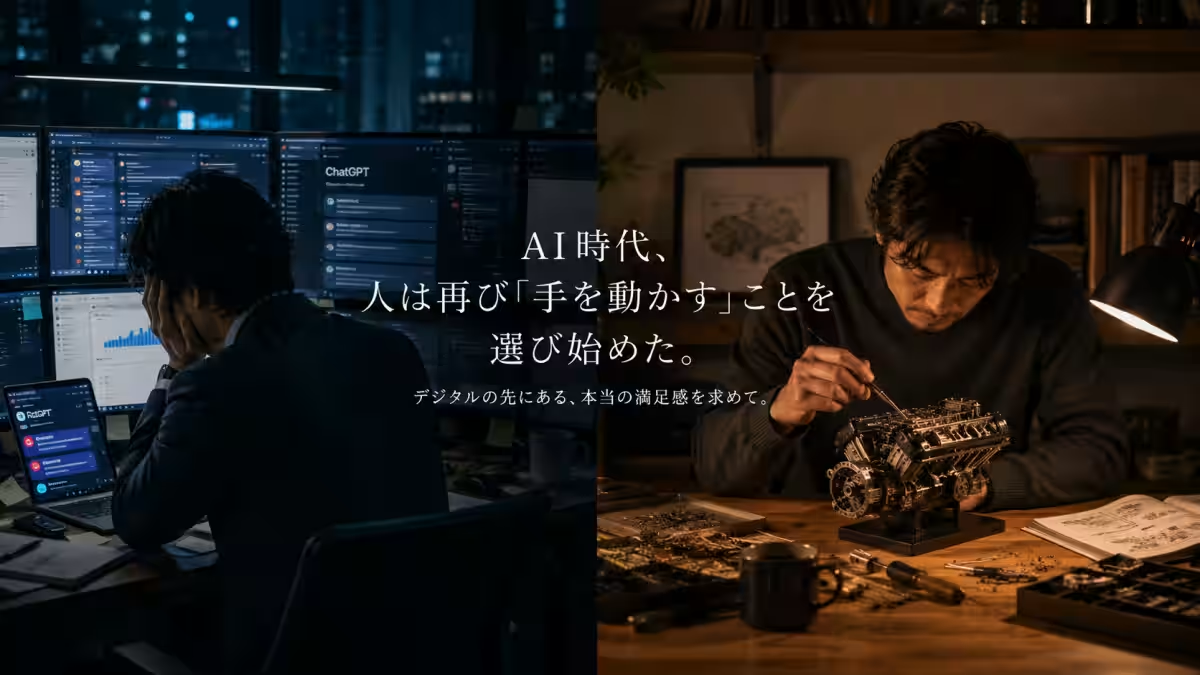
In recent years, we have witnessed a remarkable transformation in our daily lives and work styles brought on by the rapid advancement of generative AI like ChatGPT, Gemini, and Claude. What was once considered solely the domain of human thought and creative expression has now been turned into mere prompts that yield instant results—whether it’s text generation, programming, or producing beautiful images. While we have benefitted from such technological advancements, there seems to be an emerging sense of dissatisfaction among us.
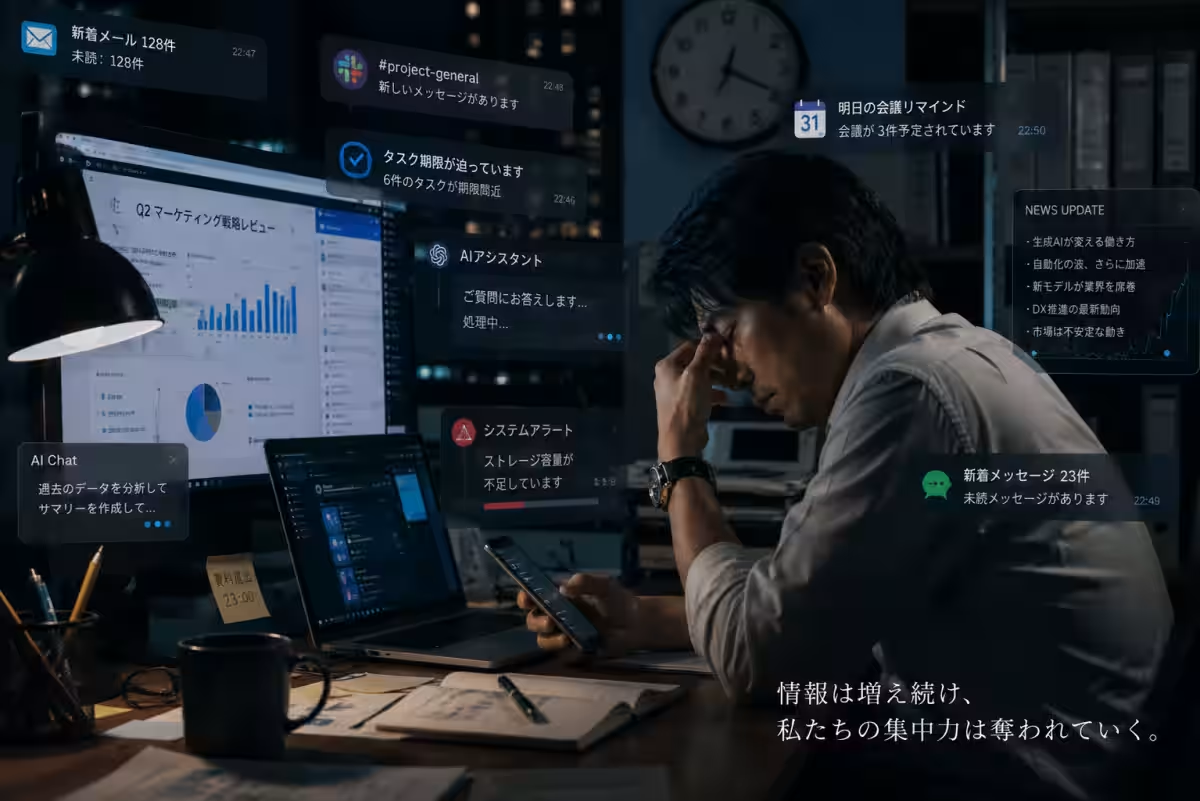
Our screens, whether they are computer monitors during work or smartphones in our leisure time, have become our primary focus from the moment we wake up to the moment we sleep. Even our hobbies often involve binge-watching content on streaming platforms or scrolling through social media, leading us to spend most of our time in a digital world that is efficient, information-saturated, and comfortable. However, at the end of the day, this modern lifestyle leaves us with a peculiar sense of emptiness, feeling as if our minds and bodies have been somewhat neglected.
In the heart of a digitized and optimized society, we see an increasing number of adults choosing to engage in hobbies that involve moving their hands and creating tangible, physical objects. In an era where AI can handle everything for us, why would humans deliberately invest the time and effort in analog crafting? This article aims to unravel the essence of the ‘real experiences’ that contemporary individuals unconsciously crave, exploring the interconnections between technology and human cognitive mechanisms.
Digital Fatigue: The Ills of Our Screen-Dominated Lives
As digital dependence has worsened, the phenomenon of 'screen fatigue' has emerged as a critical issue in modern society. Today, we are inundated with excessive information, constantly bombarded by business chat notifications and trends on social media. This overwhelming influx drains our cognitive resources and leads to chronic digital fatigue.
Information gleaned from screens is nothing but a series of binary signals—mere symbols devoid of physical weight, texture, or aroma. While accessing a wide array of content with just a flick of our fingers is convenient, it also means that our experiences are often insipid and devoid of substantial value. In cognitive science, it has been noted that prolonged processing of information lacking sensory engagement can deplete certain areas of the brain, resulting in decreased attention and emotional instability. Ironically, tools designed to enhance productivity become contributors to our mental fatigue.
In light of this reality, the importance of taking a break from digital devices—what we call 'digital detox'—has been emphasized. However, merely switching off our devices does not allow us to completely escape the residue of incoming information. What we truly need in those idle moments, away from our smartphones, is an engaging, physical object that mobilizes our senses.
Why 'Time Spent Creating' is Valuable in Today's World
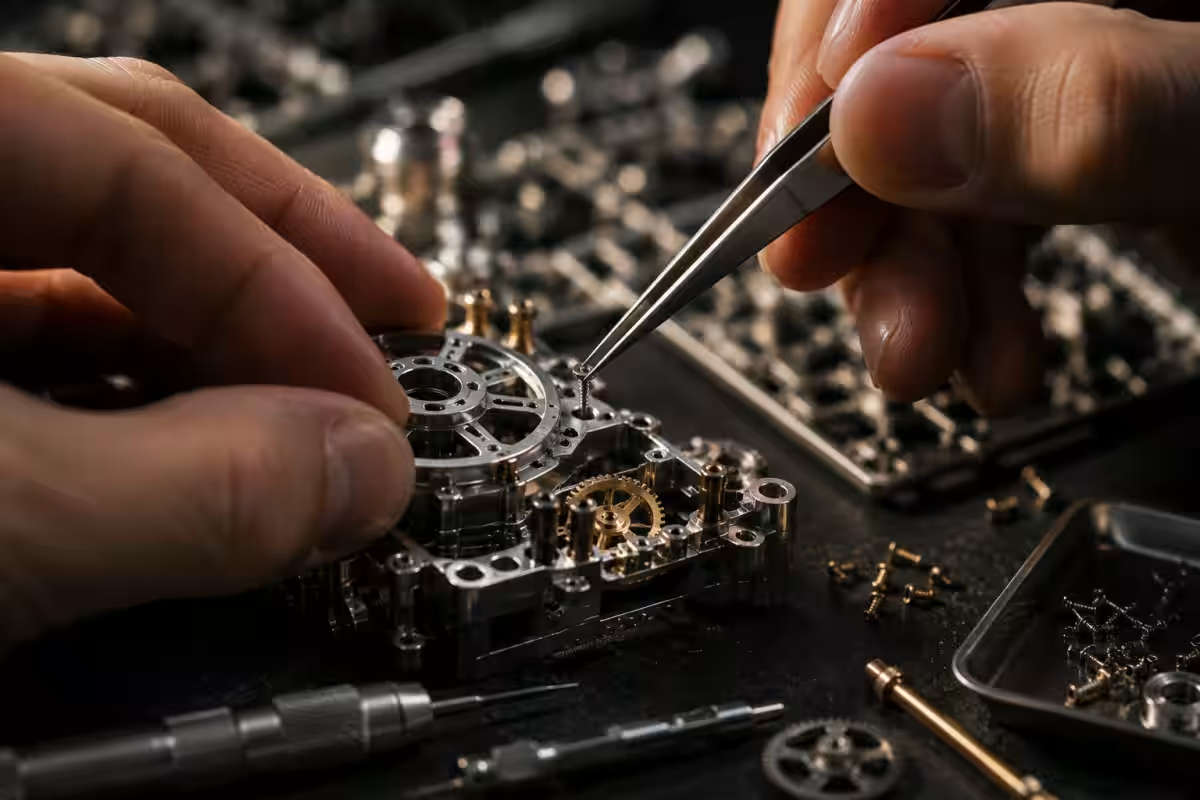
Why has the act of crafting become increasingly valued as an effective means of digital detox? The answer lies in the intricate relationship between the human brain and body. When people engage in hand-on tasks, they exhibit distinct brain activation patterns unlike those elicited by gazing at digital screens. Particularly, processes that involve assembling fine components or making precise adjustments are likely to trigger what is known in psychology as the ‘flow state.’ This mental state describes the experience of being so immersed in an activity that one loses track of time. During this state, excessive mental chatter and anxieties about the future or regrets about the past—characterized by the overactivity of the ‘Default Mode Network’—are suppressed, providing a form of mindfulness.
Furthermore, creating something requires full engagement of all five senses:
- - Vision: Identifying the subtle shine of metals or the precision with which parts fit.
- - Touch: Feeling the coolness and hardness of materials or the resistance of tools.
- - Hearing: Noticing the clicks of parts fitting together or the friction noise of tightening screws.
According to the psychological theory of ‘optimal experience,' engaging in tasks with diverse sensory feedback and solving problems with our hands delivers a sense of deep fulfillment and boosts self-esteem.
AI provides answers instantly, devoid of the trial-and-error process. Conversely, in hobbies where individuals handle materials and assemble items, completion only comes after overcoming obstacles. The moderate challenges faced, and the subsequent release of dopamine upon overcoming them, serve as the true source of the substantial sense of accomplishment that modern individuals long for.
A Global Revival: DIY and Craft Hobbies
The return to crafting is not limited to Japan; it represents a broader global trend. In Western countries, the DIY market and craft culture, which expanded during the COVID-19 pandemic, have taken root rather than fading after a temporary boom. Particularly notable is the increasing enthusiasm among higher-income adults for domains once perceived as mere children's play, such as modeling and hobbies. In the United States and Europe, intricately designed mechanical models and wooden or metal 3D puzzles are establishing themselves as



Topics Consumer Products & Retail)
【About Using Articles】
You can freely use the title and article content by linking to the page where the article is posted.
※ Images cannot be used.
【About Links】
Links are free to use.