




New Insights into Decreased Neurogenesis in Alzheimer's Disease Linked to BMP Signaling
New Insights into Alzheimer's Disease Mechanisms
Alzheimer's disease has long been associated with cognitive decline, particularly affecting memory and social functioning. The phenomenon of adult neurogenesis, where new neurons are formed in the brain, distinctly diminishes with aging, and even more so in individuals suffering from Alzheimer's. Researchers from Waseda University, led by Professor Toshio Ohshima, have shed light on the connection between increased Bone Morphogenetic Protein (BMP) signaling and decreased neurogenesis specifically in female Alzheimer's model mice, which could explain gender disparities in disease prevalence.
Study Overview
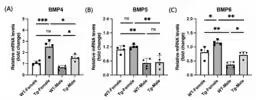
The study conducted utilized APPNL-G-F mice, which are genetically modified to develop Alzheimer’s disease-type amyloid pathology by incorporating human mutations. The primary focus was on the hippocampus, a brain region crucial for memory. Professor Ohshima's team discovered that female APPNL-G-F mice exhibited significantly higher expression of BMP-related genes compared to their male counterparts, suggesting a gender-based disparity in neurogenesis linked to BMP signaling.
Key Findings
1. BMP Signals and Gender: It was noted that the expression of BMP4, 5, and 6 genes within the hippocampus was notably higher in female APPNL-G-F mice than in wild-type mice. This increase in BMP signaling was correlated with the inhibition of neurogenesis, essential for memory formation.
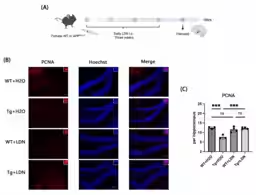
2. Neurogenesis Restoration: When BMP signaling was inhibited using specific inhibitors in female mice, the process of neurogenesis showed improvements. This suggests that targeting BMP signaling could be a potential strategy for enhancing neurogenesis in Alzheimer's.
3. Role of Estrogen: Further investigations revealed that estrogen, a female hormone, significantly enhances the expression of BMP-related genes in cell culture experiments. This suggests that estrogen might play a critical role in modulating neurogenesis through BMP signaling.
Implications for Alzheimer's Research
The implications of this study are profound as they connect biological mechanisms to gender differences in Alzheimer's disease. Understanding why women are disproportionately affected by Alzheimer's could lead to targeted therapies to bolster neurogenesis in at-risk populations. The research highlights the necessity of looking deeper into how gender-related physiological differences can influence disease states.
Future Directions
This research opens the door to significant inquiries that could enhance therapeutic approaches to Alzheimer's disease. Further studies should focus on understanding the cognitive effects of BMP inhibitors and how these interventions could ameliorate memory loss in Alzheimer's patients. Researchers also emphasize the importance of exploring the efficacy of such treatments in human clinical trials, given that the APPNL-G-F mice can closely mimic human Alzheimer’s pathology.
Conclusion
As the global population ages and the prevalence of Alzheimer’s disease continues to rise, understanding the mechanisms underlying cognitive decline is crucial. This research presents new avenues for both male and female Alzheimer's treatment approaches, situating itself as a critical piece in the ongoing battle against dementia. With continued research efforts, we may find viable interventions that cater specifically to the needs of diverse patient groups.
This study was published in the journal "Biology of Sex Differences" on December 12, 2025, providing an essential contribution to the understanding of Alzheimer’s disease, particularly concerning gender differences. Researchers are optimistic that their findings will inspire further investigations, ultimately leading to improved outcomes for individuals affected by this challenging condition.

Topics Health)
【About Using Articles】
You can freely use the title and article content by linking to the page where the article is posted.
※ Images cannot be used.
【About Links】
Links are free to use.