



New Glycan Marker Development Enhances iPS Cell Quality Control for Regenerative Medicine
Introduction
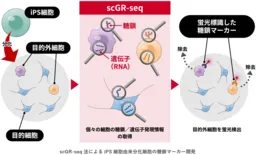
In the realm of regenerative medicine, iPS cells (induced pluripotent stem cells) are acknowledged for their exceptional ability to differentiate into various cell types. However, when these cells differentiate into target lineages, they can inadvertently produce off-target cells, which may not only compromise treatment efficacy but also pose safety risks. To address this pressing issue, researchers from the National Institute of Advanced Industrial Science and Technology (AIST) have developed a novel method for identifying off-target cells in neuron populations derived from iPS cells by utilizing a glycan marker.
The Research Team and Methodology
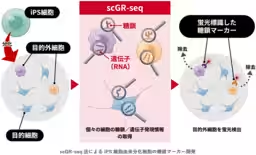
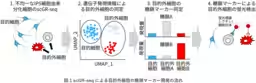
Led by Dr. Haruki Odaka and Dr. Hiroaki Tateno, the team employed the advanced technique known as single-cell glycan and RNA sequencing (scGR-seq). This innovative approach allows simultaneous analysis of glycan expression and gene expression information at the single-cell level. In a recent study, they performed detailed analyses of the glycan profiles and gene expression data from neuron populations differentiated from iPS cells, revealing significant diversity among these cells and identifying characteristics of highly expressed glycan antigens.
Findings
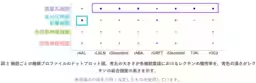
The research successfully identified glycan markers that can label off-target cells within the neuron population. Previously, the challenge lay in finding universal markers to distinguish these unintended cells, as the types of off-target cells can vary depending on the lineage of interest and the differentiation method employed. The scGR-seq technique enabled a comprehensive characterization of the neuron population and highlighted distinct glycan signatures between different cell subpopulations.
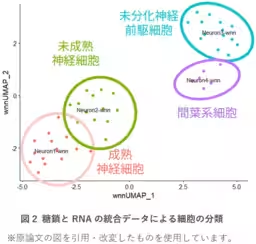
Through rigorous statistical analysis, including Uniform Manifold Approximation and Projection (UMAP), the study categorized the cell population into four distinct subgroups: mature neurons, immature neurons, undifferentiated neural progenitor cells, and mesenchymal cells. This classification was based on gene expression profiles and glycan binding assays using specific lectins that interact with these surface sugars.
Application in Regenerative Medicine
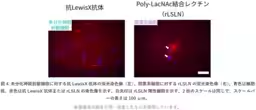
The identification of specific glycan markers is crucial. For instance, the study showed that undifferentiated neural progenitor cells exhibited high reactivity with certain lectins that bind to fucosylated glycans. In contrast, mesenchymal cells showed a stronger interaction with other glycan structures, indicating the presence of Poly-LacNAc. These findings present a pathway to isolate and eliminate off-target cells effectively through flow cytometry and other advanced detection strategies.
This development is expected to contribute significantly to the quality control of iPS cell-derived products and enhances the safety and efficacy of regenerative therapies. Proper identification and removal of off-target cell types may reduce the risk of tumor formation and other complications associated with unregulated cell growth.
Future Prospects
Going forward, the researchers plan to expand the application of this technology beyond neuronal cells to a broader range of cell types utilized in regenerative medicine. Their goal is to refine marker development further, thereby improving the standardization and evaluation methods for cell-based therapies. This will ultimately support the cultivation of high-quality regenerative therapy cells that are not only effective but also safe for patient use.
Conclusion
In summary, the development of glycan markers offers a transformative approach to ensuring the purity and reliability of iPS cell-derived populations. The subsequent publication detailing these findings is set to appear in Stem Cell Reports on September 4, 2025.
For further information on this groundbreaking research, please refer to AIST Press Release.
Topics Health)
【About Using Articles】
You can freely use the title and article content by linking to the page where the article is posted.
※ Images cannot be used.
【About Links】
Links are free to use.