



The Significance of Oxidative Stress Markers in Diagnosing Long COVID Symptoms
The Importance of Oxidative Stress Markers in Long COVID Diagnosis
In a groundbreaking study conducted by Okayama University in collaboration with Yamaguchi University, researchers have made significant strides in understanding the complexities of long COVID, which refers to lingering symptoms experienced by some individuals after recovery from COVID-19. Despite ongoing research, the mechanisms behind long COVID remain largely unexplored, making it challenging for healthcare professionals to assess its presence and severity objectively.
Background on Long COVID
Long COVID is characterized by a range of debilitating symptoms that persist long after the acute phase of COVID-19 has resolved. Patients often report fatigue, cognitive impairment, and other debilitating conditions which are subjective and difficult to quantify. This poses a challenge in both diagnosis and treatment planning. To bridge this gap, there is a pressing need for biomarkers that can provide a clearer picture of the health status of long COVID patients.
Researchers, led by Assistant Professor Yuki Otsuka and Professor Fumio Otsuka at Okayama University, aimed to identify objective indicators that could help in the diagnosis and evaluation of long COVID. They focused on oxidative stress markers present in the blood, which are indicators of oxidative stress levels and antioxidant capacity in the body.
Research Methodology
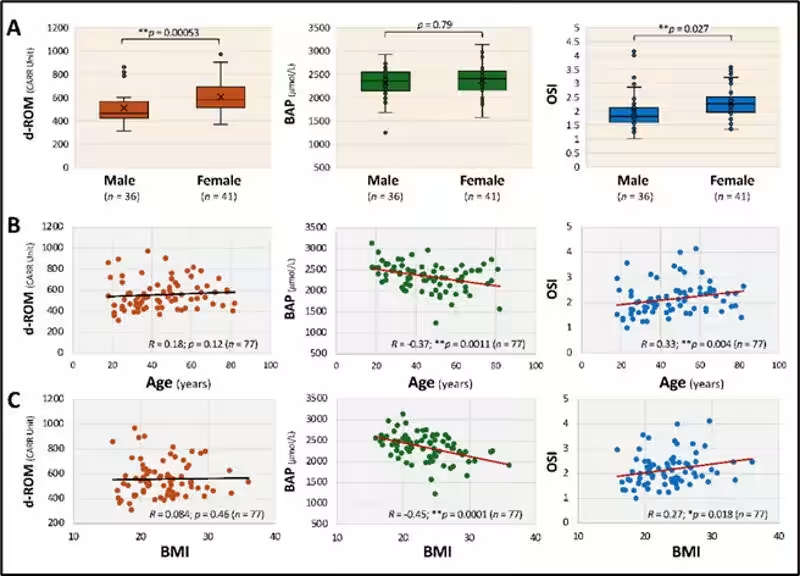
The study involved 77 patients affected by the Omicron variant of COVID-19 who visited Okayama University's postoperative care clinic between May to November 2024. Among these, 41 were female and 36 were male, with a median age of 44 years. The researchers measured several oxidative stress markers in the serum, including d-ROMs (an indicator of oxidative stress intensity), BAP (a measure of antioxidant power), and OSI (which indicates the balance between oxidative stress and antioxidant capacity).
The findings uncovered that long COVID patients exhibited significantly elevated levels of oxidative stress compared to healthy individuals, paired with a reduced antioxidant capacity. Notably, the results indicated that female patients had a greater level of oxidative stress than their male counterparts, with correlations observed between oxidative stress and factors such as age, body mass index (BMI), and inflammation markers.
Implications of the Findings
One of the standout results of the study highlighted the utility of oxidative stress markers in evaluating specific cognitive symptoms associated with long COVID, particularly in patients experiencing “brain fog.” This cognitive impairment is characterized by difficulties in concentration and memory, suggesting that measuring oxidative stress levels could serve as a valuable diagnostic tool for this particular symptom.
The study also explored potential links between oxidative stress markers and various hormones, such as thyroid hormones and corticosteroids, providing new insights into the underlying pathology associated with long COVID.
The research findings were recently published in the international journal Antioxidants, and they pave the way for future studies aimed at establishing these markers as formal diagnostic tools, with the hope of supporting clinicians in managing long COVID more effectively.
Researchers' Perspectives
Professor Fumio Otsuka emphasized the significance of their findings in addressing the subjective nature of long COVID symptoms, which can complicate diagnosis and management. The identification of oxidative stress measurement opens the door to more objective assessment methods.
Assistant Professor Yuki Otsuka expressed his commitment to developing further diagnostic tools that could help visualize the often invisible symptoms associated with long COVID, especially fatigue.
According to Dr. Yasue Sakurada, the results bring researchers closer to meeting patients' demands for objective testing methods to confirm long COVID. The researchers aim to continue developing these insights into clinical applications.
Professor Junzo Nojima from Yamaguchi University also highlighted that the detailed analysis of oxidative stress markers has helped in objectively understanding part of the complexities associated with long COVID.
Conclusion
As the study demonstrates, oxidative stress markers represent a promising avenue for advancing the diagnosis of long COVID. With ongoing research, insights from this study may lead to improved care for patients grappling with the challenging aftermath of COVID-19, helping to clarify the connection between oxidative stress and long-lasting symptoms.
For further details on this research, the original publication can be found in Antioxidants, and additional information is available through Okayama University’s resources.







Topics Health)
【About Using Articles】
You can freely use the title and article content by linking to the page where the article is posted.
※ Images cannot be used.
【About Links】
Links are free to use.