



Battery Performance Confirmed Through Recycling of Used Lithium-Ion Cells
Achievement in Lithium-Ion Battery Recycling
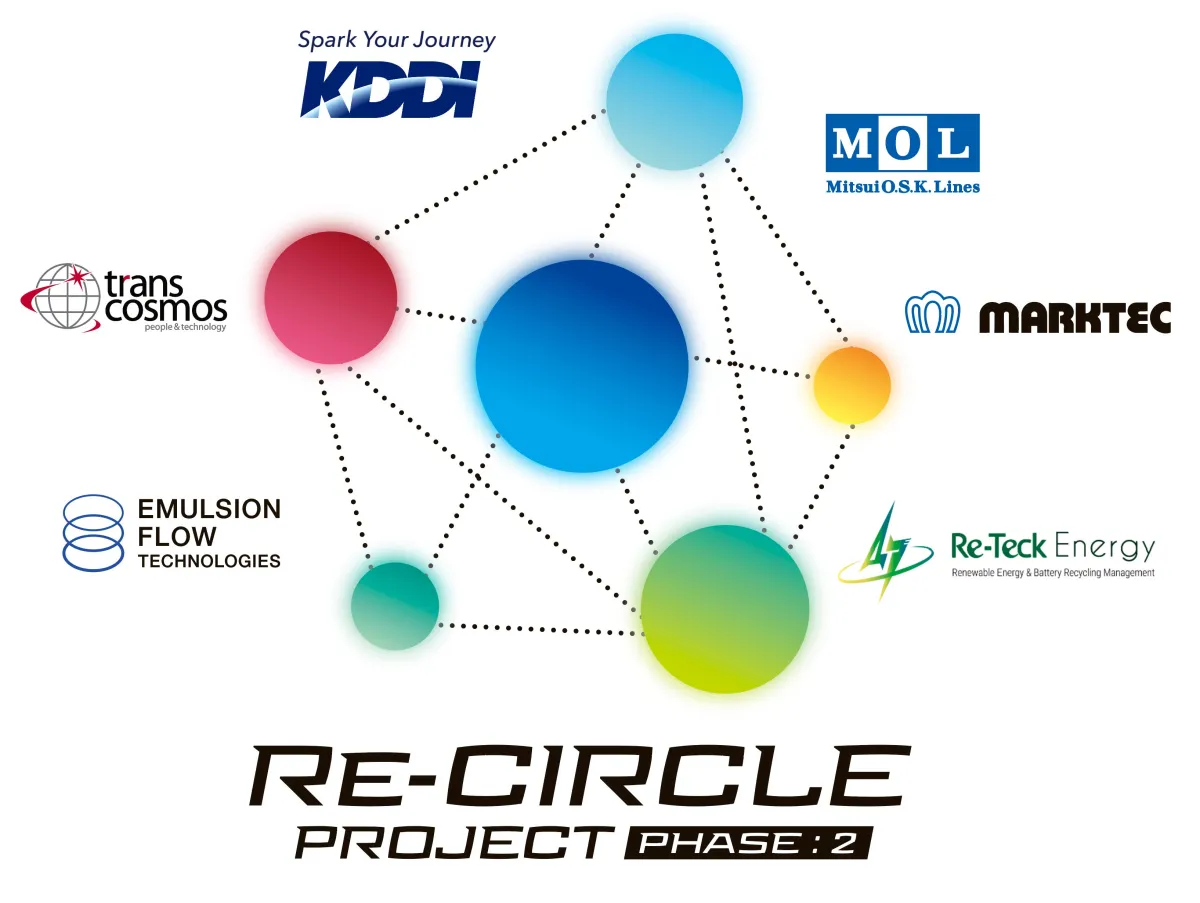
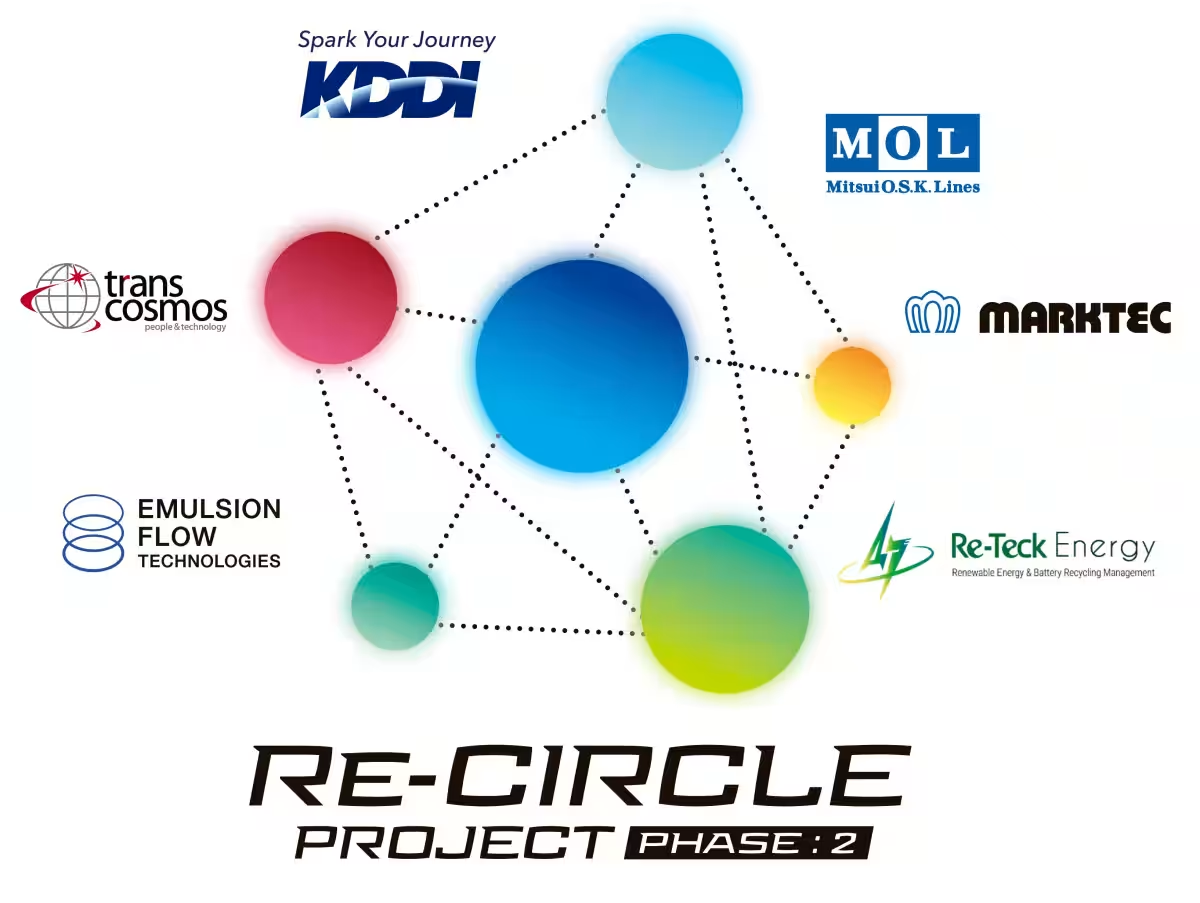
Marktec Corporation, along with KDDI Corporation, ReTech Renewable Energy Solutions, Emulsion Flow Technologies, Mitsui O.S.K. Lines Logistics, and transcosmos, have successfully demonstrated the performance of prototype batteries created from recycled materials derived from used lithium-ion batteries. This innovative approach shows that batteries made from recycled resources can achieve performance levels comparable to those made from newly sourced materials, marking a significant step forward in the implementation of "horizontal recycling."
The Importance of Recycling Used Batteries
With the rapid rise in the popularity of smartphones, electric vehicles (EVs), and IoT devices, the demand for lithium-ion batteries has seen unprecedented growth. These batteries commonly contain rare metals such as lithium, cobalt, and nickel. Thus, ensuring a stable supply while minimizing environmental impact has made resource recycling increasingly vital. Previously, recovering these rare metals from used lithium-ion batteries was both costly and time-consuming, presenting significant challenges for quality assurance in battery material reuse.
The Demonstration Project
The demonstration was executed under a collaborative framework aimed at ensuring all aspects of the recycling supply chain, including resource recovery, regeneration, performance evaluation, transportation, and traceability, were effectively addressed. The six companies involved view used batteries not as "waste" but as "urban resources," aiming to create a sustainable supply chain applicable both domestically and internationally.
Specifically, under the Re-CIRCLE project, the pilot study successfully generated high-purity black mass from used lithium-ion cells as raw materials. Utilizing Emulsion Flow Technology, this black mass allowed for the extraction of rare metals, which were then reused as cathode materials in the prototype batteries. Performance evaluation revealed that these regenerated batteries matched the performance criteria of those made from commercial lithium carbonate.
Key Points of the Demonstration
- - The project confirmed that resources recovered from used lithium-ion batteries can be reused as battery materials.
- - Testing showed that the recycled battery's volume resistance, interface resistance, charging and discharging capacity, and cycling characteristics matched those of batteries made from newly sourced materials.
Roles of Participating Companies
The contributions of each company involved in the Re-CIRCLE project are as follows:
1. KDDI: Establishing a circular resource model by utilizing collection points from used mobile devices.
2. ReTech RES: Generating high-purity black mass through non-roasting, low-impact environmental processes for resource recycling.
3. Emulsion Flow Technologies: Implementing their Emulsion Flow Technology to recover and reintroduce rare metals into the supply chain.
4. Marktec: Conducting material evaluations, quality assessments, and performance verifications needed to employ recycled resources as battery materials.
5. Mitsui O.S.K. Lines Logistics: Testing transport solutions and global supply chain development for regenerated resources.
6. transcosmos: Promoting solutions for establishing a circular economy and resource supply chain using digital transformation strategies.
Future Prospects
Building on the results from this pilot project, these companies aim to enhance the recovery of used lithium-ion batteries, further optimize the quality of battery materials from recycled resources, and work towards commercializing these advanced battery technologies. They will also innovate transportation and traceability systems that comply with both domestic and international regulations. This ongoing commitment establishes a complete flow from battery collection to re-utilization as battery materials, contributing to resource stability, reduced environmental impact, and the realization of a circular society.
For further details, refer to the Re-CIRCLE project leaflet available in PDF format.
1. Black Mass: A dark powder obtained by crushing and separating used lithium-ion batteries, encompassing reusable intermediary material with rare metals.
2. Emulsion Flow Technology: A solvent extraction technique developed by Emulsion Flow Technologies that allows for the cost-effective, high-efficiency, and high-purity recovery of rare metals compared to traditional methods.
3. Rate Characteristics: The battery’s capability to charge and discharge at varying current values, reflecting performance efficiency.
4. Cycle Characteristics: Durability evaluated through repeated charging and discharging cycles to inform battery longevity.
Topics Energy)
【About Using Articles】
You can freely use the title and article content by linking to the page where the article is posted.
※ Images cannot be used.
【About Links】
Links are free to use.