



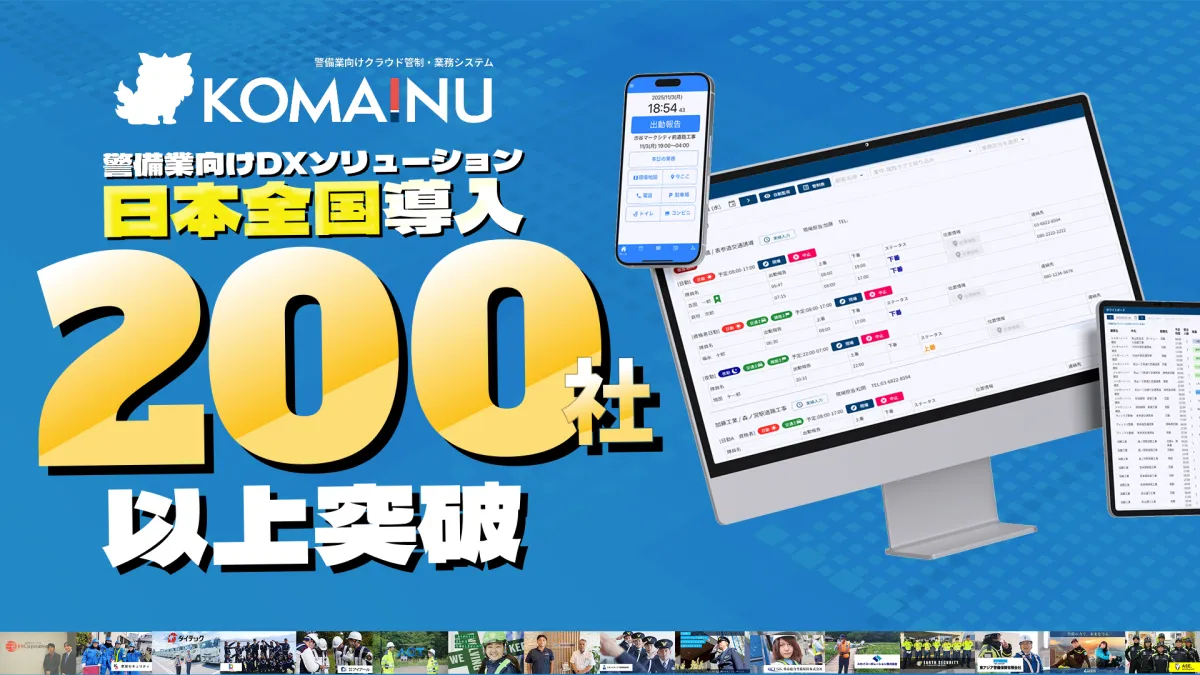
KOMAINU's Revolutionary Impact on Security Industry Management with Over 200 Implementations
The Transformation of Security Management with KOMAINU
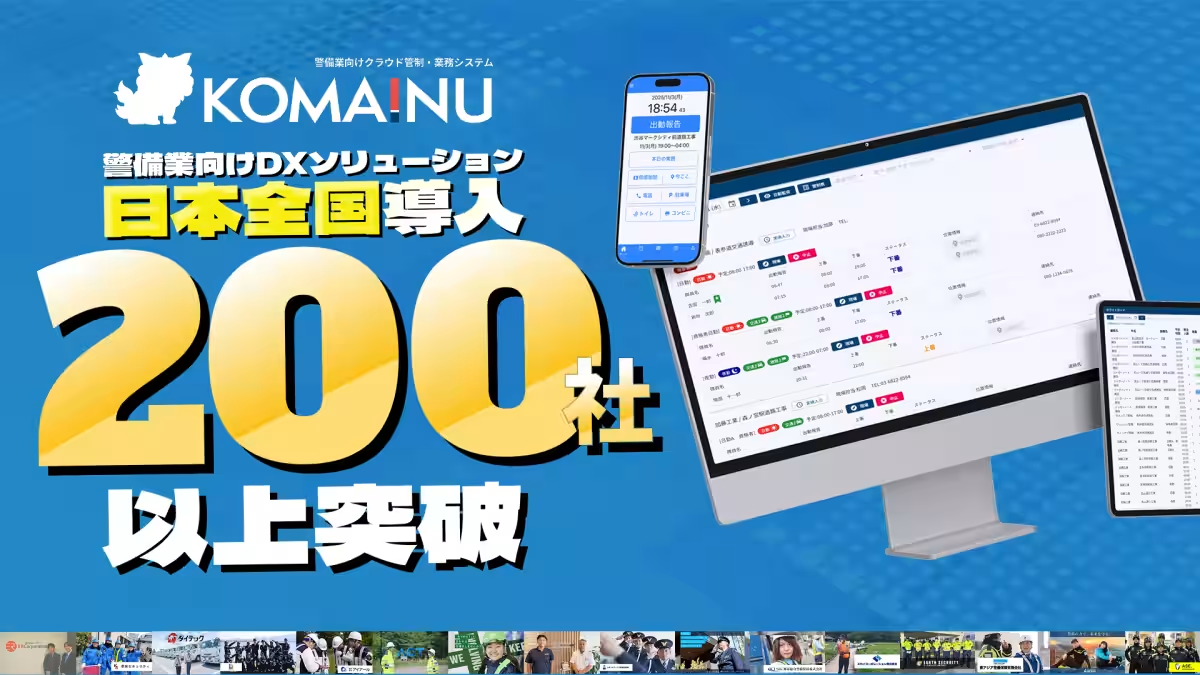
In a significant development for the security industry, the KOMAINU platform by Juggernaut has surpassed the milestone of 200 implementations, marking a pivotal shift in how security companies manage their operations. Established in April 2021, this innovative cloud-based solution streamlines various backend processes, from dispatch operations to payroll management and labor oversight, effectively serving firms of diverse sizes across Japan.
Comprehensive Cloud-Based Solutions
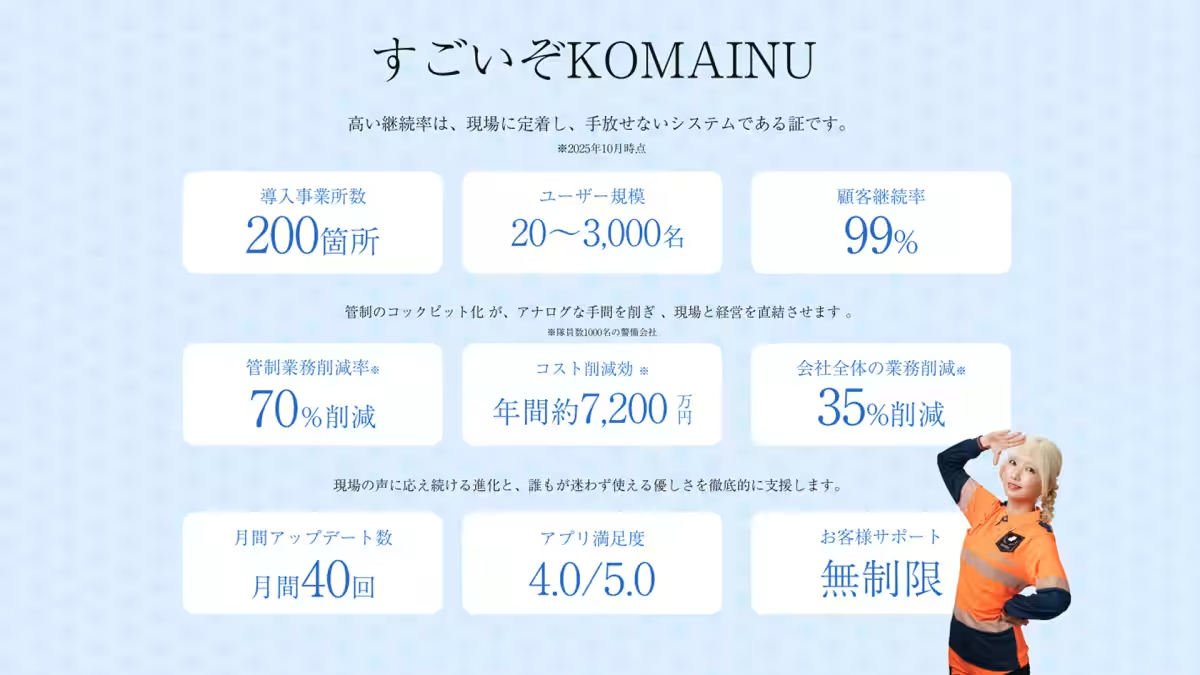
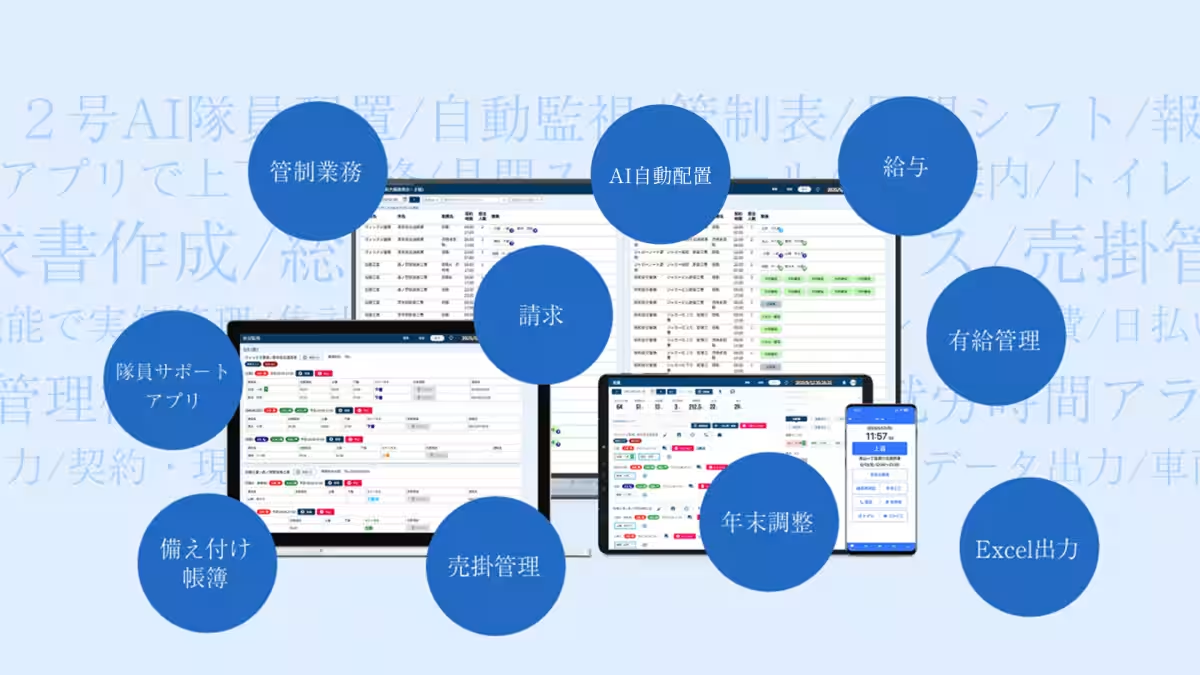
KOMAINU is designed specifically for security firms, addressing their unique challenges by consolidating operations into a single platform. Offering management capabilities for dispatch assignments, officer schedules, report generation, invoicing, payroll calculations, and labor management—all handled in real-time through the cloud. This not only facilitates communication and information sharing among security personnel but also promotes efficiency within the organization. From small-scale operations with fewer than 20 staff to major corporations employing over 3,000, KOMAINU has proven its versatility and reliability across the industry.
Exceptional Customer Retention and Satisfaction
One statistic that stands out is KOMAINU's impressive customer retention rate of 98%, indicating that users find the platform indispensable for daily operations. The platform has been continuously refined to meet the evolving needs of security personnel in the field, creating a robust tool that integrates seamlessly into existing workflows.
Successful Implementation Examples
KOMAINU's impact can be measured through various success stories from its users:
- - In Aichi Prefecture, a company reduced its dispatch operations by 70% and centralized information management for over 500 officers.
- - Another organization reported an 80% decrease in accounting tasks, along with the elimination of overtime in dispatch management for around 300 officers.
- - A distillation of growth is seen in Iwate, where a firm evolved from 50 to 70 personnel with zero in-house administrative staff over two years.
- - These statistics exemplify how KOMAINU helps streamline operations, reduce hours, and ultimately, foster a better working environment.
Insights from Leadership
Tomohito Hirai, CEO of Juggernaut, emphasizes that the fundamental goal of KOMAINU is not just to automate dispatch operations but also to connect effectively with other back-office tasks like accounting. The aim is to ensure that small to medium-sized security companies can optimize their workflow and improve their operational environment, leading to higher employee retention rates and increased revenue. Since its inception, Hirai has personally engaged with users across various sectors, continually integrating feedback into the platform's development, ensuring it evolves in line with industry needs.
Future Prospects and Innovations
Looking ahead, Juggernaut plans to introduce several new features based on direct feedback from its users. These include the digitalization of order placements, automatic payroll calculations for night shifts, and a management dashboard providing greater visibility into gross profits. The company also aims to enhance recruitment and retention strategies through features like advance salary payments. By continually listening to feedback, KOMAINU intends to fully encapsulate all back-office needs within a single, efficient tool.
Conclusion
KOMAINU does not just represent a database; it embodies a revolutionary approach to securing and optimizing the operational backend of security firms. By enhancing functionalities and being receptive to user input, Juggernaut is firmly establishing KOMAINU as an essential tool in the security industry, paving the way for future advancements and robust operational frameworks. As more companies adopt this innovative platform, the potential for a more efficient and sustainable security industry continues to expand, ensuring that security firms not only survive but thrive in an increasingly competitive landscape.


Topics Consumer Products & Retail)







【About Using Articles】
You can freely use the title and article content by linking to the page where the article is posted.
※ Images cannot be used.
【About Links】
Links are free to use.