



Daikin, Shin-Etsu, Hitachi, and Tokyo Eco-Recycling Initiate Rare Earth Magnet Recycling in Japan
Collaboration for Rare Earth Magnet Recycling
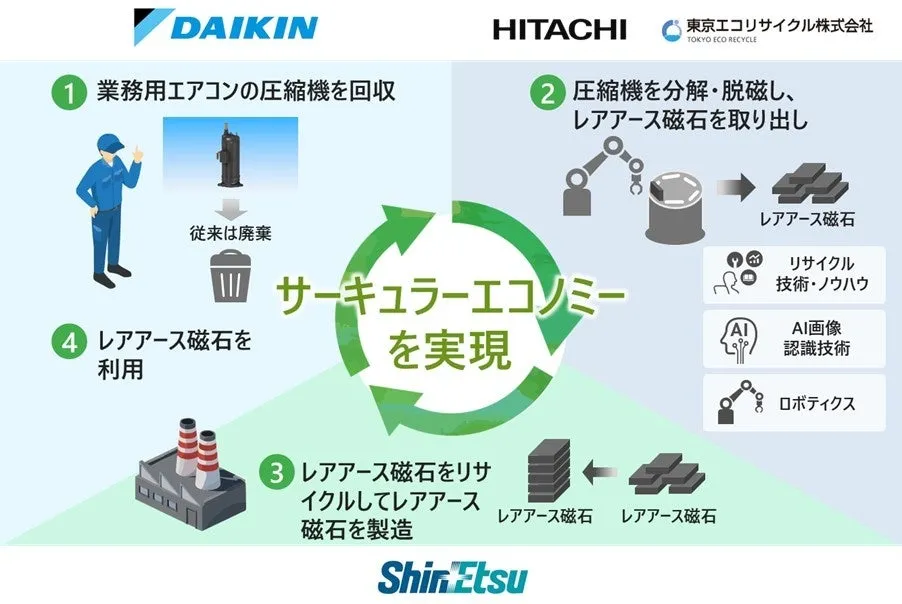
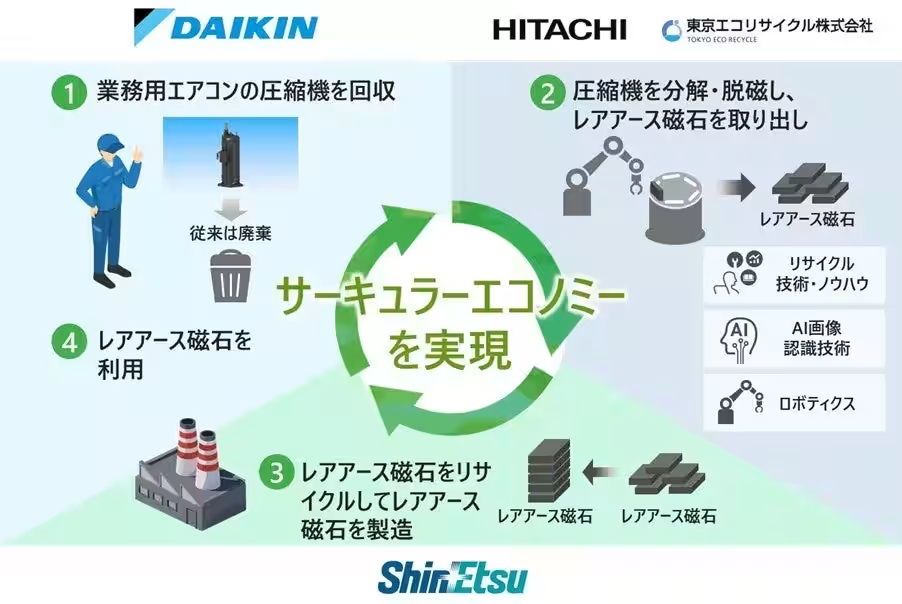
In an innovative partnership, Daikin Industries, Shin-Etsu Chemical, Hitachi, and Tokyo Eco-Recycling have launched a pioneering initiative in Japan aimed at creating a recycling scheme for rare earth magnets found in commercial air conditioning compressors. This project marks the first time in Japan that a systematic approach will be taken to recover and recycle these vital rare earth components, which are essential for the functioning of many modern technologies.
The participating companies are committed to integrating advanced technologies such as AI image recognition and robotics for the automation and efficiency of the decommissioning process. This not only enhances the retrieval of rare earth magnets but also streamlines the entire operation of collecting, dismantling, and evaluating the quality of the recovered materials. The systematic approach ensures traceability and optimization throughout the process, which is critical for effective resource management.
The overall vision of this collaboration is to launch a fully operational recycling scheme by 2027, with development and testing of automation equipment to be completed by 2026. Under this plan, Daikin will collect compressors from their industrial air conditioners, which will then be dismantled and demagnetized by Tokyo Eco-Recycling. The project leverages Daikin's technical information to optimize the dismantling process and incorporate environmentally friendly technologies to minimize carbon emissions.
The rare earth magnets recovered will be reprocessed into new materials by Shin-Etsu Chemical, thereby contributing to a circular economy that significantly reduces environmental burdens throughout the supply chain. This initiative is not only a step towards sustainability but also a contribution to the broader goals of Green Transformation (GX) in the manufacturing sector.
Circular Economy Efforts by Participating Companies
Each of the four partner companies has its own initiatives regarding the circular economy, further emphasizing their commitment.
1. Daikin Industries: Daikin has made the realization of a circular economy a key priority. They focus on the collection and regeneration of refrigerants as a top priority, while also working on the miniaturization of products, extending their lifespan, and reducing the use of materials from the design stage. The company aims to mitigate environmental impact across the entire product lifecycle and foster a circular society.
2. Shin-Etsu Chemical: Recognizing the significance of circular economy practices, Shin-Etsu aims to enhance its competitiveness by effectively utilizing resources and embracing modern technology to reclaim materials from used products. This collaboration not only aims to minimize waste but also contributes to environmental conservation.
3. Hitachi: Through its Connected Industries (CI) sector, Hitachi brings extensive recycling expertise and a wide range of industry solutions that focus on creating innovative circular economy practices. The company's strategic plan, “Inspire 2027,” integrates digital technologies to enhance resource recycling and contribute to maintaining a sustainable environment.
4. Tokyo Eco-Recycling: This company views discarded products as valuable resources. By facilitating their efficient recovery and reuse, they aim to build a sustainable circular society and contribute towards a carbon-neutral future.
Background of the Initiative
Japan's formalization of recycling practices for consumer electronics through the Home Appliance Recycling Law in 2001 has laid the groundwork for such initiatives in the industrial sector. However, specialized legislation for recycling industrial equipment has yet to develop, creating a critical gap that needs addressing. In line with global movements towards more robust recycling frameworks and Japan's own
Topics Other)
【About Using Articles】
You can freely use the title and article content by linking to the page where the article is posted.
※ Images cannot be used.
【About Links】
Links are free to use.