




Insights from the FIFA World Cup 2026: Japanese Players and Coaches Performance Analyzed
Insights from the FIFA World Cup 2026
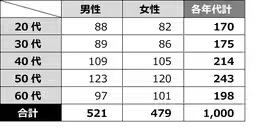
In the aftermath of the FIFA World Cup 2026 held in North and Central America, a comprehensive survey was conducted by the Sports Management Research Institute of Sanno University. This study aimed to assess public perceptions regarding the performance of Japan's national football team, key players, and their coach, Hajime Moriyasu, following an initial survey conducted before the tournament. A total of 1,000 respondents participated in this follow-up study.
1. Player Recognition and Performance Satisfaction
The survey started by asking respondents to list players they recognized from the Japan national team, determining a recognition rate for all 26 players. By comparing recognition rates before and after the tournament, a notable increase in awareness was quantified numerically. Furthermore, participants were asked to select players they felt had performed well, allowing for an evaluation of performance satisfaction rates for each player.
Top 5 Rising Stars in Recognition
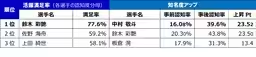
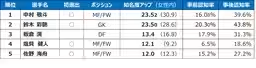
The top player with the highest recognition post-tournament was Kaito Nakamura, who scored Japan's first goal against the Netherlands. Notably, his recognition soared especially among female respondents, showcasing a remarkable increase from 9.0% pre-tournament to 39.9% post-tournament. Following closely behind was Ayaka Suzuki, who also achieved impressive rankings in terms of performance satisfaction.
Newcomers to the national team, such as Kento Shiogai and Kaishu Sano, significantly benefitted from the exposure gained during the tournament. Their performances largely overshadowed expectations, with Shiogai attracting attention for his motivational statements before the match against Brazil. Additionally, Ko Itakura, who recently took over as captain, also marked a notable increase in recognition due to public interest linked to his marital news.
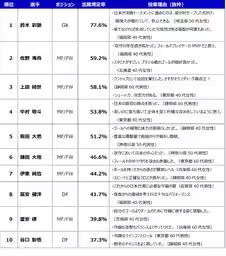
Top 10 Performance Satisfaction Rates
Among the players, Ayaka Suzuki, the goalkeeping standout, claimed the top spot in overall satisfaction rates, followed by Sano with his dynamic stamina and impressive goal against Brazil. Other notable mentions such as Daizen Maeda and Junya Ito also impacted viewers positively with their goal-scoring contributions. Defenders like Takehiro Tomiyasu made their mark through significant defensive plays, garnering recognition for their contributions during the tournament.
2. Viewership and Satisfaction Rates
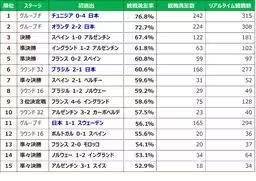
The study evaluated viewership through a survey on all 104 matches, focusing on how many were watched in real-time, regardless of viewing duration. The resulting statistics provided insights into real-time viewing rates across various matches.
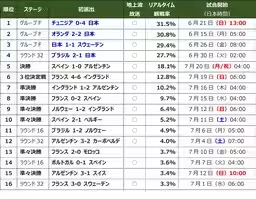
Best Real-Time Viewing Rates
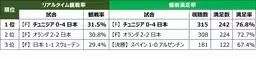
Notably, the matches featuring Japan drew the highest viewing rates, especially the game against Tunisia, which was aired at convenient times for viewers. This resulted in impressive figures given the complexities of scheduling due to match times falling in early mornings or late nights. The tournament saw the top four FIFA-ranked teams advance seamlessly to the semifinals, culminating in a final match between the leading teams, which further fueled viewer interest.
Matches with Over 50% Satisfaction Rates
The analysis showed satisfaction levels above 50% during significant matches, indicating a strong positive reception, particularly for Japan's victory against Tunisia. The excitement surrounding Japan's competitive spirit resonated well with viewers, leading to enhanced satisfaction ratings despite the national team's overall elimination.
3. Evaluating Coach Hajime Moriyasu's Tenure
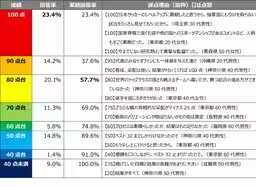
Hajime Moriyasu's impact as the head coach over the past eight years also underwent scrutiny, with respondents asked to rate his performance out of a total of 100 points. The average score was a commendable 72.9, with fluctuations noted in individual ratings. Overall, many respondents displayed high regard for his tenure despite criticisms concerning recent tournament outcomes.
4. Notable Figures Beyond Japan
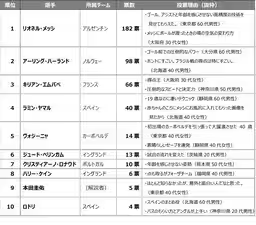
The survey also examined impressions left by players outside Japan's roster, where Lionel Messi was recognized by almost 20% of respondents as the standout performer. Players like Erling Haaland and Kylian Mbappe closely followed, showcasing the global interest surrounding non-Japanese athletes during the tournament.
5. Overall Tournament Assessment
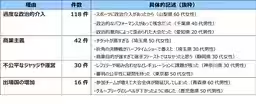
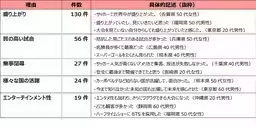
When asked if the FIFA World Cup 2026 was a successful event on the whole, the results indicated a split opinion: 37.6% viewed it as successful, while 62.4% thought otherwise. Reasons for success often hinged on the excitement of the matches and the performances of international teams, while criticisms included perceived political interference and unjust refereeing decisions.
With this substantial data, the survey sheds light on player recognition, public satisfaction, and overall reception of the FIFA World Cup 2026, marking milestones and indicating key trends in the realm of football.
Survey Overview
- - Methodology: Internet research
- - Duration: July 22-24, 2026
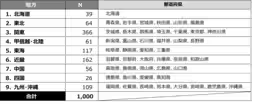
- - Participants: 1,000 respondents selected from an initial pool of 10,000 surveyed earlier in May
- - Supervision: Tetsuya Onoda, Researcher at Sanno University
For further information, you can visit Sanno University's official website.



Topics Sports)

【About Using Articles】
You can freely use the title and article content by linking to the page where the article is posted.
※ Images cannot be used.
【About Links】
Links are free to use.