



Why Winter Acne is More Challenging Than You Think: A Study Report
Introduction
Acne is often associated with summer months; however, emerging evidence suggests that winter poses its own set of challenges for those suffering from this skin condition. A recent survey conducted by the Icy Clinic—a medical entity focused on skincare located in various parts of Tokyo—has unveiled some startling statistics regarding the prevalence and perception of winter acne among women in their 20s to 40s.
The Common Misconception
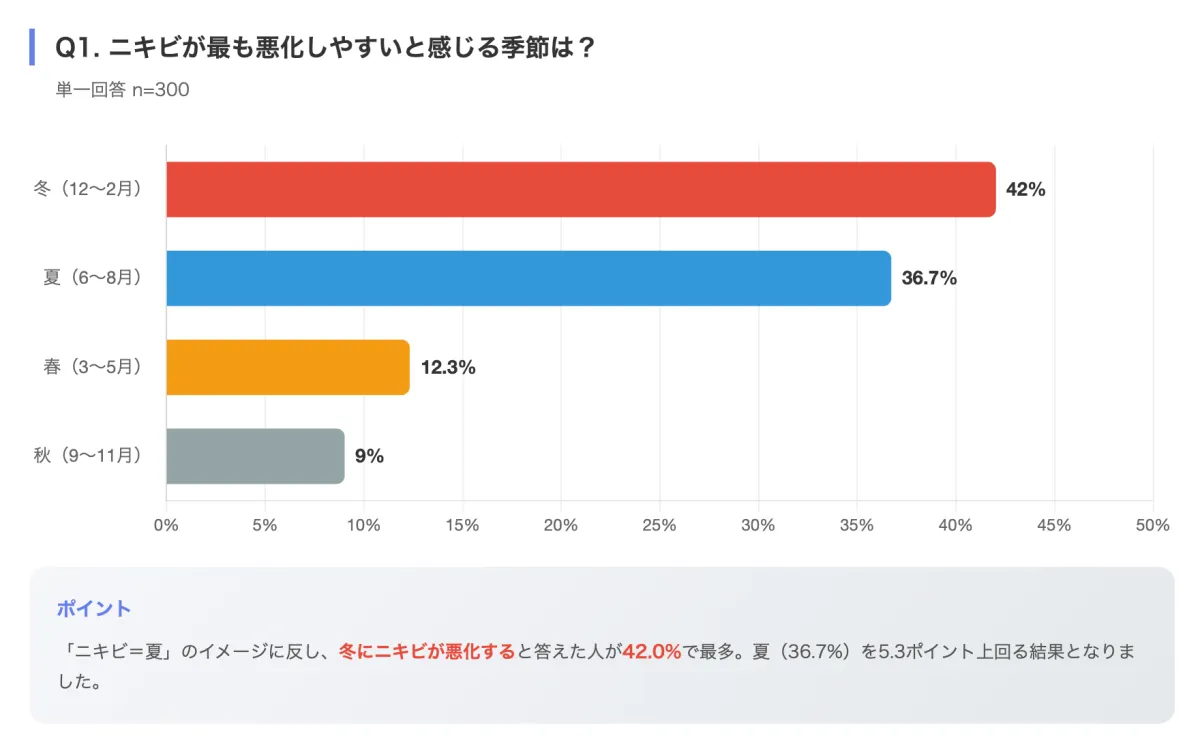
Many assume that acne problems primarily arise during the summer due to heat and humidity, leading to increased sweat and oil production. However, our survey results indicate that 42% of respondents actually experience worsened acne during the winter months. The myth that winter is a respite for those with acne is thoroughly debunked, as the dry and harsh conditions can exacerbate the skin’s issues.
Survey Insights
Conducted between November 1 and November 15, 2025, with 300 participants who reported past experiences with acne, our survey yielded some eye-opening insights:
- - Severity of Acne by Season: 42% identified winter as the worst season for their acne, compared to 36.7% who chose summer. This highlights a concerning reality for many who struggle with skin-related issues in colder months.
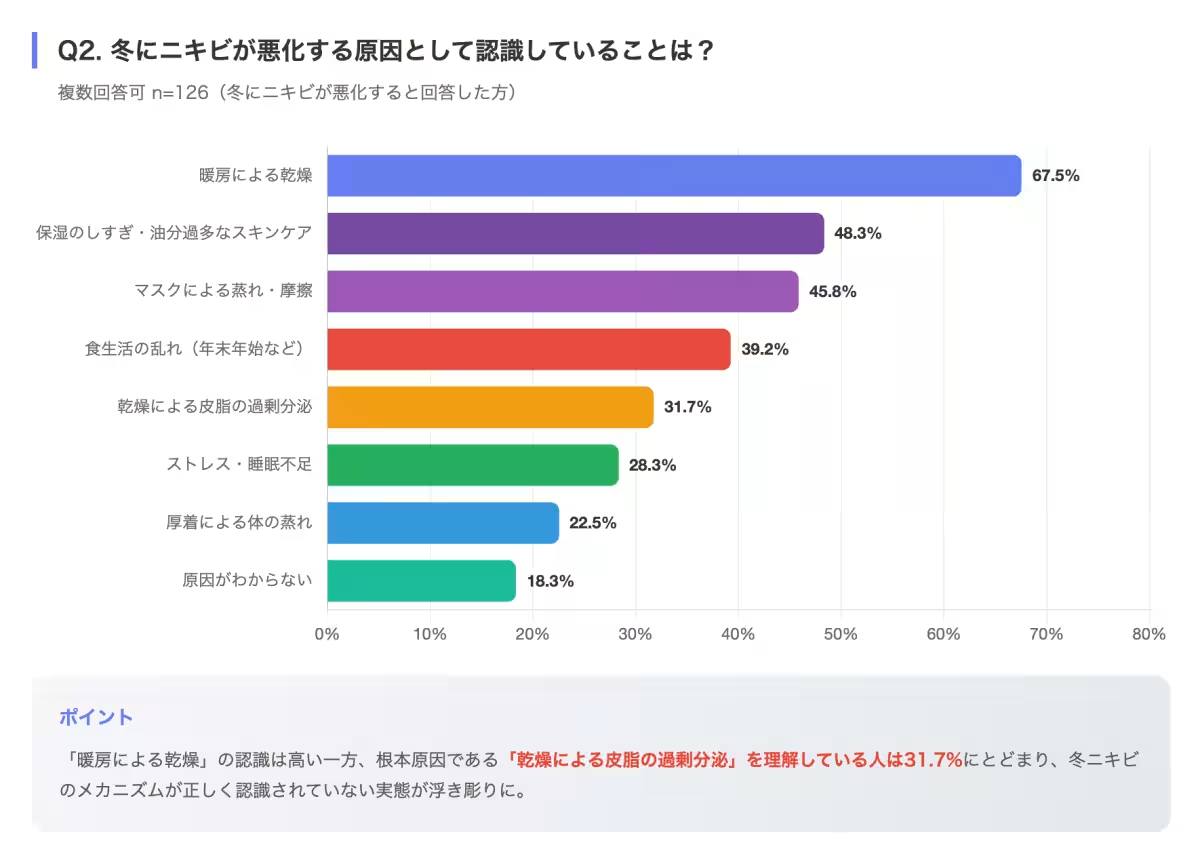
- - Recognized Causes of Winter Acne: Respondents pointed out several factors contributing to winter acne:
- 48.3% cited "over-moisturizing or using oily skincare products."
- 45.8% highlighted "mask-related irritation and sweating."
- Surprisingly, only 31.7% understood that "excess oil production due to dryness" is fundamental in aggravating acne.
Challenges in Winter Skincare
The survey delved deeper into the struggles participants faced in managing their winter skincare routines:
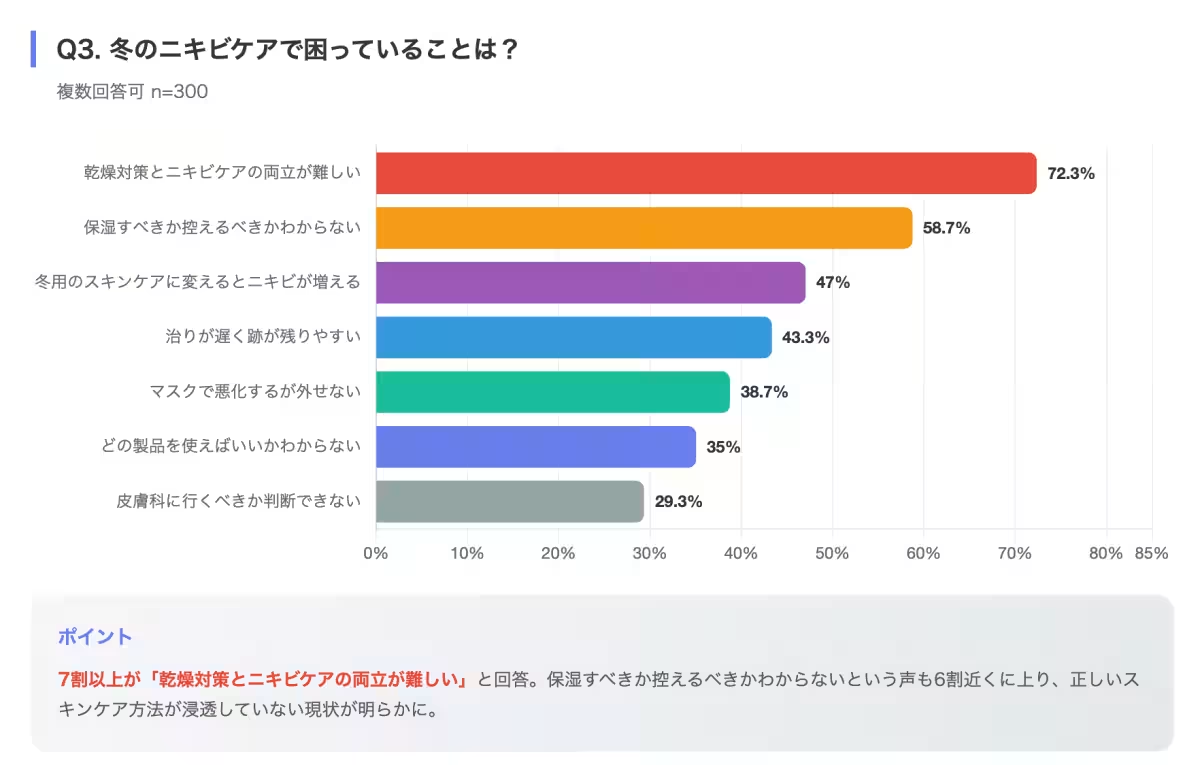
- - A staggering 72.3% of respondents expressed difficulty in balancing moisture retention with acne care.
- - 58.7% were unsure whether they should increase or limit their moisturizing routines during the colder months.
- - 47% mentioned experiencing an increase in acne when switching to winter-specific skincare products.
These results emphasize the confusion many face while trying to navigate the conflicting needs of acne-prone and dry skin.
Identifying Problem Areas
One key finding was the specific areas where winter acne tends to manifest:
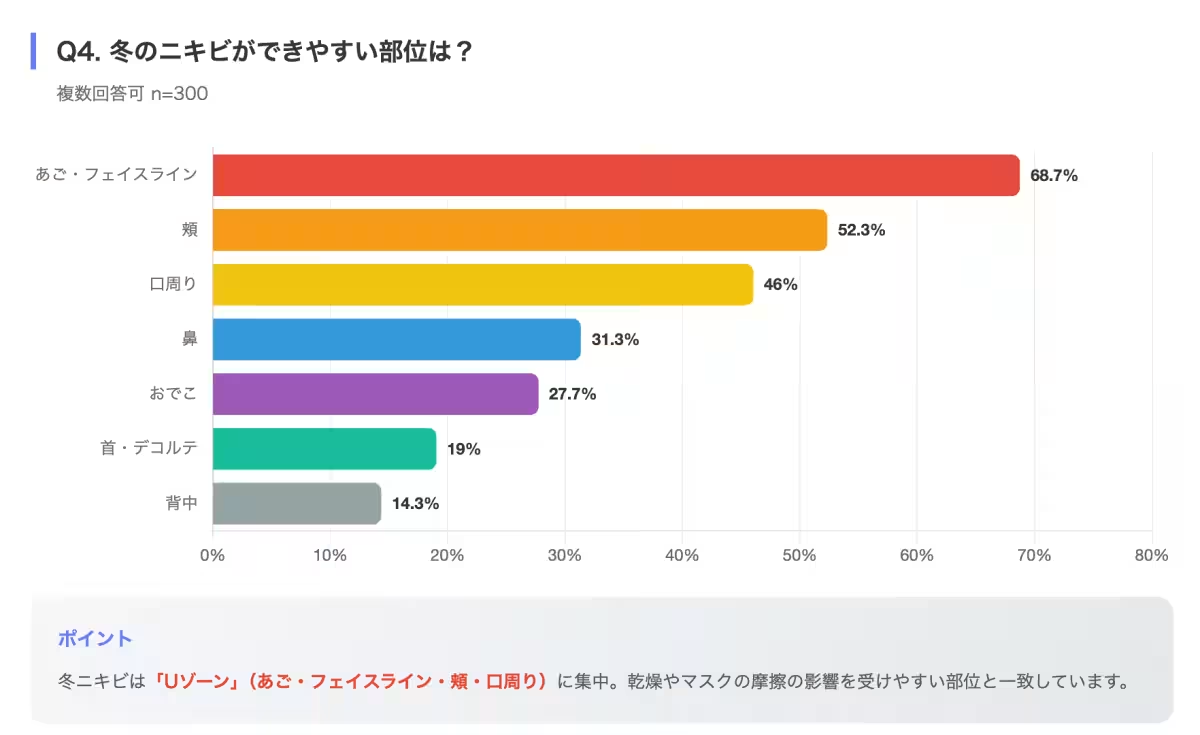
- - The chin and jawline topped the list at 68.7%, followed by the cheeks at 52.3% and areas around the mouth at 46%. This so-called "U-zone" is particularly vulnerable due to dryness and irritation from face masks and heavy clothing.
Seeking Professional Help
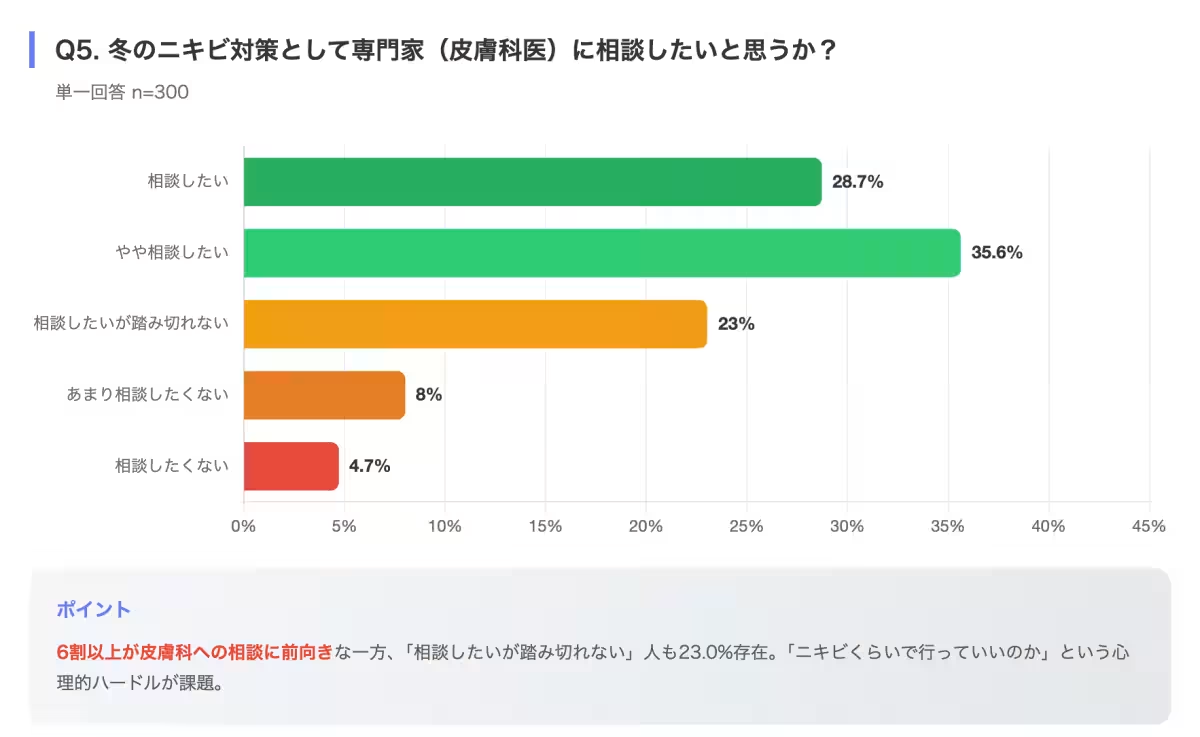
Despite the challenges, our survey found a positive inclination towards seeking professional help. 64.3% expressed interest in consulting dermatologists regarding their winter acne issues. However, 23% of respondents hesitated due to concerns over costs and the perception that they should not seek help for what they consider minor problems.
Expert Opinions
Dr. Kouta Takakuwa from Icy Clinic commented on the troubling trend:
"The physiological factors driving acne during winter are often misunderstood. The skin's response to dryness—resulting in an increase in oil production—can lead to more clogged pores and subsequent acne breakouts. Addressing these dual problems requires informed skincare solutions, not double standards."
Dr. Takakuwa encourages individuals not to dismiss their acne as trivial but rather to seek professional advice. Effective treatments are often covered by insurance, making it a reasonable option for many.
Conclusion
The findings from our survey underline the importance of understanding the mechanisms behind winter acne. Winter skincare does not have to be a daunting task. With the right advice and product choices, individuals can manage their skin problems effectively. If over-the-counter solutions aren't working, consider consulting a dermatologist for tailored treatments that suit your skin type. Remember, you’re not alone in your struggle, and professional help is readily available. The Icy Clinic stands ready to assist with a range of treatment options tailored to your unique skin needs, whether through medication, lifestyle advice, or specialized skin procedures.
With several conveniently located clinics in Shinjuku, Shibuya, Ueno, Ikebukuro, Tokyo, and Omiya, patients can engage with dedicated professionals eager to restore confidence to their skin this winter.
Topics Health)
【About Using Articles】
You can freely use the title and article content by linking to the page where the article is posted.
※ Images cannot be used.
【About Links】
Links are free to use.