



Breakthrough in Cancer Immunotherapy: New Gene Signature Revealed for T Cell Proliferation Prediction
Discovering Key Genes for T Cell Proliferation in Cancer Immunotherapy
In the realm of cancer treatments, immunotherapy has emerged as a groundbreaking approach, with CD8+ T cells playing a critical role in fighting tumors. An innovative study led by a team from Tokyo University of Science and Tokyo University sheds light on this mechanism by identifying a specific gene signature responsible for predicting the proliferation of these powerful immune cells within tumors.
Understanding T Cell Dynamics in Tumors
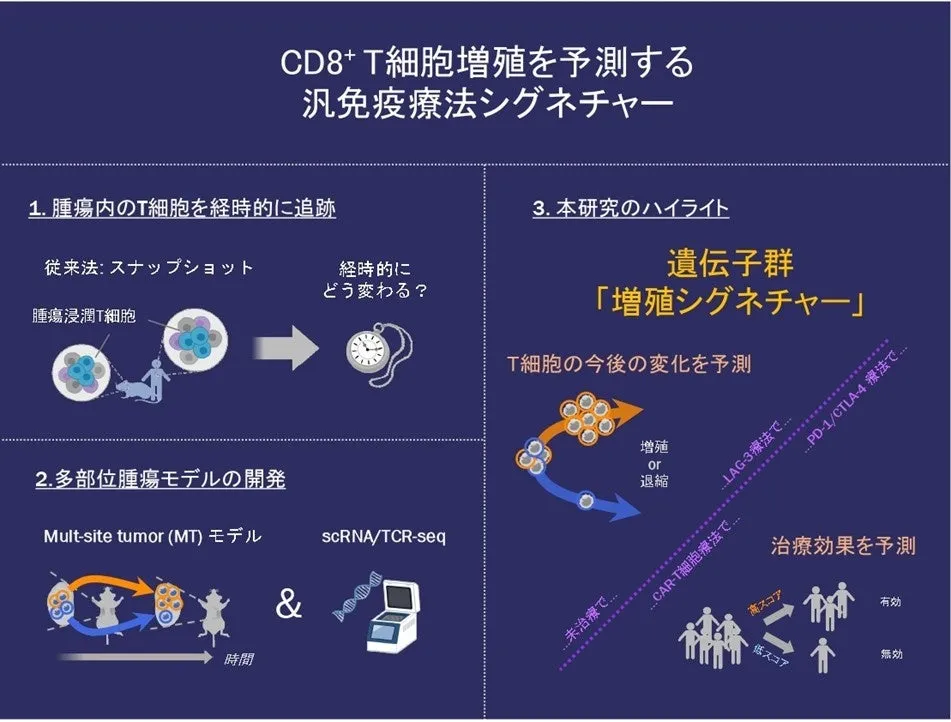
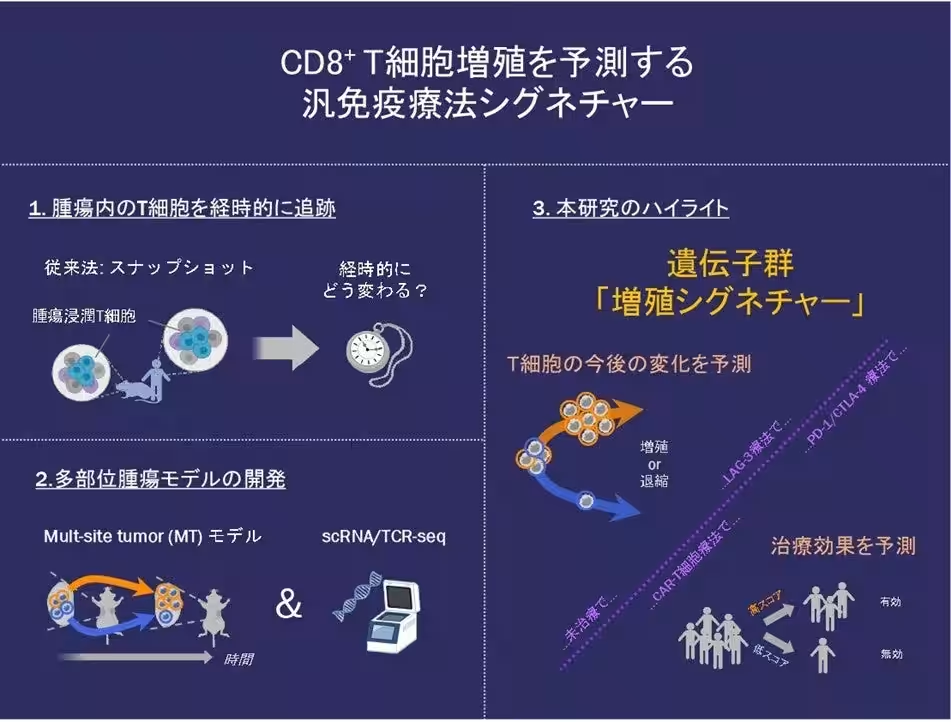
It is well-known that for cancer immunotherapy to be successful, robust immune responses characterized by rapid CD8+ T cell proliferation are essential. However, understanding the precise mechanisms that regulate this proliferation has been elusive. The research team, including Associate Professor Satoshi Ueha and Professor Tatsuji Matsushima, has developed a novel method to continuously track CD8+ T cell responses within tumors. This led to the identification of a unique group of genes termed the “proliferation signature,” capable of predicting how T cells will grow.
Methodology Employed
To achieve this, the researchers established a multi-site tumor model in which tumors were implanted at various sites in mice, allowing them to collect continuous samples from these tumors. Using a technique that combined single-cell RNA sequencing and analysis of T cell receptor (TCR) sequences, they successfully monitored the growth dynamics of hundreds of unique CD8+ T cell clones over time. The result was an unprecedented insight into how these immune cells proliferate and contract in response to therapy.
The Revolutionary Proliferation Signature
The breakthrough came when the team discovered that before T cells start proliferating, they consistently express certain genes, marking them with the aforementioned “proliferation signature.” This signature not only serves as a marker for T cells that are poised for growth but also acts as a powerful predictor of tumor responses to immunotherapy across different models, including those treated with PD-L1 and CTLA-4 checkpoint inhibitors. Notably, the expression of this gene signature was also found to correlate with positive outcomes in human patients receiving PD-1 inhibitor therapy.
Future Implications
What makes this research particularly exciting is the potential for using the proliferation signature as a target for novel therapies that encourage T cell growth. The insights provided by this study could be instrumental in developing personalized cancer therapies, tailored specifically to enhance immune responses in individual patients. Professor Ueha commented, “We have opened a new door to dynamically understanding the successes and failures of immunotherapy in real-time. This proliferation signature not only serves as a predictor of treatment responses but can also guide the design of new therapies to reactivate the immune system when it starts to wane.”
Conclusion
The implications of these findings extend far beyond the laboratory. They represent a significant step towards the realization of truly personalized cancer therapies, enabling clinicians to predict and enhance patient responses to immunotherapy. By leveraging the knowledge gained from this research, the medical community may strategically transform cancer treatment protocols and improve long-term outcomes for patients battling cancer. This research was published on October 20, 2025, in the prestigious journal Nature Communications, a testament to the work’s importance and potential impact.
Acknowledgment
This groundbreaking research was supported by the Japan Society for the Promotion of Science, as well as the Japan Agency for Medical Research and Development, highlighting the collaborative efforts needed to push the boundaries of cancer treatment.
Topics Health)
【About Using Articles】
You can freely use the title and article content by linking to the page where the article is posted.
※ Images cannot be used.
【About Links】
Links are free to use.