



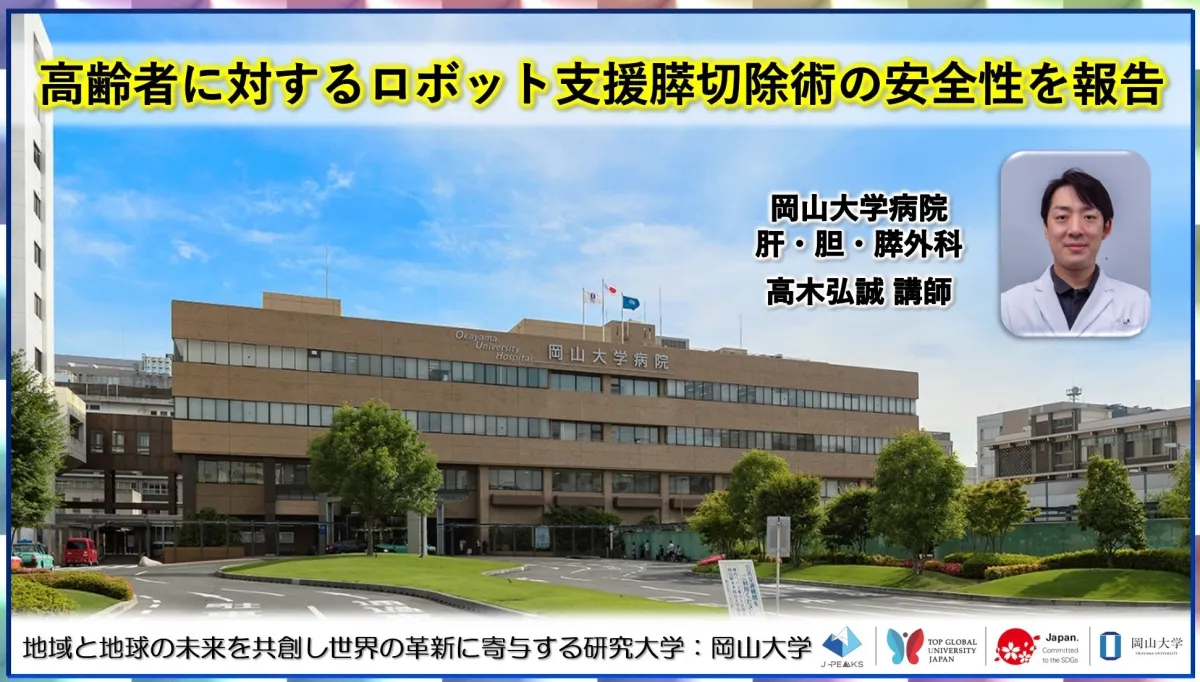
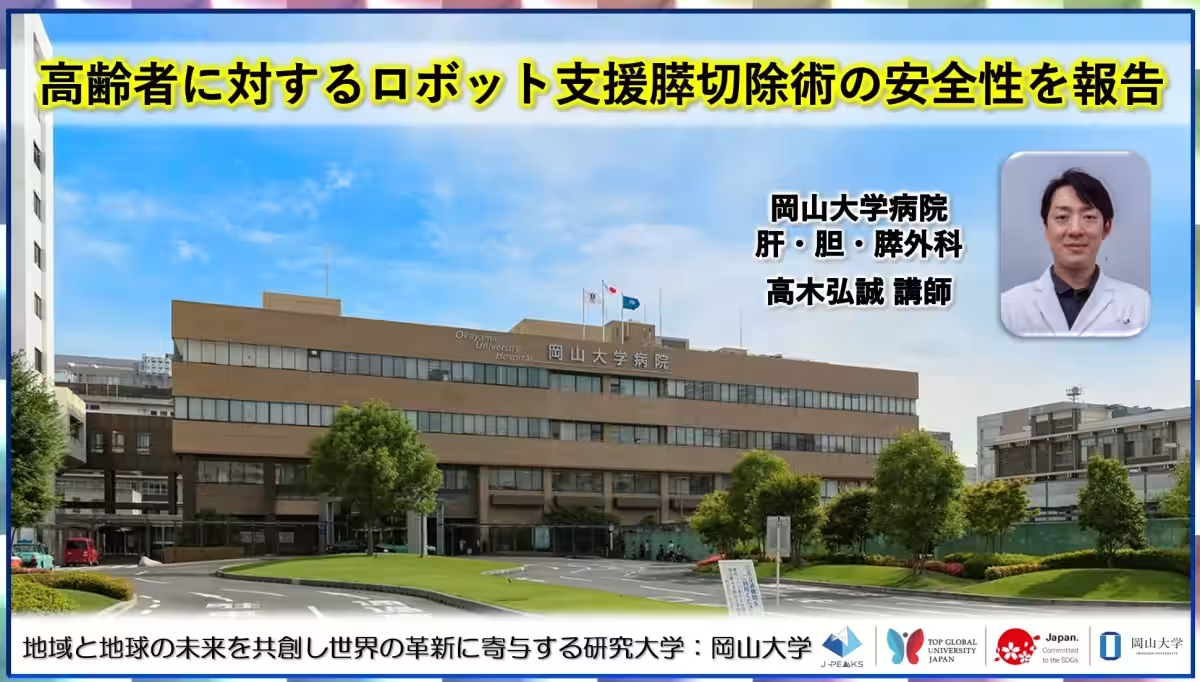
Okayama University Reports Safety and Efficacy of Robotic-Assisted Pancreatectomy in Aged Population
Safety and Efficacy of Robotic-Assisted Pancreatectomy in Elderly Patients
In recent years, the aging population has led healthcare professionals to reconsider surgical procedures for older adults. Addressing this pressing concern, Okayama University Hospital's Department of Hepato-Biliary-Pancreatic Surgery has pioneered robotic-assisted pancreatic resection surgeries since 2020, aligning with insurance requirements.
On November 6, 2025, Okayama University, located in Okayama City, published significant findings from its collaborative study with Fujita Medical University, a prominent high-volume center for specific treatments and surgeries. This research focused on the efficacy and safety of robotic-assisted pancreatectomy specifically in elderly patients.
Study Overview
Under the supervision of esteemed faculty including Professor Hiroshi Takagi from Okayama University and Professor Takeshi Takahara from Fujita Medical University, the research team conducted a multicenter study analyzing the outcomes of robotic-assisted pancreatic surgeries performed from April 2020 to December 2024. Out of the 380 patients who underwent this advanced surgical procedure, 59 were over the age of 80, representing 15.5% of the total cohort.
Elderly patients often present several comorbid conditions and malignant diseases, necessitating a cautious approach when deciding surgical interventions. Although elderly patients had longer hospital stays compared to their younger counterparts (under 79 years), their rate of complications post-surgery was found to be comparable. This outcome emphasizes the potential of minimally invasive robotic surgery as a viable option for older adults, allowing for reduced complications and promoting quicker recovery times.
The findings have been documented in the European academic journal 'Cancers', slated for publication on September 17, 2025. The study underscores the significance of minimally invasive surgical techniques amid the increasing prevalence of pancreatic procedures performed on older populations.
Insights from Dr. Takagi
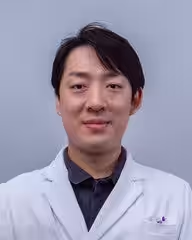
Professor Hiroshi Takagi commented on the rising number of elderly patients undergoing complex surgeries. He stressed that surgical candidacy must be assessed meticulously for pancreatic surgeries—characterized by their invasive nature—within this unique demographic. The study provides a foundation on which further research can improve surgical outcomes and long-term survival rates in the elderly. Takagi reiterated the importance of robotic-assisted surgery, which has been shown to be less invasive and associated with fewer complications, thus paving the way for further advancements and better treatment outcomes for these patients.
The findings from this groundbreaking study suggest an optimistic future where robotic surgery leads to enhanced safety for elderly patients requiring advanced surgical interventions, improving their quality of life while minimizing risks associated with traditional surgical techniques.
As healthcare continues to adapt to societal changes such as an aging population, the integration of advanced technologies like robotic assistance in surgical procedures will be imperative. The collaborative efforts of Okayama University and Fujita Medical University exemplify the evolution of surgical techniques that respect the complexities of patients' health and enhance the potential for successful outcomes.
Conclusion
With ongoing studies and a commitment to improving surgical techniques, the future of robotic-assisted pancreatectomy and its implications for elderly patients look promising. The research not only highlights the safety and efficacy of robotic surgery in this demographic but also addresses vital considerations for a healthcare system increasingly focused on heightened patient care and improved surgical outcomes.
For more detailed information about the study, you can access the complete paper here.
Topics Health)
【About Using Articles】
You can freely use the title and article content by linking to the page where the article is posted.
※ Images cannot be used.
【About Links】
Links are free to use.