



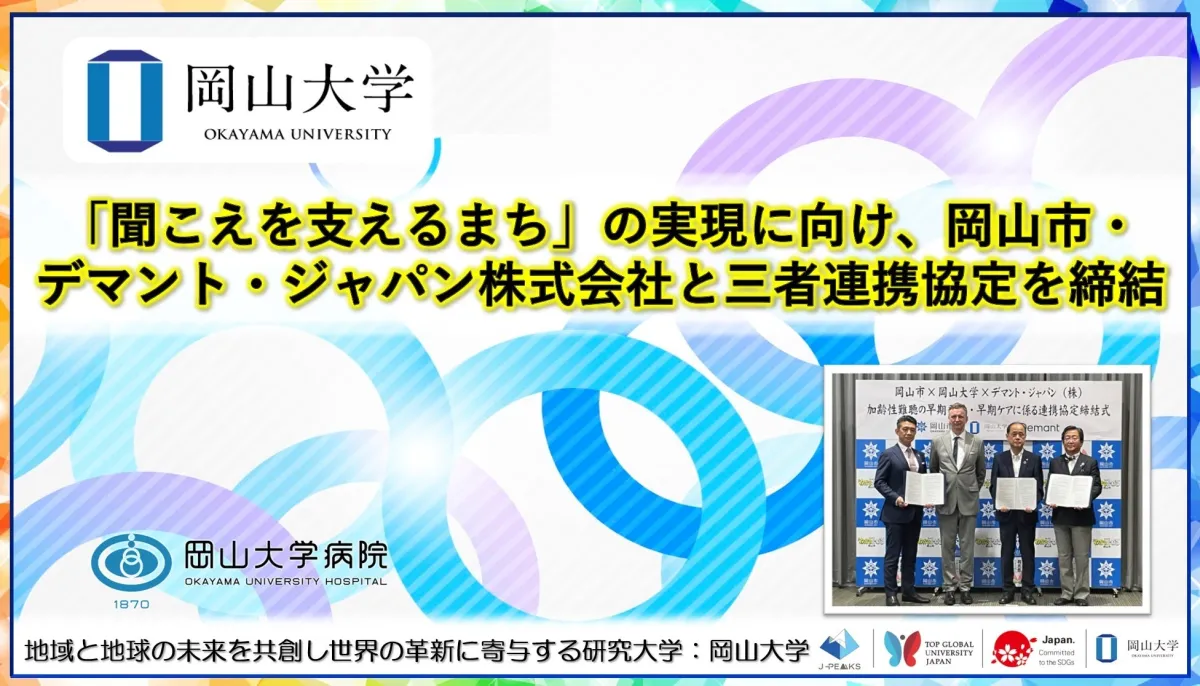
Okayama University Forms Partnership to Enhance Hearing Support in Community
On July 2, 2025, Okayama University (located in Okayama City) officially established a collaborative agreement with Okayama City and Demant Japan. This partnership aims to promote accurate understanding and early detection of age-related hearing loss, significantly enhancing the quality of life (QOL) for the elderly and fostering sustainable community development. The initiative, branded as "City for Better Hearing," seeks to create an inclusive framework that supports hearing among residents, especially seniors.
At a signing ceremony held at the Okayama City Hall, prominent figures such as Okayama University's President, Professor Yasuyuki Nasu, Okayama City Mayor Masao Omori, and Demant Japan President Tohru Saito gathered to formalize this important collaboration. They aimed to elevate community awareness around hearing health, through education, screening, and support initiatives.
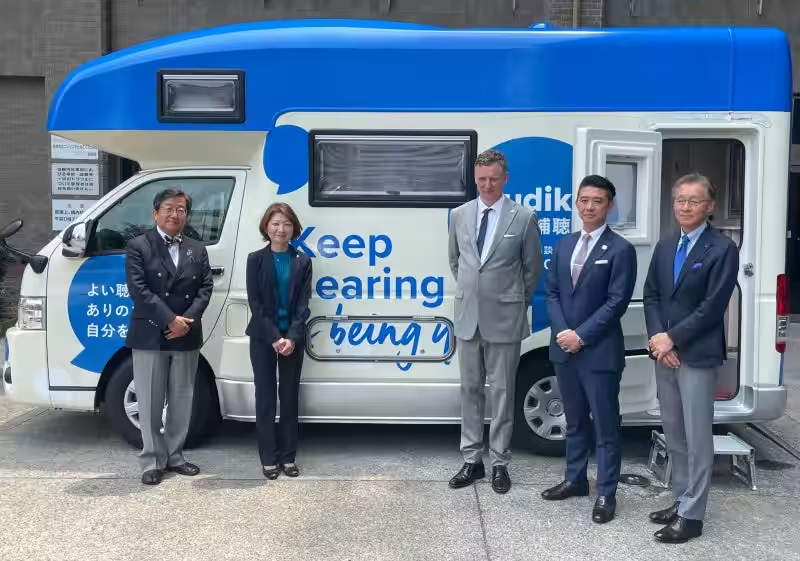
An essential aspect of this agreement includes the introduction of a hearing screening vehicle, the Audika GO. This mobile unit will facilitate hearing tests and encourage those with suspected hearing impairments to seek assistance. As part of the program, the training of specialized personnel to support the use of hearing aids is also planned, ensuring community members receive the best possible care.
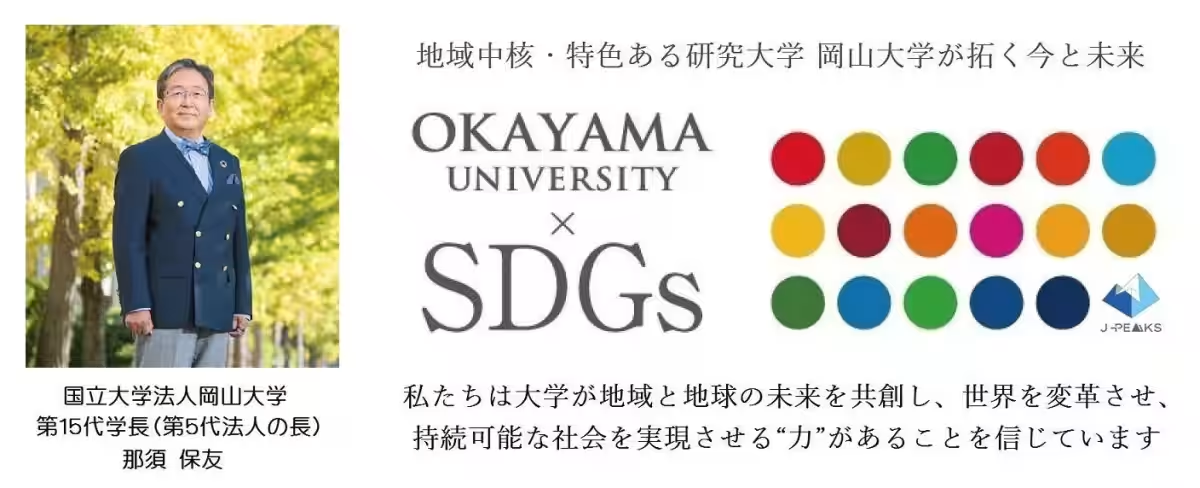
During the signing event, President Nasu expressed a steadfast commitment to implementing the principles of the Sustainable Development Goals (SDGs) within the community. He stated, "We aim to realize a City for Better Hearing, ensuring that no one is left behind, and we'll share a new model of hearing support with the world from Okayama."
Mayor Omori echoed this sentiment, emphasizing the value of local support systems for citizens' ear health. He reinforced the determination to work diligently on public awareness and early intervention strategies. Saito, representing Demant Japan, reiterated the importance of joint efforts in promoting hearing care, including increasing the rates of ENT consultations and hearing aid usage.
The ceremony also highlighted the international significance of the partnership, with the presence of Danish embassy officials, including Thomas Højlund Kristensen, who emphasized the advanced examples of hearing support in Northern Europe. This gesture not only acknowledged the partnership's goals but also laid the groundwork for potential global collaborations in hearing health initiatives.
In alignment with this cooperative effort, Okayama University has established a Hearing Support Center within its hospital, aiming to create an integrated support system spanning medical care, welfare, and education. This agreement is a significant step in advancing local programs that confront societal issues concerning age-related hearing loss.
The initiative is also part of the university's broader commitments under the Ministry of Education's J-PEAKS program, which emphasizes human and community health. The agreement represents a concrete manifestation of these principles in action within the region.
The event featured a practical demonstration of the Audika GO vehicle, allowing attendees to experience hearing tests and share insights on future applications of hearing support technology.
Okayama University is optimistic about leveraging this collaboration further, aiming to become a model for practical co-creation that connects local and international communities, all while striving for a society sensitive to issues related to hearing. The university encourages ongoing engagement with its initiatives aimed at promoting health and well-being in communities across the globe.
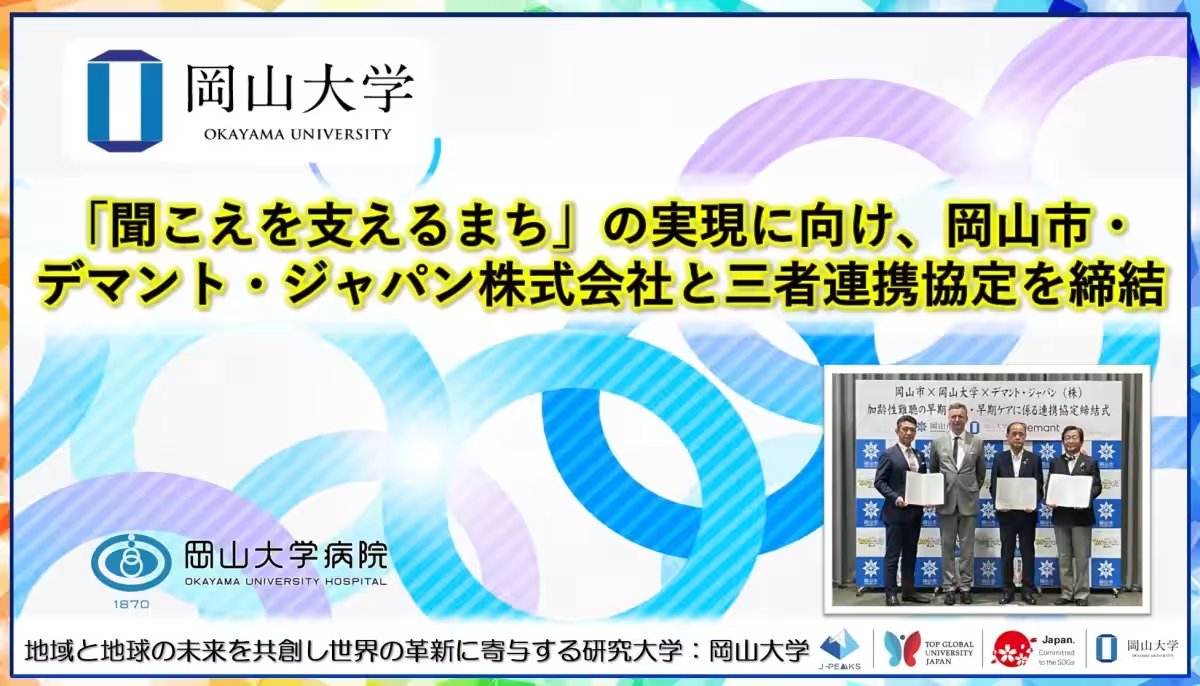
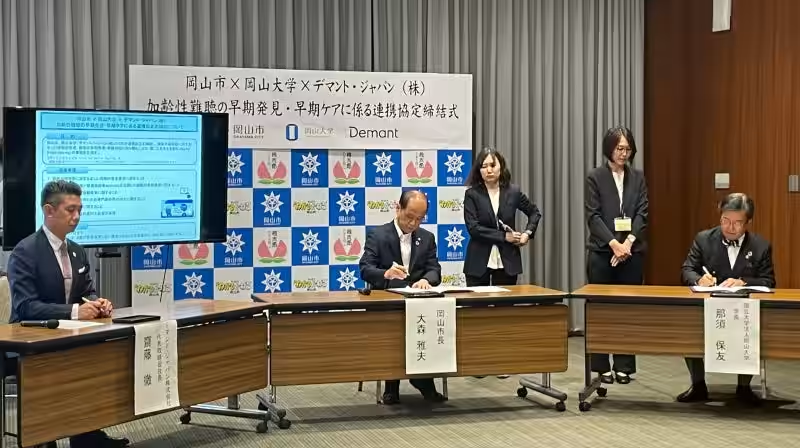
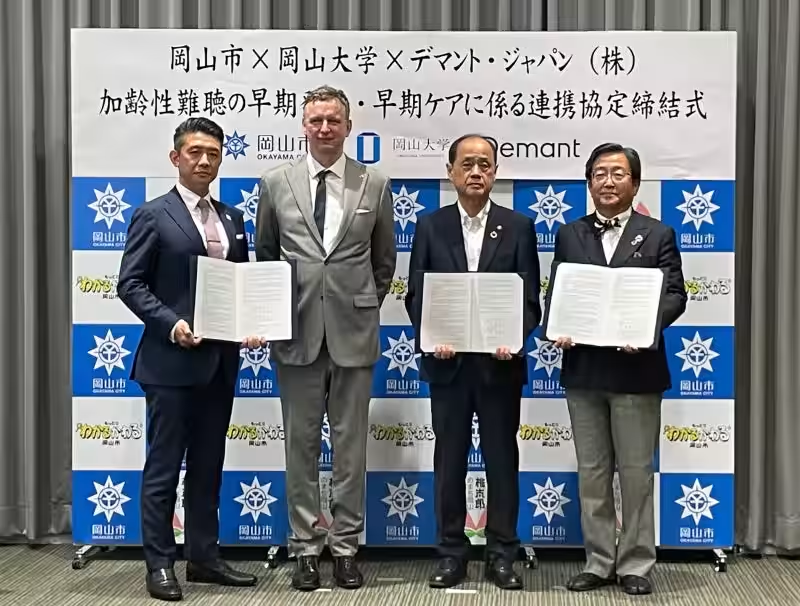


At a signing ceremony held at the Okayama City Hall, prominent figures such as Okayama University's President, Professor Yasuyuki Nasu, Okayama City Mayor Masao Omori, and Demant Japan President Tohru Saito gathered to formalize this important collaboration. They aimed to elevate community awareness around hearing health, through education, screening, and support initiatives.
An essential aspect of this agreement includes the introduction of a hearing screening vehicle, the Audika GO. This mobile unit will facilitate hearing tests and encourage those with suspected hearing impairments to seek assistance. As part of the program, the training of specialized personnel to support the use of hearing aids is also planned, ensuring community members receive the best possible care.
During the signing event, President Nasu expressed a steadfast commitment to implementing the principles of the Sustainable Development Goals (SDGs) within the community. He stated, "We aim to realize a City for Better Hearing, ensuring that no one is left behind, and we'll share a new model of hearing support with the world from Okayama."
Mayor Omori echoed this sentiment, emphasizing the value of local support systems for citizens' ear health. He reinforced the determination to work diligently on public awareness and early intervention strategies. Saito, representing Demant Japan, reiterated the importance of joint efforts in promoting hearing care, including increasing the rates of ENT consultations and hearing aid usage.
The ceremony also highlighted the international significance of the partnership, with the presence of Danish embassy officials, including Thomas Højlund Kristensen, who emphasized the advanced examples of hearing support in Northern Europe. This gesture not only acknowledged the partnership's goals but also laid the groundwork for potential global collaborations in hearing health initiatives.
In alignment with this cooperative effort, Okayama University has established a Hearing Support Center within its hospital, aiming to create an integrated support system spanning medical care, welfare, and education. This agreement is a significant step in advancing local programs that confront societal issues concerning age-related hearing loss.
The initiative is also part of the university's broader commitments under the Ministry of Education's J-PEAKS program, which emphasizes human and community health. The agreement represents a concrete manifestation of these principles in action within the region.
The event featured a practical demonstration of the Audika GO vehicle, allowing attendees to experience hearing tests and share insights on future applications of hearing support technology.
Okayama University is optimistic about leveraging this collaboration further, aiming to become a model for practical co-creation that connects local and international communities, all while striving for a society sensitive to issues related to hearing. The university encourages ongoing engagement with its initiatives aimed at promoting health and well-being in communities across the globe.
Topics Health)
【About Using Articles】
You can freely use the title and article content by linking to the page where the article is posted.
※ Images cannot be used.
【About Links】
Links are free to use.