



Okayama University Develops Early Detection Technology for Cancer Immunotherapy Efficacy
Early Detection Technology for Cancer Immunotherapy
Okayama University, in collaboration with Sapporo Medical University, has achieved a significant breakthrough in the field of cancer treatment. Their recent research successfully developed a technique to detect the early immune response, termed the 'spark response', which indicates the aggressive action of immune cells against cancer cells. This discovery promises to enable the early assessment of the effectiveness of immune checkpoint inhibitors in cancer therapies, particularly for non-small cell lung cancer (NSCLC).
Understanding the Breakthrough
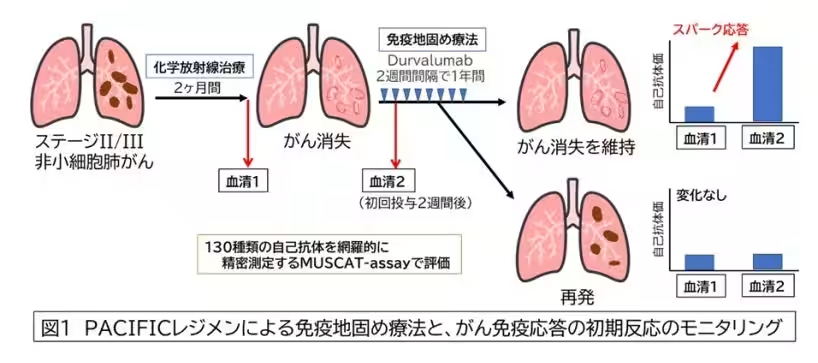
The research emphasizes the importance of timely evaluations in patient treatment plans. Following chemoradiation therapy for NSCLC, which is notorious for its aggressive nature and high relapse rates, patients are often administered immune checkpoint inhibitors such as PD-L1 antibodies as a form of treatment consolidation. The developed technology specifically focuses on measuring autoantibodies associated with immune responses, allowing clinicians to determine treatment efficacy just two weeks after the initial dose.
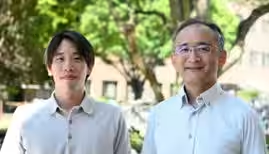
Professor Junichiro Futami from Okayama University's Graduate School of Health System Sciences and PhD student Takeru Mori led this innovative research. Their work showcases the Muscat-assay, a system capable of comprehensively quantifying these autoantibodies. This method's ability to highlight substantial increases in specific autoantibodies correlates with favorable patient outcomes, providing a scientifically backed approach for personalizing cancer treatment.
Impacts on Personalized Medicine
The variability in patient response to cancer immunotherapy has presented challenges within clinic environments. Recent findings hold promise for improving medication usage optimization and advancing personalized medical approaches for patients with lung cancer. The preliminary results underscore the technology's potential to transform treatment protocols, allowing for more precise interventions tailored to individual patient needs.
The implications extend beyond immediate treatment outcomes. With applications of personalized medicine on the rise, the Muscat-assay represents a shift towards integrating molecular diagnostics directly into patient care, making it possible to predict and enhance therapeutic effectiveness stratified by individual immune responses.
As mentioned in their findings published in Scientific Reports on July 28, 2025, the research paves the way for forthcoming studies aimed at verifying the Muscat-assay's use in widespread clinical settings. The collaborative efforts signal an essential link between academia and clinical practice in the ongoing war against cancer.
Further Research and Development
Both Mori and Futami expressed enthusiastic commitment to advancing this promising research. The ongoing study will involve a broader range of clinical specimens in future assessments, enhancing the reliability and utility of the Muscat-assay in clinical environments.
Research funding came from various initiatives, including the Japan Society for the Promotion of Science and JST-SPRING, underscoring national support for advancing sustainable cancer treatment methodologies. As the need for effective cancer therapies rises, discoveries like these at Okayama University highlight the essential role of innovative research in medical science, establishing a model for future explorations in oncology.
In conclusion, this advancement in detecting immune responses marks a significant milestone in cancer treatment, contributing to a more accurate and personalized approach in managing drug therapies for patients battling non-small cell lung cancer. With continued investment in research and technology, the vision for integrating such groundbreaking techniques into everyday clinical use becomes ever more attainable.

Topics Health)
【About Using Articles】
You can freely use the title and article content by linking to the page where the article is posted.
※ Images cannot be used.
【About Links】
Links are free to use.