



Launching a New Era in Cancer Screening Support through Local Government Programs
Comprehensive Cancer Screening Support Program
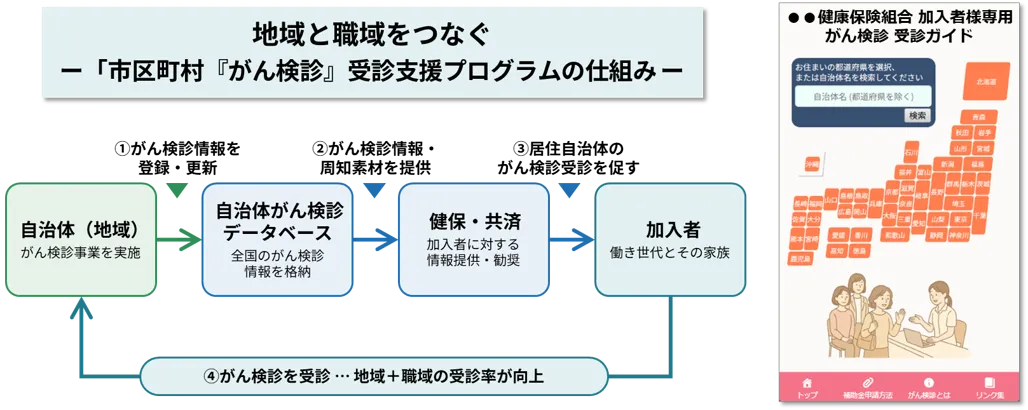
In a significant development for public health, a new support program for cancer screenings has been launched by Insights Inc., a Tokyo-based health promotion service company. The initiative, known as the 'Municipality Cancer Screening Support Program,' has completed its trial phase and is set to operate in its full capacity starting July 14, 2026. This program aims to enhance the quality of cancer screening information across Japan by leveraging a comprehensive database populated with data from various local governments.
Objective of the Program
The new program focuses on creating a healthier population by ensuring that residents have easy access to necessary cancer screenings in their local areas. The initiative is backed by the Ministry of Health, Labour and Welfare, which has approved it as part of its supplementary project for fiscal years 2025 and 2026. The ultimate goal is a seamless integration of local and workplace health initiatives to combat structural challenges in cancer screening uptake.
Enhancing Data Quality
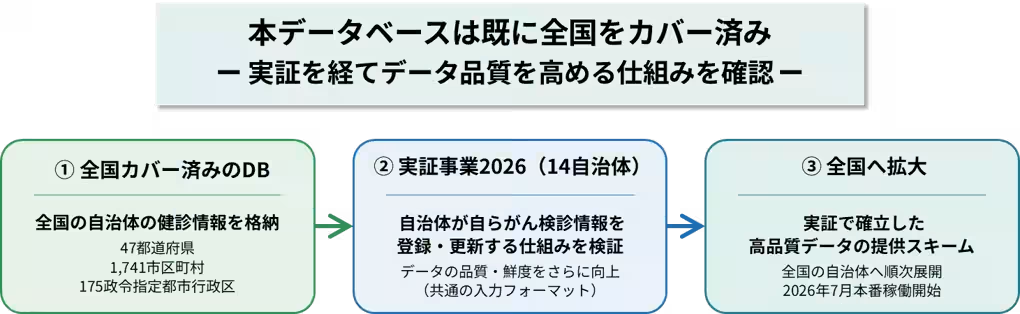
The core of this program lies in the Municipality Cancer Screening Database, which already encompasses information from 47 prefectures, 1,741 municipalities, and 175 designated cities across Japan. Through the validation process involving 14 local governments, this database will not only maintain its integrity but also facilitate the delivery of accurate and up-to-date cancer screening information to members of health insurance unions nationwide.
By having local officials input and regularly update cancer screening data, the program promises to not only improve data quality but also allow municipalities to tailor screening information based on residents' needs, ensuring relevant and timely access.
Addressing Structural Challenges
A critical barrier to effective cancer screening is the lack of information flow between local governments and health insurance unions. This often leads to a division that complicates the encouragement of dependent family members to undergo screenings, resulting in increased risk of late-stage cancer detection. Furthermore, the smooth transition of former employees to their local cancer screening services has been a pressing concern.
The program has been designed to overcome these hurdles by providing a structured framework for cooperation between various parties involved in health promotion.
Key Achievements of the 2026 Trial
Between January and June 2026, three operational conferences and trial runs were conducted with 14 participating municipalities, covering a collective population of approximately 3.3 million people. The main achievements from this trial included:
- - User-Friendliness: Officials from participating municipalities confirmed the feasibility of the database with minimal burden, sustaining ongoing information submissions.
- - Standardization and Clarity: A standardized input format was developed to ensure clarity in screening information and adherence to national guidelines.
- - Guidance for Residents: The program features a user-friendly interface that filters available screenings based on user demographics, thereby simplifying decision-making for residents.
- - Addressing Operational Challenges: Issues identified during the trials, such as age eligibility and cost inputs, have been integrated into system improvements.
A Broader Reach and Future Participation
With the program moving to full operations, health insurance unions can now facilitate direct access to cancer screening information for their members, significantly enhancing screening rates. Additionally, support will be provided to retirees facing insurance changes, ensuring they can remain vigilant about their health.
Moreover, the program continues to welcome new health insurance union participants to join in collaborative efforts towards enhancing public health. Operating costs remain low, requiring only an annual basic fee to maintain access to this invaluable resource.
The benefits of joining the program include:
- - Comprehensive and low-cost access to cancer screening data nationwide.
- - Increased opportunities for members and dependents to participate in necessary health screenings.
- - Support in managing cost transitions for retirees moving to national health insurance.
Conclusion
The 'Municipality Cancer Screening Support Program' heralds a new chapter in public health engagement in Japan. By fostering interconnectivity among local governments and health insurance providers, Insights Inc. is paving the way for a healthier future, with streamlined access to vital cancer screening resources for all citizens. To learn more about participating in this program, visit Insights Inc..
Topics Health)
【About Using Articles】
You can freely use the title and article content by linking to the page where the article is posted.
※ Images cannot be used.
【About Links】
Links are free to use.