



Stress Relief Turns Exhausting: The Disturbing Drinking Trends Among Employees in April
Stress Relief Turns Exhausting: The Disturbing Drinking Trends Among Employees in April
As spring ushers in a new season of workplace transitions, many employees find themselves grappling with increased stress and the temptation to turn to alcohol as a coping mechanism. A recent survey conducted by Natural Food Research Co., Ltd. sheds light on alarming trends in drinking habits among employees during April, a month marked by changes in job roles and responsibilities.
The Context of the Survey
In April, typically associated with job changeovers and new beginnings, employees often find themselves feeling overwhelmed by the pressures of their environments. Natural Food Research Co., Ltd., located in Buzen, Oita Prefecture, undertook the task of investigating the correlation between stress brought on by new work situations and drinking habits among employees aged 20 to 50 who reported feeling stress during this month.
The survey, which took place from March 25 to March 26, 2026, utilized an online platform to collect data from 1,006 participants, comprising both employees and medical specialists. While the study primarily aimed to understand drinking patterns linked to workplace stress, it also highlighted the interconnected issues facing employees during this difficult transition.
Key Findings on Workplace Stress
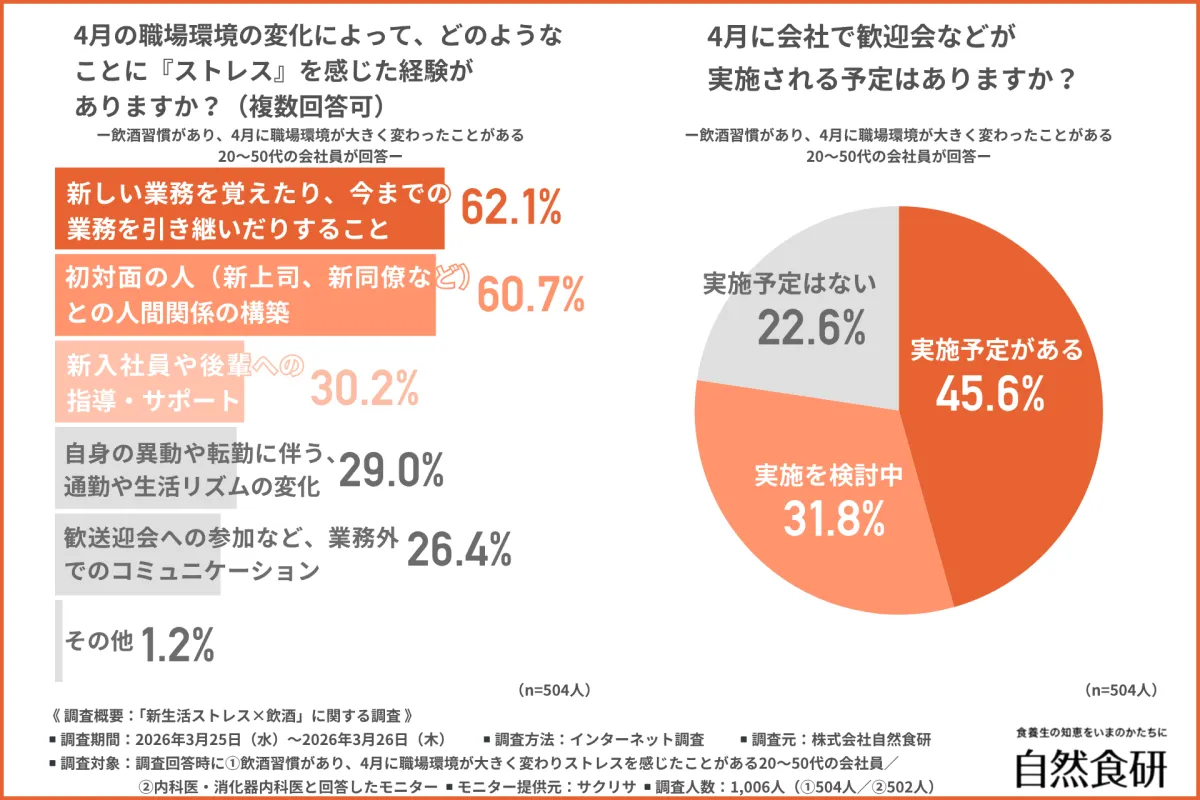
What stresses employees the most during April? Among surveyed individuals, the leading cause of stress derived from new job responsibilities and transfers, with 62.1% citing difficulties in adapting to new tasks. Additionally, 60.7% experienced stress from establishing relationships with new supervisors and colleagues, and 30.2% felt pressure from mentoring fresh recruits.
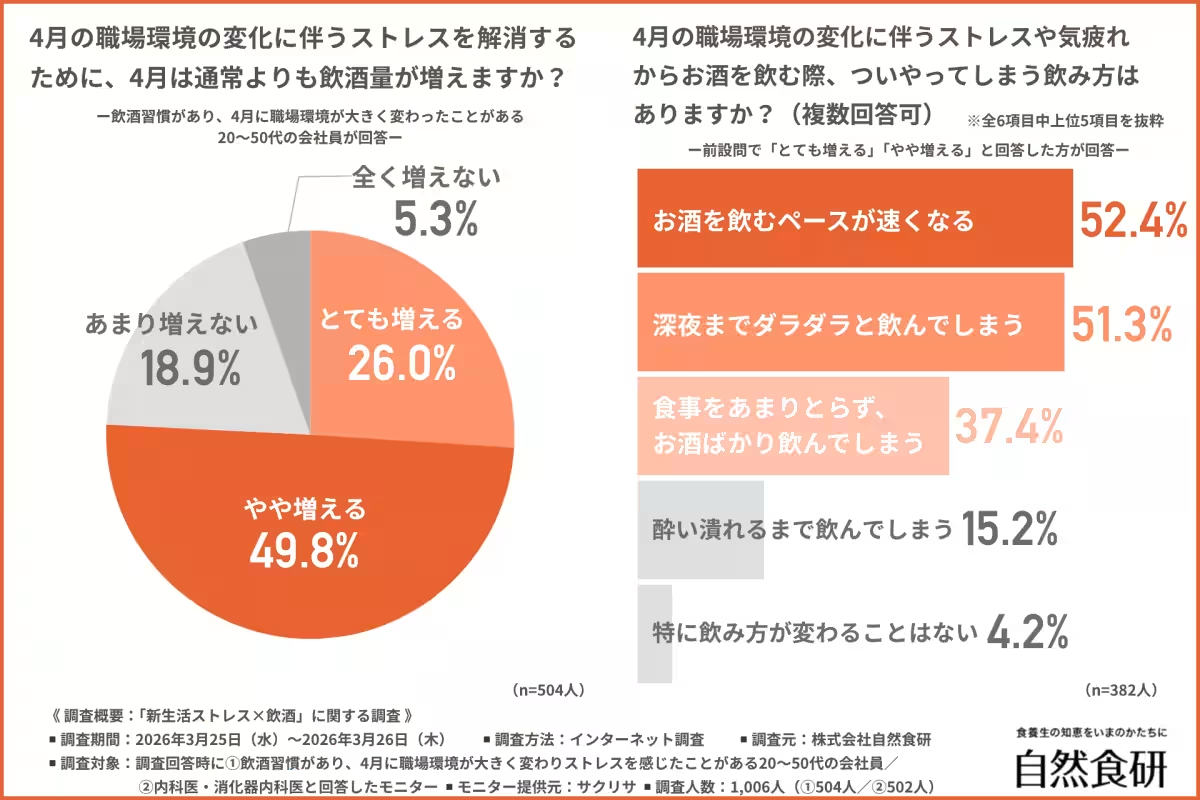
These dynamics create a heightened sense of anxiety, often leading individuals to seek solace in alcohol. The survey results indicated that nearly 80% of respondents reported an increase in their drinking habits during April. Notably, 26.0% claimed their alcohol consumption greatly increased, while 49.8% said it slightly increased as a way to alleviate stress.
The Dangerous Cycle of Drinking
Diving deeper into respondents’ drinking behaviors, the survey revealed that many engage in unhealthy drinking patterns during this season. Around 52.4% admitted to increasing their drinking pace, with 51.3% staying out late to drink, and 37.4% consuming alcohol on an empty stomach.
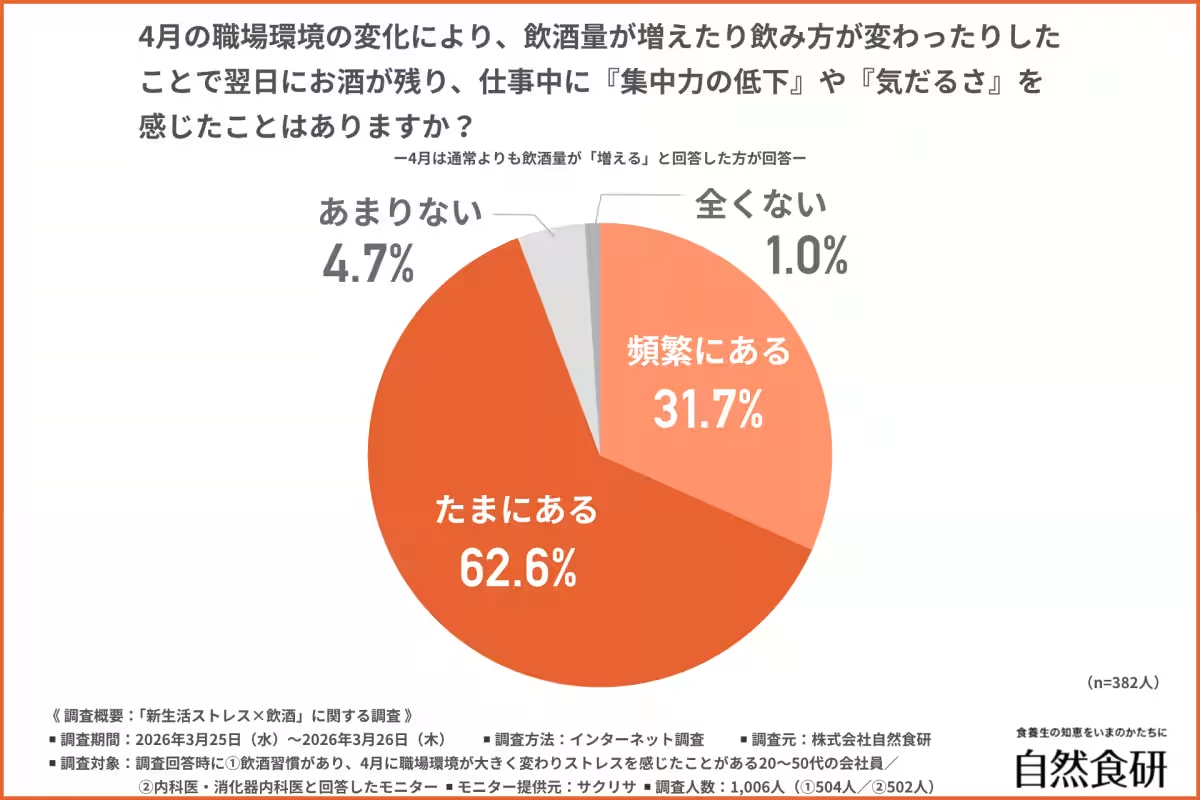
Such behaviors are not without consequences. A staggering 90% of individuals acknowledged experiencing reduced focus and lethargy at work following these drinking sessions, unveiling a harmful cycle where stress leads to drinking, followed by negative repercussions at work that can compound stress levels.
Perspectives from Medical Professionals
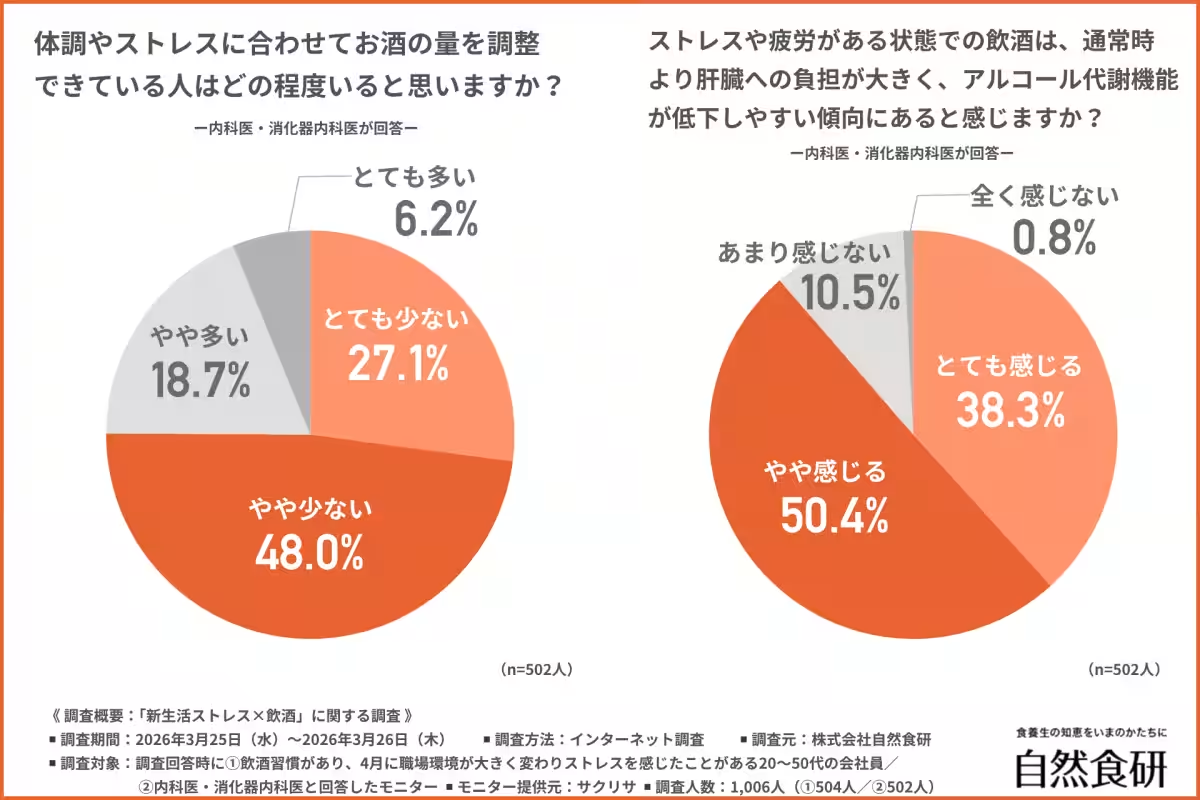
Insights from approximately 500 medical professionals surveyed in the study highlighted a consensus: around 80% believed that few individuals manage to adjust their alcohol intake according to their stress and health conditions. Furthermore, nearly all doctors agreed that drinking while under stress increases the burden placed on the liver, slowing the body’s ability to metabolize alcohol.
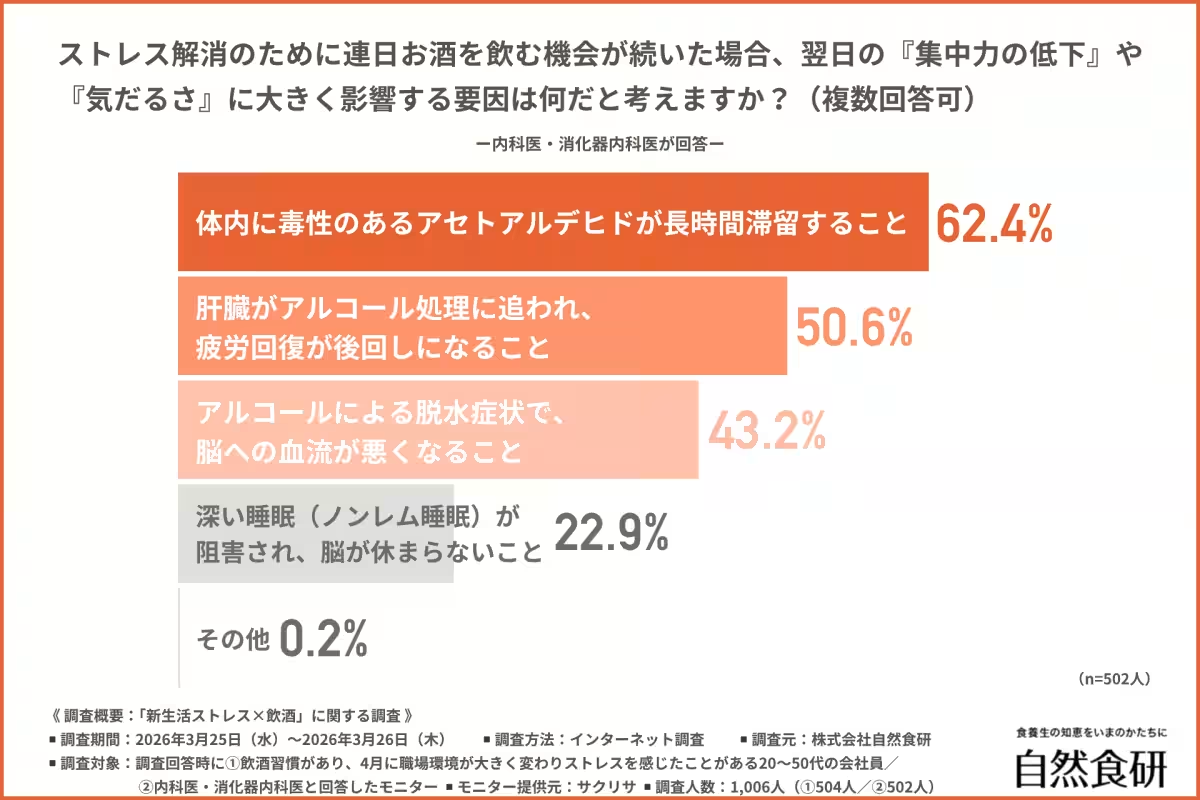
The lingering effects of alcohol in the body include the toxic compound acetaldehyde, which many doctors pointed out as contributing significantly to next-day fatigue and decreased attention spans. Additionally, the chaos of alcohol processing can lead to delayed recovery from fatigue, perpetuating the cycle of low productivity and escalating stress.
Recommendations for Healthier Drinking
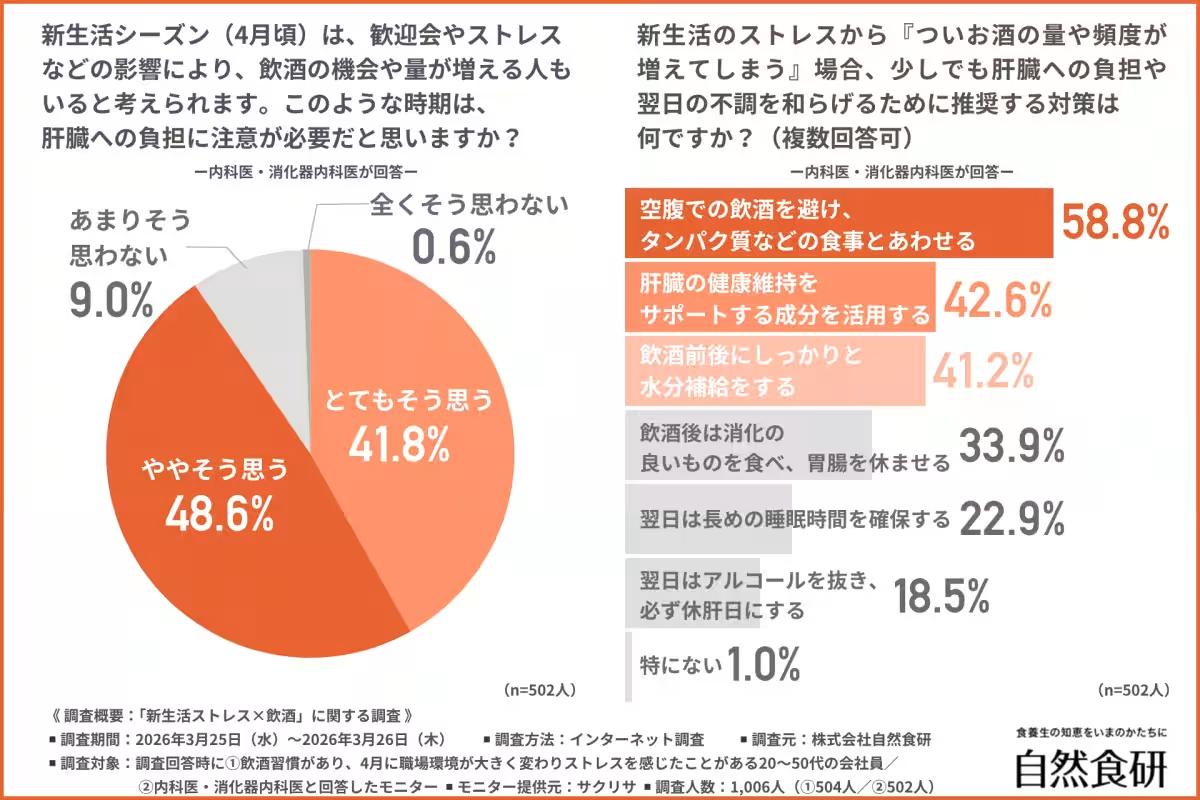
Despite the social pressures that encourage increased drinking during this seasonal shift, experts offer vital strategies for individuals to manage their alcohol consumption effectively. Many recommend avoiding alcohol on an empty stomach and emphasizing nutritious meals to mitigate liver impact. Moreover, the incorporation of supplements aimed at supporting liver health has been identified as a beneficial practice, especially during high-stress periods when alcohol consumption tends to rise.
In conclusion, April presents particular challenges for employees navigating new roles, and while the urge to seek comfort in alcohol is strong, understanding its effects and making informed choices can help prevent the downturn in health and productivity. As the statistics reveal, it’s critical for both individuals and organizations to recognize and address the interplay of stress and alcohol consumption to foster a healthier workforce.
Topics People & Culture)







【About Using Articles】
You can freely use the title and article content by linking to the page where the article is posted.
※ Images cannot be used.
【About Links】
Links are free to use.