



New Discoveries in Mechanisms of Liquid Droplet Formation Related to Gene Control
New Insights into Liquid Droplet Formation in Gene Control
Overview
Recent research conducted by various experts, including those from the National Institute of Advanced Industrial Science and Technology and Tokyo Science University, has shed light on the relationship between chemical modifications of histones and liquid-liquid phase separation (LLPS). This study aims to deepen the understanding of gene regulation, which could have significant implications for disease research, drug development, and diagnostic techniques.
The Mechanism of Phase Separation and Its Importance
Gene regulation is crucial for determining which genes are active or inactive at any given moment. This regulation involves various mechanisms, including transcription factors and epigenetics. Notably, chemical modifications to histones—proteins around which DNA is wound—have been extensively studied as a primary regulatory mechanism.
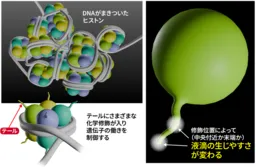
In recent years, the phenomenon known as LLPS has emerged as a critical area of exploration, where proteins and DNA within cells spontaneously aggregate to form distinct droplet-like structures. These structures may regulate gene activity by gathering or isolating specific molecules. However, the precise link between histone modifications and LLPS has not been fully understood.
Research Findings
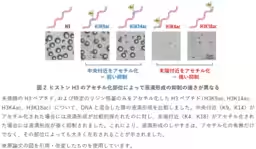
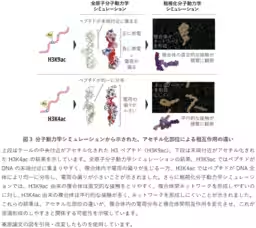
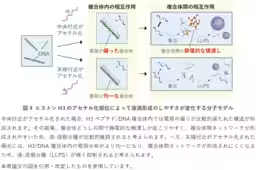
In their recent work, the research group focused on the acetylation of histones, aiming to understand how the locations of these modifications influence the likelihood of droplet formation. The results revealed that not only the presence of acetylation but also the specific sites where it occurs significantly affects the process of droplet formation. This discovery provides a new perspective on gene control through liquid droplet formation and opens pathways for future research in therapeutic developments targeting abnormal gene expression.
The details of this study were published in the Journal of the American Chemical Society on May 7, 2026.
Societal Context of the Research
Various diseases, including cancer and neurodegenerative conditions like Alzheimer's, are thought to involve abnormalities in gene expression regulation. Understanding the molecular mechanisms behind these regulations is essential for the discovery of new treatment methods and drug targets, which has led to ongoing research worldwide.
Epigenetics plays a vital role by modifying gene functioning without changing the DNA sequence, such as through histone acetylation. This modification is closely associated with conditions like cancer and neurodegenerative diseases. In addition, LLPS has gained attention as a significant factor in gene control processes, potentially linked to various diseases through changes in regulatory mechanisms.
Research Development History
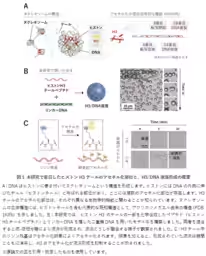
The research team at AIST has pursued an understanding of how biomolecules interact to form droplets and produce life functions. Earlier works have shown that a unique DNA structure, known as guanine quadruplex, can promote droplet formation through interactions with histones. In this study, the focus was expanded to include histone modifications, particularly how differences in acetylation sites affect droplet formation.
Experimental Analysis
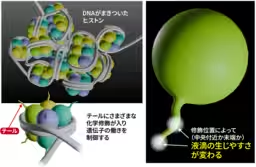
Within the cellular nucleus, DNA wraps around histones, creating nucleosome structures made up of eight histones (two each of H2A, H2B, H3, and H4). Histones have a protruding part known as the
Topics Other)



【About Using Articles】
You can freely use the title and article content by linking to the page where the article is posted.
※ Images cannot be used.
【About Links】
Links are free to use.