



Omron Launches New Power Conditioners for High-Current Solar Panels in Low-Voltage Industrial Applications
Omron Launches Advanced Power Conditioners for High-Current Solar Panels
Introduction
Omron Social Solutions Corp., headquartered in Minato, Tokyo, has announced the upcoming release of its new power conditioners designed specifically for low-voltage industrial solar power systems. Set to launch in late September 2026, these power conditioners will accommodate high-current solar panels, a notable advancement in solar technology that caters to the growing demands of the industry.
The Rise of High-Current Solar Panels
In recent years, there has been a significant trend toward the production of larger and more powerful solar cells, driven by the goal of reducing manufacturing and installation costs for solar panels. This trend has been particularly notable in self-consumption solar power systems installed on rooftops of offices and stores, where maximizing energy generation within a limited area is essential. The adoption of high-current solar panels has become increasingly common in these applications.
Expanded Options for System Design
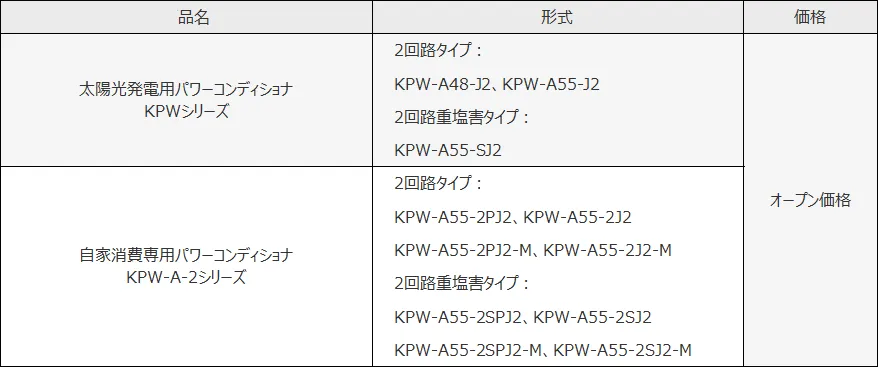
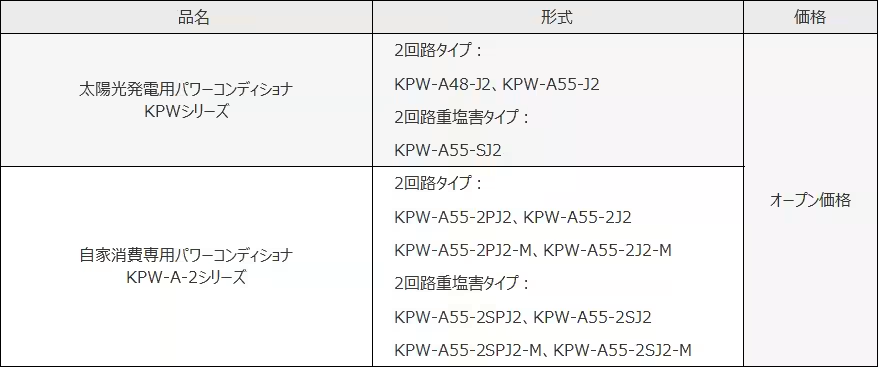
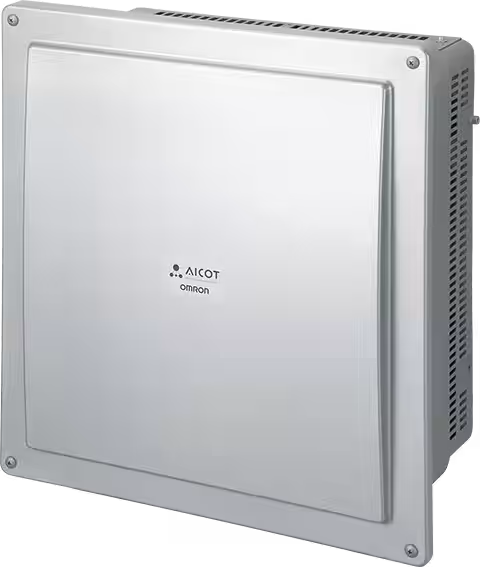
Recognizing this shift, Omron has expanded its product line for low-voltage industrial power conditioners by adding a two-circuit model that supports high-current solar panels. By increasing the maximum operating current, this new model allows for a broader variety of system configurations, accommodating different roof shapes and installation conditions. This flexibility is crucial for enhancing the adoption of high-current solar panels in self-consumption applications, facilitating custom system setups that optimize energy generation.
Key Features
1. Support for Mainstream High-Current Solar Panels
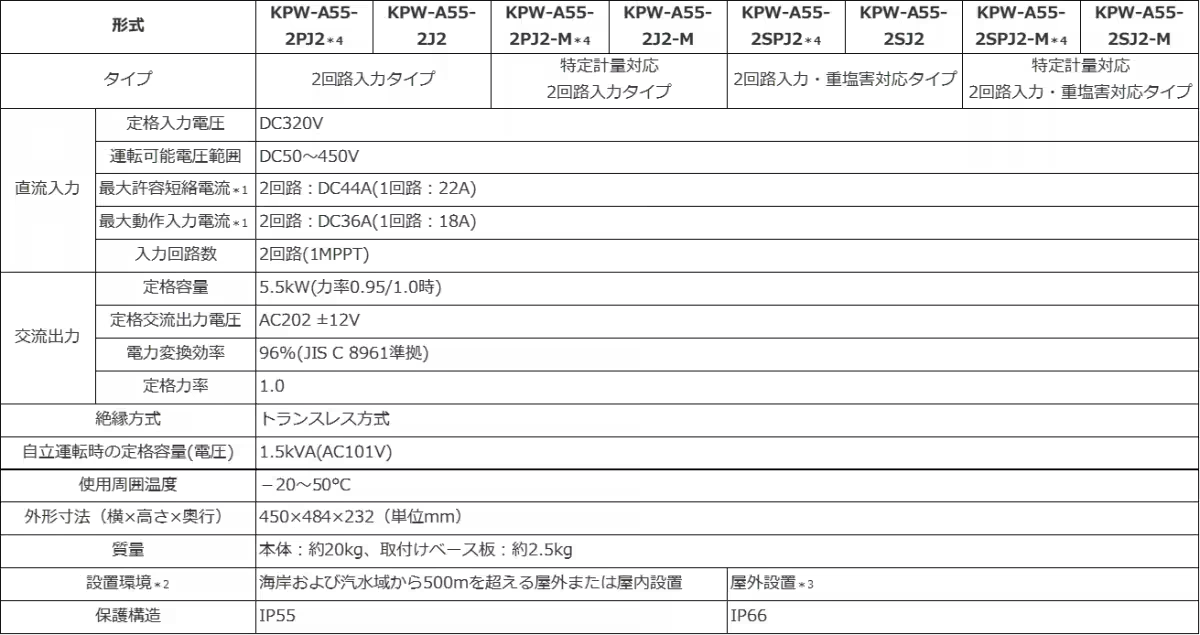
The new power conditioners have increased the maximum operating current from the previous 2-circuit DC29A (14.5A per circuit) to DC36A (18A per circuit). Furthermore, thanks to a functional enhancement implemented in May 2026, the maximum permissible short-circuit current can support up to DC44A (22A per circuit) during two-circuit operation. This improvement significantly enhances compatibility with high-current solar panels and widens the design options for self-consumption system configurations.
2. Ease of Installation and Maintenance
Despite the increase in maximum operating current, the dimensions and weight of the new power conditioners remain consistent with previous models. This means that the installation and maintenance processes will not be altered, making it easier for contractors to transition to the upgraded technology without additional complexity.
3. Diverse Lineup for Various Applications
Omron has added the two-circuit model tailored for self-consumption projects focused on high current capacity. At the same time, they will continue to offer the original four-circuit model for projects requiring a high overloading ratio. This dual offering enables tailored recommendations based on specific application needs and installation conditions. Additionally, there’s a dedicated power conditioner series (KPV series) that has also been introduced for standalone installations.
Specifications and Standards
The new power conditioners are categorized under the KPW-A/KPW-A-2/KPV series. It is important for users to design systems that comply with both the maximum short-circuit current value and maximum operating current value. Users should also be aware of installation conditions listed in the installation manual, including avoiding areas exposed to direct sunlight, volatile substances, or corrosive gases.
Commitment to Renewable Energy
As part of its ongoing commitment to adapt to changes in the solar power market, Omron will continue to innovate in product development. Their efforts aim to contribute to the increased adoption of renewable energy, ultimately driving progress towards carbon neutrality.
Conclusion
Omron Social Solutions Corp. has long been a pioneer in automation technology, offering a broad range of products from automatic ticketing systems to advanced energy management tools. By integrating IoT, AI, and power electronics technologies, the company continues to provide services from proposal through operation and maintenance, reinforcing the sustainability of social infrastructure and striving for a socially responsible future.
For more information about these new power conditioners or to inquire about release dates, please refer to the company’s official communications.


Topics Consumer Products & Retail)



【About Using Articles】
You can freely use the title and article content by linking to the page where the article is posted.
※ Images cannot be used.
【About Links】
Links are free to use.