



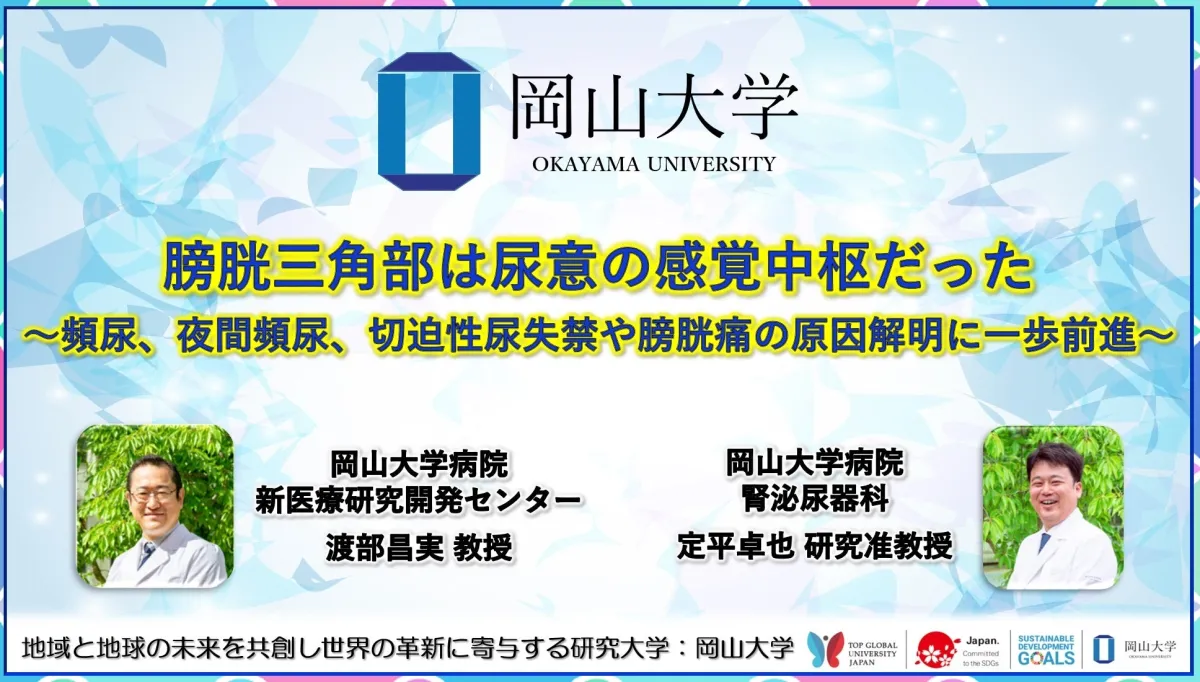
Okayama University Unveils Groundbreaking Study on Bladder Function and Urinary Disorders
Okayama University Uncovers Bladder Trigone's Role in Urinary Sensation
Recently, a research team at Okayama University, led by Associate Professor Takuya Sadahira and Professor Masami Watanabe, has made significant strides in understanding the bladder trigone's function as a sensory hub. This triangular region located at the exit of the bladder has shown to be densely packed with sensory nerve networks, contributing to the sensations of urinary urgency, pain, and other related symptoms.
Key Findings
The team published their findings in a narrative review in the journal Cureus. The bladder trigone has been identified as a crucial site where sensory receptors and various molecular components, such as PIEZO2, P2X3, and TRPV1, are concentrated. This high density of receptors indicates the trigone's vital role in processing sensations linked to bladder conditions, particularly in cases of overactive bladder and interstitial cystitis, both of which can cause significant discomfort and distress for patients.
The research indicates that these specialized sensory nerves react strongly to stretching and chemical stimuli, effectively transmitting signals of urgency and pain to the brain. Furthermore, these nerves are subject to changes influenced by inflammation and aging, which can lead to chronic hypersensitivity and exacerbate symptoms.
Implications for Treatment
These findings not only enhance our understanding of bladder function but also suggest potential avenues for future treatment strategies. Specifically, targeting the receptors present in the bladder trigone could lead to the development of new therapeutic options. The research team has highlighted the possibility of utilizing substances like botulinum toxin to inhibit the overly excited sensory nerves, potentially alleviating symptoms.
Professor Watanabe, reflecting on years of clinical experience with conditions like overactive bladder and interstitial cystitis, expressed optimism. He emphasized the importance of understanding the physiological basis behind patients' complaints of urgency and discomfort, stating, “This research lays the groundwork for future treatment strategies, particularly through the ETA method.”
Associate Professor Sadahira added, “The bladder is often perceived merely as an organ for urine storage, but it is, in reality, a complex sensory apparatus. Our goal is to eventually develop treatments that can control the sensation of urgency itself.” The team is currently advancing their research on the ETA treatment method, which shows promise in mitigating the burdensome effects of frequent urination and bladder pain.
Future Research Directions
As the research progresses, the team aims to collaborate with experts in neuroscience, materials engineering, and pharmaceutical companies. By pooling expertise, they hope to develop technologies that could harmonize bladder sensations and enhance patient quality of life. Our understanding of bladder function is evolving, revealing its intricate nature and signaling an exciting frontier in urinary health research.
Conclusion
This cutting-edge research from Okayama University not only contributes to existing medical knowledge but also holds promise for innovative therapies. As we continue to explore the functionalities of the bladder trigone, we can look forward to future breakthroughs that may profoundly impact the management of urinary disorders.
For additional information on this research, visit Okayama University's official site and check their updates in the medical field.





Topics Health)
【About Using Articles】
You can freely use the title and article content by linking to the page where the article is posted.
※ Images cannot be used.
【About Links】
Links are free to use.