



Unraveling the Toxic Mechanism of BECb Toxin from Clostridium perfringens
Understanding the Toxicity of BECb Toxin from Clostridium perfringens
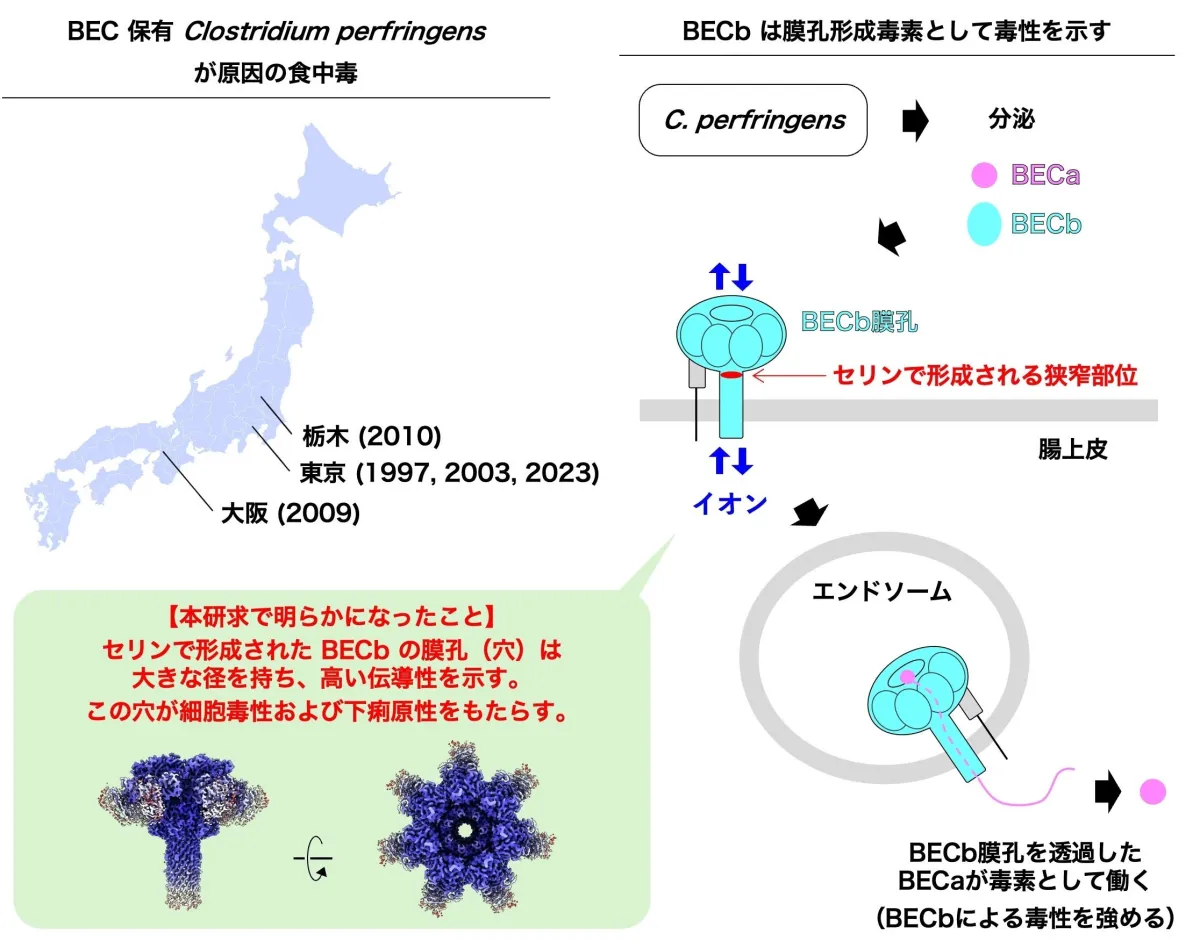
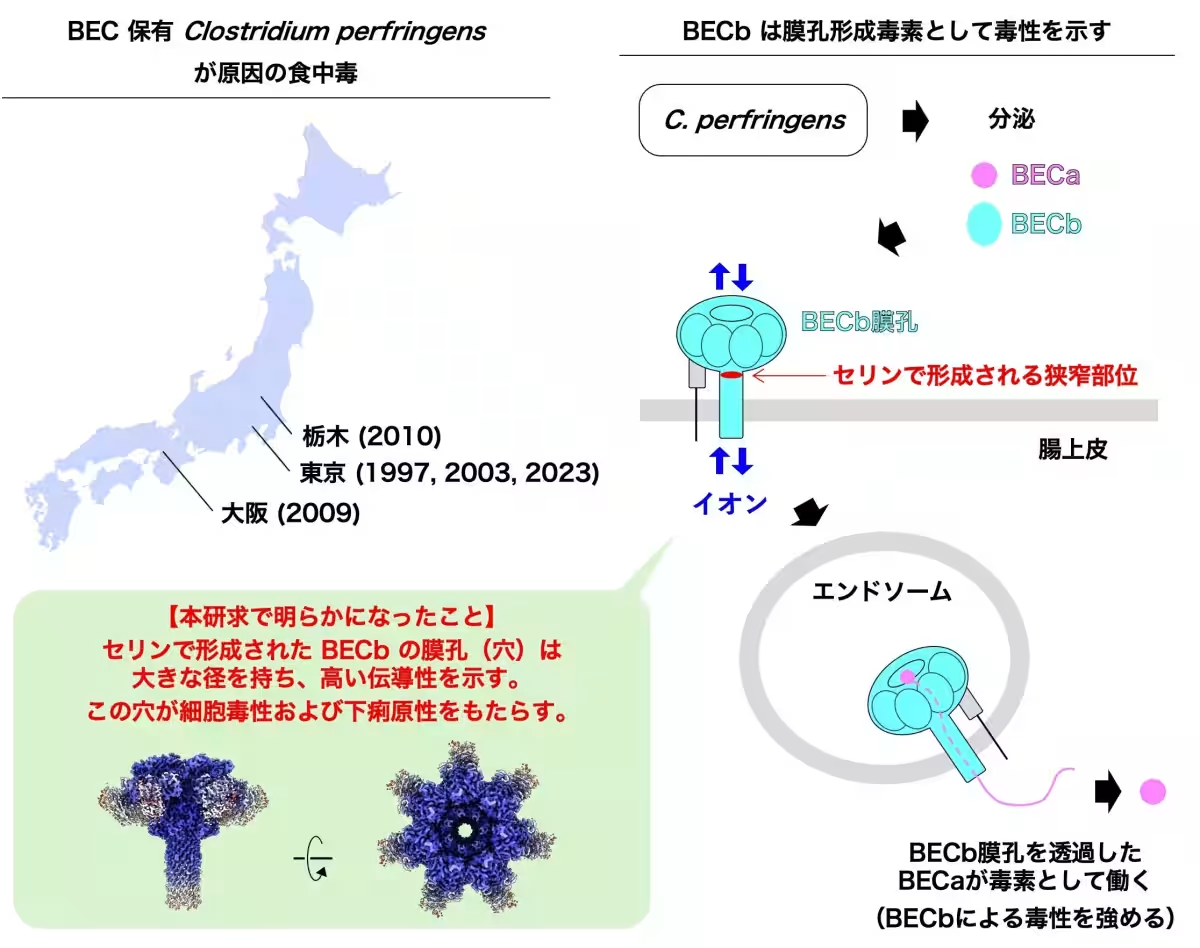
A collaborative research team from several institutions, including Yoshida Toru at Nihon Joshi Daigaku and Kamenma Chie from Tokyo Metropolitan Research Institute of Public Health, has made significant advancements in understanding the BECb (also known as CPILEb) toxin. This toxin, derived from the infamous food poisoning bacterium Clostridium perfringens, has been identified as a potent cause of food poisoning in Japan. The central focus of their study was to uncover the underlying reasons BECb exhibits cytotoxic and enterotoxic properties.
The Background of the Research
Clostridium perfringens is a well-known bacterium responsible for foodborne illnesses due to its ability to produce a protein called CPE. However, in several outbreaks in Japan between 1997 and 2023, variants of this bacterium that did not produce CPE were identified. Instead, the BEC (or CPILE) toxin emerged as the main culprit behind these food poisoning cases.
BEC consists of two protein components: the alpha component (BECa) and the beta component (BECb). While most two-component toxins have the alpha component as the primary toxin, it was observed that BECb was responsible for the toxicity in this case. Despite previous findings, the precise mechanism by which BECb operates had yet to be elucidated.
Discovering the Mechanism of Toxicity
The research team focused on the unique characteristics of the pore-forming component BECb. This component, responsible for creating small holes in cell membranes, was previously thought to function similarly to other b components found in toxins like iota. However, the researchers found that BECb's binding site was composed of serine instead of the typical phenylalanine. When this substitution was made, a marked decrease in cytotoxicity and enterotoxicity was observed.
Further analyses showed that the sizeand hydrophilicity* of the pores formed by serine residues in BECb significantly differed from those in phenylalanine-containing components, leading to increased ion conductivity. These insights suggest that BECb operates more as a membrane-permeabilizing toxin rather than following the conventional two-component toxin model.
Implications of the Findings
Given that Clostridium perfringens is prevalent in various environments—food sources, soil, and water—understanding the mechanism of BEC toxin provides essential insights for diagnostic and therapeutic developments. With the identification of key factors contributing to BECb's toxicity, there is potential for creating new treatments for food poisoning caused by this bacterium.
Future Directions
While the research team has made strides in understanding the mechanism of BECb, the precise structural details of the toxin still need to be elucidated. Further studies aimed at deciphering the detailed structure of BECb could lead to a more comprehensive understanding of its mode of action, paving the way for effective intervention strategies.
Publication Information
The research findings are published in Communications Biology*, titled Serine clamp of Clostridium perfringens binary toxin BECb (CPILEb)-pore confers cytotoxicity and enterotoxicity. The key contributors include Yoshida Toru, Kamenma Chie, and Ninomiya Yuki among others from various renowned universities and institutions.
For more details, you can check the official publication here with DOI: 10.1038/s42003-025-08519-5.
Topics Health)
【About Using Articles】
You can freely use the title and article content by linking to the page where the article is posted.
※ Images cannot be used.
【About Links】
Links are free to use.