



Exploring the Potential Benefits of VR Headsets on Dry Eye Syndrome
Understanding the Connection Between VR Headsets and Dry Eye Symptoms
Introduction
Virtual Reality (VR) has seen rapid advancements, becoming a popular medium for gaming and immersive experiences. However, concerns about user comfort and visual strain have arisen, particularly regarding dry eye syndrome. Recent findings from a research team from Waseda University's Graduate School of Human Sciences and Kyoto Prefectural University of Medicine offer a promising perspective: VR headset usage may actually reduce the incidence of dry eye.
Key Findings of the Research
Observations Using a Novel System
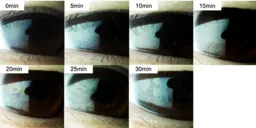
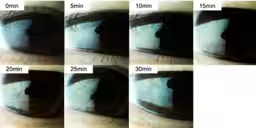
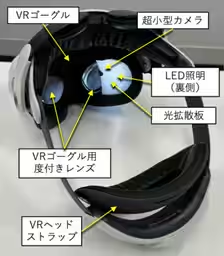
The research team developed a unique system that integrates a miniature camera into a VR headset, allowing them to monitor the dynamics of the tear film while participants engaged in VR gameplay for 30 minutes. Notably, the study involved 14 healthy individuals who played a version of Tetris while their tear film characteristics were closely observed.
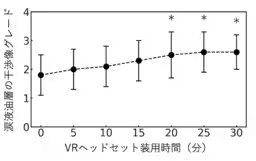
The results indicated a significant increase in the interference pattern grade of the tear oil layer—a crucial indicator for evaluating the severity of dry eye symptoms. This increase suggests that the use of VR headsets could enhance the thickness of the tear film's oil layer, thereby lowering the risk of dry eye.
Temperature Changes Observed
Along with the changes in tear film dynamics, researchers noted a rise in the temperature at the surface of the cornea and eyelids both before and after gameplay. This supports the idea that VR headset usage may have a complex impact on ocular surface conditions, possibly benefiting users in the long run, despite initial concerns about prolonged screen time.
Historical Context: Previous Research
Prior studies had predominantly focused on the adverse effects of VR headset usage, reporting decreased blink rates and increased visual discomfort among users. Comparisons before and after usage suggested improvements in tear film stability, although results varied and lacked cohesion. None of the previous research captured real-time changes in tear film stability during active VR use, making this study a pivotal exploration in understanding longitudinal effects.
Innovative Methodology of the Current Study
By employing a device that allows for real-time monitoring of tear film dynamics during gaming, the researchers aimed to fill gaps highlighted in earlier studies. They documented that after around 20 minutes of gameplay, the increase in interference pattern grades became significantly evident. Interestingly, other metrics related to tear layer performance did not show meaningful changes, leading to questions about the underlying mechanisms at play.
Implications for Society and Future Research
The introduction of a real-time monitoring system for tear film changes suggests new possibilities for optimizing VR headset designs to promote eye health. This research not only offers a glimpse into how VR technology can play a role in preventing dry eyes but also points to the potential for future investigations that could lead to guidelines for safe headset usage. Understanding how these dynamics affect individuals with existing ocular conditions remains a vital next step.
Future Directions
Despite establishing that there is a potential increase in tear film oil layer thickness during VR usage, several questions remain unanswered. For instance, will this effect hold true for individuals suffering from chronic dry eye or meibomian gland dysfunction? The variability in tear film stability across different eye conditions necessitates further research, particularly involving diverse patient populations. Additionally, incorporating a control group of non-headset users in future studies will provide valuable comparative data to break down the insulating effects of VR headsets on eye health.
Concluding Remarks by Researchers
As digital lifestyles become increasingly dominant, eye-related discomforts, including dry eye, continue to affect user populations. This research opens doors to understanding VR headset use as a non-invasive method of potentially alleviating dry eye symptoms. The promising results suggest that short-duration sessions with VR technology may enhance tear film stability, encouraging further investigations to validate these findings and contribute to our understanding of optimal visual health in a tech-driven society.
Reference Information
- - Publication: Scientific Reports
- - Title of Paper: Time-course observation of tear film dynamics during VR headset use
- - Authors and Affiliations: Yoshirō Okazaki (Waseda University), Norihiko Yokoi (Kyoto Prefectural University of Medicine) - Corresponding Author
- - Publication Date: September 26, 2025
- - DOI Link: Scientific Reports DOI
Topics Health)
【About Using Articles】
You can freely use the title and article content by linking to the page where the article is posted.
※ Images cannot be used.
【About Links】
Links are free to use.