




Okayama University Successfully Transplants Cartilage Tissue from Human iPS Cells to Mini-Pig Model
Breakthrough in Regenerative Medicine at Okayama University
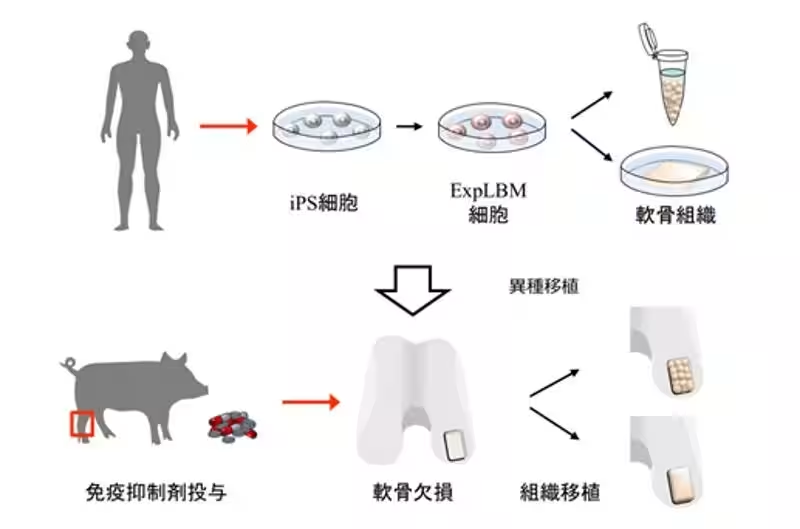
A revolutionary research project led by Okayama University has made significant strides in the field of regenerative medicine. Researchers have successfully generated various forms of cartilage tissue from human-induced pluripotent stem (iPS) cells. This groundbreaking achievement opens new avenues for treating joint disorders. The findings were published in the prestigious journal, npj Regenerative Medicine.
The research team, which includes PhD student Shota Takihira and Professor Tsuyoshi Hodada, successfully crafted cartilage tissues in different shapes, including spheres and plates. Subsequently, they implanted these engineered tissues into a mini-pig model with damaged knee cartilage. The team confirmed that the implanted cartilage not only integrated into the existing tissue but also maintained its functionality post-surgery.
The Importance of Cartilage Repair
Cartilage, a critical tissue for joint health, has a notoriously limited self-repair capability. Current medical treatments for cartilage damage remain insufficient, leaving many patients without viable options. The innovative methods developed at Okayama University aim to address this gap, potentially leading to the first effective treatments for cartilage injuries and degenerative joint diseases.
Takihira expressed optimism about the future implications of their work: "Having worked extensively on cartilage regeneration and drug development, I hope this research will pave the way for real treatment options for patients suffering from cartilage damage."
Future Applications in Medicine
With the successful transplantation and confirmation of biological functions in a living model, the research team believes that their methods can offer a safer and more effective solution for human applications in the future. As they move toward clinical trials, further studies will explore the long-term efficacy and safety of using iPS cell-derived cartilage in humans.
Published Research Details
The research findings are documented in a detailed paper titled Bioengineered chondrocyte-products from human induced pluripotent stem cells are useful for repairing articular cartilage injury in minipig model. The authors include Takihira, Takao, and several other distinguished researchers within the field. The paper’s DOI is 10.1038/s41536-025-00420-3.
This project received funding from multiple grants, highlighting the collaborative effort within the scientific community to enhance regenerative medicine techniques. Grants included various foundation supports and national research funding aimed at advancing medical science and technology.
Conclusion
The successful engineering of cartilage tissue from iPS cells represents a significant leap toward more effective treatments for joint health. As research unfolds, the hope is to develop regenerative therapies that can ultimately improve the lives of patients affected by cartilage damage and related conditions, driving further innovation in medical science at Okayama University and beyond.







Topics Health)
【About Using Articles】
You can freely use the title and article content by linking to the page where the article is posted.
※ Images cannot be used.
【About Links】
Links are free to use.