



New GlycoChat Method Uncovers Immune Evasion Mechanism in Pancreatic Cancer
Discovering Immune Evasion Mechanisms in Pancreatic Cancer with GlycoChat
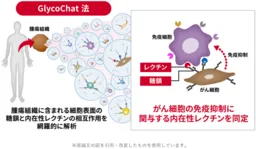
Recent research from the National Institute of Advanced Industrial Science and Technology and the University of Tsukuba has unveiled a novel technique named GlycoChat, designed to comprehensively explore glycan-lectin interactions in pancreatic cancer tissues. The study focuses on how these interactions influence immunosuppressive effects mediated by macrophages in the tumor microenvironment.
Understanding Glyco-lectin Interactions
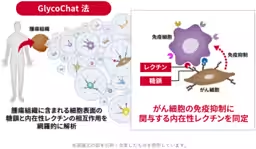
In recent years, it has become evident that glycans, which are sugar chains attached to proteins on the surface of cancer cells, play a pivotal role in immune evasion by binding to lectins found on immune cells. This process can hinder the immune response, effectively allowing cancer cells to escape detection and attack. GlycoChat aims to characterize these interactions at a detailed level, identifying combinations of glycans and lectins that contribute to immune suppression, particularly in difficult-to-treat cancers like pancreatic cancer.
The GlycoChat method employs single-cell glycan and RNA sequencing technology (scGR-seq) to map these interactions. By analyzing tumor tissues from pancreatic cancer patients, researchers have identified specific endogenous lectins in macrophages that interact with glycans on pancreatic cancer cells, contributing to immune tolerance.
Clinical Implications and Future Directions
This innovative method sets the stage for the identification of glycan-associated immune checkpoint molecules. Such checkpoints could serve as new therapeutic targets, potentially leading to the development of inhibitors aimed at these mechanisms of immune suppression. By focusing on specific glycan-lectin interactions, the research team hopes to inform the design of tailored immunotherapies that take into account individual patient profiles.
The study has garnered financial support from several funding bodies, underpinning its potential significance in the realm of cancer treatment. The findings are scheduled for publication in 'Advanced Science' on January 13, 2026.
A Deeper Look at the Research
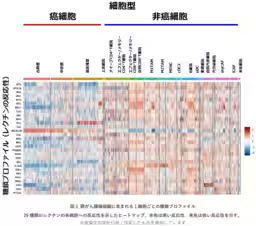
The researchers meticulously gathered samples from surgical removals of pancreatic tumors and utilized scGR-seq to analyze the glycan profiles of over 54,000 individual cells across multiple patient specimens. This approach revealed 19 different cell types within the tumor microenvironment, including epithelial cells, various T cell subtypes, and macrophages, among others. The precise role of specific glycan types in modulating the immune response of these cells demonstrates an intricate relationship between cancer cells and the immune system.
Two notable glycans, CLEC10A and SIGLEC3, were identified as pivotal in facilitating immune suppression through their interaction with pancreatic cancer cells. Subsequent experiments indicated that these lectins can enhance binding to cancer cells, promoting a microenvironment conducive to tumor growth and survival.
Conclusion
The implications of this research extend far beyond theoretical interest; they offer practical pathways to novel cancer therapies that could significantly improve patient outcomes. By employing the state-of-the-art GlycoChat method, the research team can continue to elucidate the complexities of immune interactions within various cancer types, paving the way for the development of personalized and effective treatment strategies.
The study exemplifies the intersection of innovation in cancer research and therapeutic development, highlighting the importance of targeted investigations into how cancer manipulates the immune system. As we advance, the continuous funding and support for such groundbreaking research will be crucial in the fight against cancer—in this case, focusing on pancreatic cancer, a particularly challenging adversary in oncology.
Topics Health)
【About Using Articles】
You can freely use the title and article content by linking to the page where the article is posted.
※ Images cannot be used.
【About Links】
Links are free to use.