



Okayama University Completes Clinical Trial Using Innovative Needle-Piercing Robot for Cancer Treatment
Advancements in Cancer Treatment: A Breakthrough from Okayama University
Overview
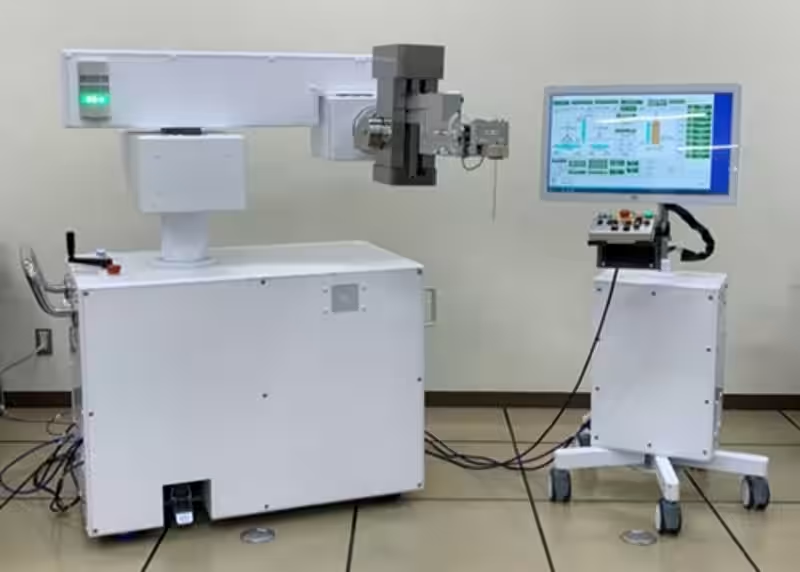
In a groundbreaking development in the field of oncology, researchers from Okayama University have successfully completed clinical trials using an innovative needle-piercing robot designed for minimally invasive cancer treatments. This new technology has shown promising results, particularly concerning the safety and efficiency of procedures that typically involve significant radiation exposure for medical professionals.
Robotic Precision
The clinical trial, which focused on CT-guided interventions, demonstrated that the needle-piercing robot achieved a 100% success rate in all cases. The use of robotics allowed physicians to perform needle insertions with precision comparable to that of traditional manual methods, all while eliminating the risk of radiation exposure associated with conventional procedures. This has exciting implications for the future of cancer treatments, potentially alleviating longstanding concerns regarding the occupational hazards faced by healthcare providers.
Research Team and Publication
The study was conducted by a team led by Professor Takao Hiraki from the Graduate School of Medicine, Dentistry, and Pharmaceutical Sciences at Okayama University, alongside Professors Tetsushi Kamegawa and Takayuki Matsuno from the Graduate School of Environmental and Life Science. The findings were published in the American journal Radiology Advances on April 4, 2025, further establishing Okayama University as a vital player in the advancement of medical technology.
Significance of the Research
This research not only showcases a significant evolution in cancer treatment methodologies but also highlights the collaborative efforts between engineering and medical fields at Okayama University over the years. The robotic system’s ability to maintain treatment effectiveness while addressing healthcare professionals’ exposure to radiation could lead to a paradigm shift in minimally invasive procedures. The long-awaited solution to reducing radiation risks is within reach, which is a significant win for both medical staff and patients alike.
A Message from Professor Hiraki
Professor Hiraki expressed gratitude for the understanding and support from patients and collaborators throughout the development of this innovative technology. He emphasized the importance of this achievement and the need to continue improving the robot’s features to enhance cancer treatment outcomes. The ultimate goal is to develop a system that serves both patients and healthcare professionals beneficially, while pushing toward practical applications in the medical field.
Future Directions
Moving forward, the research team is dedicated to further evolution of the needle-piercing robot, with a vision for it to become a standard tool in cancer treatment procedures. They are committed to practical applications of their technology, aiming to not only optimize the effectiveness of cancer treatments but also ensure that safety remains a priority.
Conclusion
Okayama University’s advancements in cancer treatment technology mark a significant step forward in the fight against cancer. As trials conclude successfully, the needle-piercing robot represents not just an advancement in technology but a new avenue for improving patient care and safety in medical practices. The outcomes of this research will undoubtedly influence cancer treatment practices in the near future, embodying the spirit of innovation and collaboration essential in medical advancements today.
For additional details on this development, refer to the full press release and research documentation available on the Okayama University website.



Topics Health)

【About Using Articles】
You can freely use the title and article content by linking to the page where the article is posted.
※ Images cannot be used.
【About Links】
Links are free to use.