



JAXA and Spacid Initiate Joint Demonstration of Quasi-Zenith Satellite System's Signal Certification
JAXA and Spacid Collaborate on Space Certification System
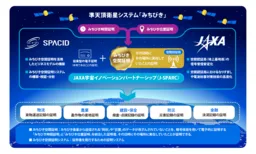
In an ambitious partnership, the Japan Aerospace Exploration Agency (JAXA) and its wholly-owned subsidiary, Spacid, have initiated a joint demonstration of the "MICHIBIKI Space Certification System." This innovative project leverages the signal authentication services provided by the Quasi-Zenith Satellite System, known as "MICHIBIKI," with the aim of fostering new avenues in the space-related business sector.
Background of the Initiative
The signal authentication services offered by the MICHIBIKI system are set to launch in April 2024. These services will allow users to verify that signals received by their devices genuinely originate from the MICHIBIKI satellites. This verification employs electronic signature technology to confirm the authenticity of navigation messages sent via satellite, significantly improving the system's ability to detect spoofing attacks, where malicious actors attempt to send fraudulent positioning signals. The anticipated applications of this service are broad, particularly in fields that require high safety and reliability, such as autonomous driving, drone delivery, and infrastructure maintenance.
However, the ongoing evolution of spoofing techniques and other forms of interference remain considerable challenges. Additionally, using the signal authentication service necessitates specialized receivers, which has hindered widespread adoption across various industries.
Overview and Roles in the Joint Demonstration
To address the aforementioned challenges, JAXA is focusing on the development of the MICHIBIKI Space Certification System. The initiative aims to combine conventional electronic certification with signals of "location" and "time" from MICHIBIKI satellites. This innovation will provide proof of the presence of an entity in a specific place at a given time.
Through this demonstration, JAXA aims to enhance the stability of the signals received at the ground-based space certification stations (known as "Space Authentication Centers") and improve the response to jamming and other forms of signal interference. This endeavor will contribute to the advancement of MICHIBIKI technology.
Spacid, on the other hand, plans to create a mechanism that enables the use of commonly available devices, such as smartphones. This will facilitate the realization of a "Data Trust," ensuring the integrity of digital data and its information across various fields, including logistics, agriculture, construction, disaster prevention, and finance.
Desired Outcomes
The joint demonstration seeks to create value through the development of the MICHIBIKI Space Certification System, which combines signal authentication and existing timestamp protocols to corroborate the timeframe and location of digital data acquisition. Key outcomes include:
- - Ensured Authenticity of Data: JAXA and Spacid are building a framework that certifies digital data (such as photographs and measurement data) as having been collected at specific times and locations, thus fostering an environment of trust in data utilization across various sectors.
- - Reliable and Stable Signal Authentication Infrastructure: JAXA will strengthen the resilience of positioning satellite signals against spoofing and jamming threats, creating a secure and robust framework for signal authentication that will contribute to its safe use.
- - Accessibility of Space Certification for All: By providing applications for smartphones instead of requiring dedicated hardware, Spacid aims to enable cost-effective integration of the MICHIBIKI Space Certification System, promoting usage across diverse environments, including international markets.
Anticipated Applications
Based on market research, Spacid and JAXA foresee applications in several sectors post-commercialization:
- - Logistics: Verification of delivery completion and documenting the condition and movement of goods in international logistics.
- - Agriculture: Certification of the origin of agricultural products.
- - Construction and Maintenance: Ensuring the authenticity of data for construction records and inspection completions.
- - Disaster Prevention: Guaranteeing the reliability of information gathered in disaster areas.
- - Finance: Integrating location data into cashless payment systems to enhance security.
Conclusion
The collaboration between JAXA and Spacid represents a significant step forward in leveraging satellite technology for practical applications across a multitude of industries. By enhancing data authenticity and ensuring the reliability of positioning systems, this initiative stands to make a profound impact on how industries approach safety and efficiency in the digital age.
Topics Other)
【About Using Articles】
You can freely use the title and article content by linking to the page where the article is posted.
※ Images cannot be used.
【About Links】
Links are free to use.