



Unveiling the Primitive Enzyme Model for ATP Production on Early Earth
Unveiling the Primitive Enzyme Model for ATP Production on Early Earth
A groundbreaking study has constructed a primitive enzyme model that elucidates the production of adenosine triphosphate (ATP)—identified as the "energy currency of life"—from a significantly reduced set of amino acids. This research not only challenges the traditional understanding of enzymatic functions but also signals a potential shift in how we comprehend the evolutionary development of early biochemical processes.
Research Overview
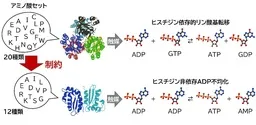
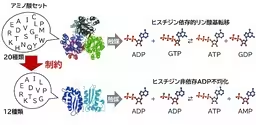
ATP is a pivotal molecule for all living organisms, serving as a fundamental energy carrier. It is synthesized through complex enzymatic reactions involving twenty standard amino acids that form contemporary proteins. However, in the primordial earth environment, organisms may have relied on a limited number of available amino acids. A team led by Professor Satoshi Akanuma from Waseda University and Shunsuke Tagami from RIKEN discovered that by constructing a primitive enzyme model consisting of only twelve amino acids, previously overlooked biochemical capabilities could emerge.
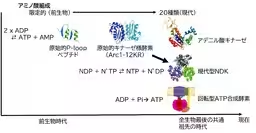
The study specifically highlights the configuration of an ancestor form of the enzyme nucleoside diphosphate kinase (NDK), where it was found that the limited amino acid composition not only facilitated ATP production—an ability absent in the original enzyme—but also proposed a novel catalytic mechanism within the enzyme's active site. Notably, this newly discovered pathway for ATP production could present implications for understanding the earliest forms of energy conversion in biological systems.
Key Findings
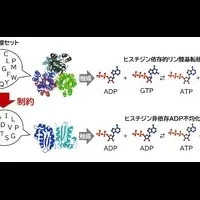
1. Limited Amino Acid Diversity: The research successfully constructed an enzyme model made from only twelve specific amino acids thought to be available on primitive Earth. This limited composition was crucial for unlocking unique ATP production functions.
2. Discovery of New Catalytic Mechanisms: Unlike its modern counterpart, the model (designated as Arc1-12KR) was able to catalyze the formation of ATP from two molecules of adenosine diphosphate (ADP)—a task not achievable by the traditional NDK, which relies heavily on the presence of the catalytic amino acid histidine.
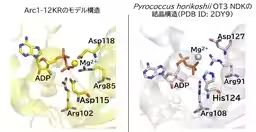
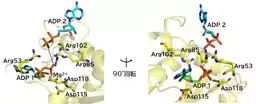
3. Active Site Reconfiguration: The absence of histidine in the Arc1-12KR model raised significant questions about the coordination of the active site. Through advanced structural analyses, differing arrangements of amino acids such as aspartic acid and magnesium ions emerged as potentially key players in ATP synthesis, significantly diverging from known enzymatic pathways.
This research stands to reshape our understanding of the enzymatic potential hidden within restricted amino acid sets and provides a clue to how life might have harnessed energy in its infancy.
Societal Impact
The implications of this research extend beyond the laboratory. By uncovering pathways that could resemble the initial energy conversion methods used by early life forms, we may connect more dots in the evolutionary puzzle. The finding enhances our understanding of the origins of ATP, shaping perspectives in areas like artificial enzyme design and protein engineering.
Furthermore, this work suggests that re-evaluating amino acid compositions in enzyme construction allows us to explore functions and reactions previously overlooked. In light of these findings, future explorations into early protein functions using restricted amino acids may uncover novel biochemical reactions fundamental to the roots of life.
Future Directions
Moving forward, it is essential to dissect the precise mechanisms through which Arc1-12KR facilitates ATP generation. Special attention will be dedicated to understanding how ADP molecules interact within the enzyme, enabling the transfer of phosphate groups. While this study focused solely on one enzyme model, expanding this approach to analyze other enzymes under similar restricted conditions could reveal even more unexpected enzymatic features that reflect life in its formative stages.
Engaging with this primitive model not only aids in reconstructing the energy conversion mechanisms of early life but also poses larger questions related to the co-functionality of metabolic networks within primitive biochemistry. By piecing together these foundational aspects of biology, we edge closer to understanding how organisms adapted to their environments, setting the stage for the rich diversity of life observed today.
In conclusion, the revelations brought forth by the establishment of this primitive enzyme model converge on a pivotal understanding of ATP's ancestral pathways, urging us to rethink the narratives written about life's origins. As scientists continue to navigate the complexities of enzymatic evolution, the significance of each finding reverberates through multiple fields of study, potentially altering our understanding of life's journey on Earth.
Topics Health)

【About Using Articles】
You can freely use the title and article content by linking to the page where the article is posted.
※ Images cannot be used.
【About Links】
Links are free to use.