



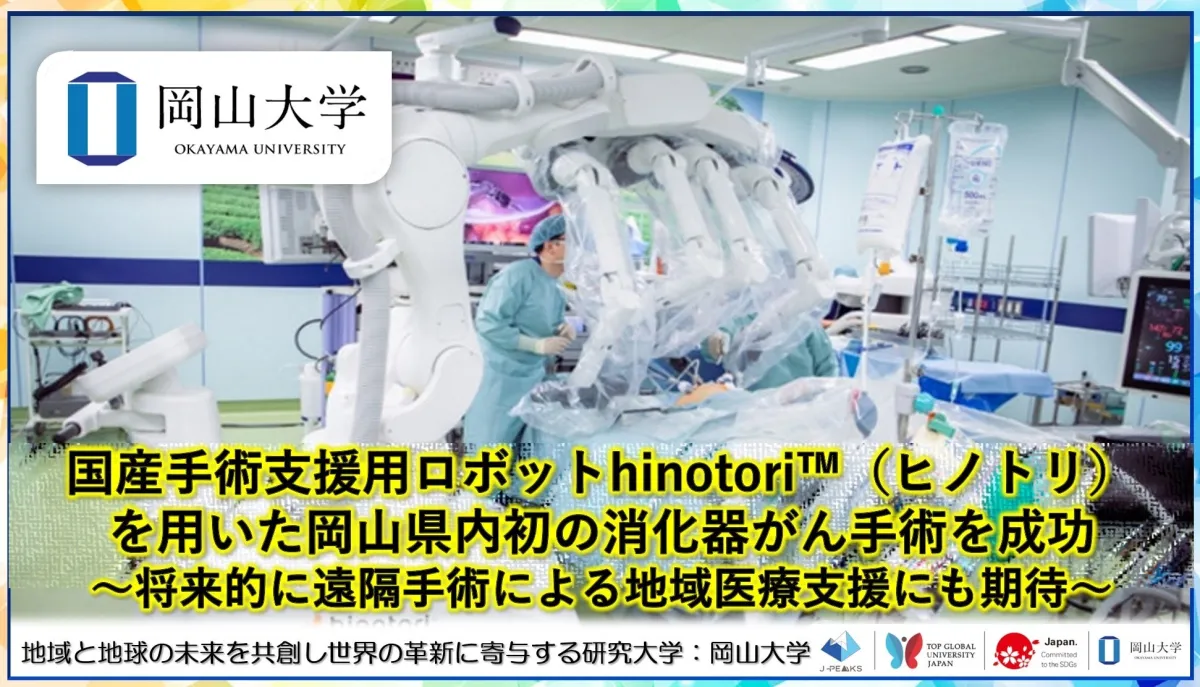
Okayama University Successfully Performs First Surgery Using Domestic Robot hinotori™ in Okayama Prefecture
Okayama University Achieves Milestone in Surgical Robotics
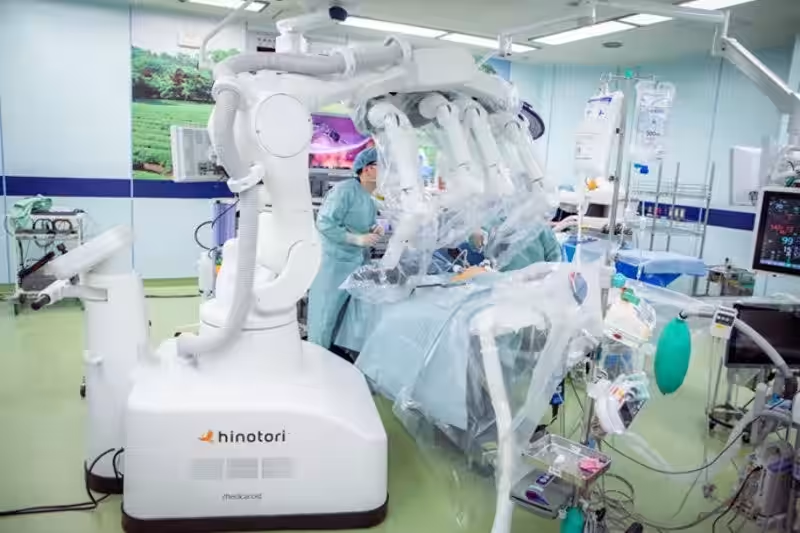
In early October 2025, Okayama University marked a significant advance in surgical technology by performing the first-ever gastroenterology surgery using the domestic surgical assistant robot, hinotori™. This landmark operation not only underscores Japan's commitment to medical innovation but also aims to enhance local healthcare solutions through robotics.
The surgery was a collaborative research endeavor with Sysmex Corporation, focusing on assessing the safety and effectiveness of hinotori™. This robot is designed to be comparable to the widely-utilized da Vinci surgical system, but tailored more closely to the needs of Japanese surgeons and the healthcare environment. It reduces the physical burden on patients during procedures, potentially leading to less post-operative pain, thereby improving recovery times.
Professor Toshiyoshi Fujiwara and Associate Professor Arashi Kuroda lead the surgical team from Okayama University’s Faculty of Medicine, making monumental strides in the fight against gastrointestinal cancers. The introduction of hinotori™ offers exciting prospects for future remote surgeries, providing communities with critical medical support, especially in areas facing a shortage of surgeons.
As a core regional hospital, Okayama University Hospital is dedicated to delivering high-quality surgical care to a wide array of patients, regardless of their geographic location. With this surgical robot, the hospital aims to expand its capabilities to better serve the local populace and beyond.
Innovative Design and Objectives
The hinotori™ robot is developed with a focus on minimizing invasiveness while maximizing the surgeon's dexterity. A notable aspect of the design is its aim to lessen the physical strain on patients, reflecting a deep commitment to patient-centered care. The development team envisions that hinotori™ will not only assist in local surgeries but also pave the way for remote-assisted surgeries, addressing the increasing demand for specialized healthcare.
Kuroda stated, “The hinotori™ derives its name from Osamu Tezuka's iconic work 'Phoenix'. It symbolizes rebirth, the value of life, and immortality—the aspirations that we hope to embody in a robot that saves lives.” With the global demand for surgical robots on the rise, the inclusion of a homegrown product cheered by Japanese spirit adds a unique narrative to the evolving landscape of surgical technology.
Future Implications
The potential applications of hinotori™ are vast. As it becomes integrated into surgical practices, the robot could address issues like the surgeon shortage in various regions, significantly enhancing accessibility to advanced medical care. The team at Okayama University is hopeful that their innovative practices will influence future healthcare models both domestically and globally.
In the fast-paced world of medical technology, the success of hinotori™ sets a precedent for other initiatives and reaffirms Okayama University’s role as a leader in innovative, community-focused healthcare. Continuous research, collaboration, and technological development are critical paths forward as the medical community navigates the complexities of modern healthcare needs.
With a focus on sustainable development, Okayama University is also channeling its efforts toward integrating the principles of the UN's Sustainable Development Goals (SDGs), ensuring that advancements in healthcare align with broader global objectives. As we look to the future, the marriage of robotics and medicine at institutions like Okayama University promises to unlock new horizons in patient care and surgical precision.
For further details about the hinotori™ and its impact on the surgical community, please refer to the complete research documentation available on the Okayama University website.


Topics Health)
【About Using Articles】
You can freely use the title and article content by linking to the page where the article is posted.
※ Images cannot be used.
【About Links】
Links are free to use.