



Okayama University's 'BIZEN Ecosystem' Selected for Startup Support by AMED
Okayama University's Innovative BIZEN Ecosystem
In a significant move towards enhancing medical technology and startup culture, Okayama University has proudly announced that its initiative, the BIZEN Ecosystem, has been accepted into the Startup Support Program by the Japan Agency for Medical Research and Development (AMED). This program is part of Japan's efforts to foster advanced medical devices and is recognized as one of four specialized centers focusing on medical device development and startup creation among 13 nationwide locations.
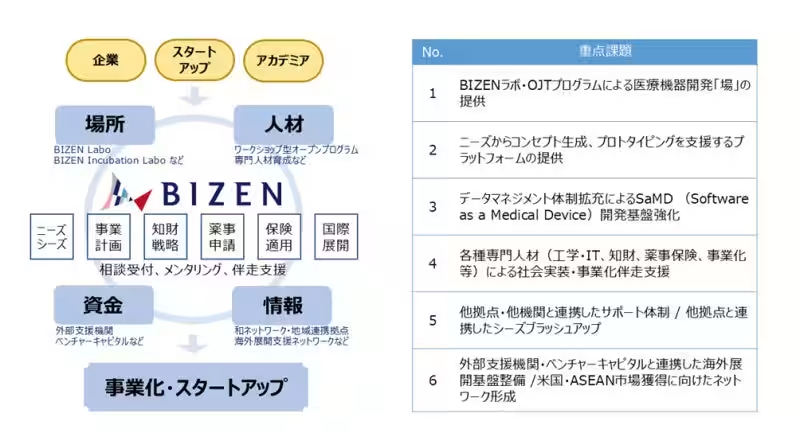
The BIZEN Ecosystem aims to create a robust foundation for the entire process of medical device development, from research to market launch and global expansion. By leveraging its unique open innovation program heavily concentrated on the medical and healthcare sectors, the initiative seeks to nurture startups that can contribute to both local and global health solutions.
Key Objectives of the BIZEN Ecosystem
Led by Professor Jun Sakurai and Associate Professor Daisuke Uchida, the BIZEN Ecosystem is designed to provide a comprehensive support system for startups. The project will significantly enhance collaboration between academia and industry, promoting innovation in the healthcare space. The approach includes tailored management strategies that adapt to the distinctive needs of various projects, ensuring that technology, expertise, and human resources converge effectively.
Through collaborations with external partners, the BIZEN program emphasizes the importance of translating clinical needs into practical technologies. As Professor Sakurai articulates, the essence of the BIZEN Ecosystem is to facilitate an environment that responds to the critical needs expressed by healthcare professionals encountering patients.
Contributions to Regional Development
Not only is the BIZEN initiative set to make waves in the medical technology industry, but it also plays a crucial role in revitalizing the local economy in Okayama. With the foundation set for educational and innovation-driven projects, this program will foster a thriving ecosystem for startups, ultimately enhancing the welfare of communities on a broader scale. As these startups grow and succeed, they will inevitably contribute to the economic upliftment of the region and expand their impact worldwide.
The announcement from Okayama University signifies a powerful step towards integrating advanced research into practical applications that meet the needs of society. Tapping into the university's extensive resources and expertise, the BIZEN Ecosystem can serve as a model for future initiatives that aim to bridge the gap between research and industry, propelling Japan to the forefront of global medical innovation.
Conclusion
With the strategic backing from AMED and a strong framework established through the BIZEN Ecosystem, Okayama University is poised to lead in the medical innovation sector. This initiative not only supports the development of advanced medical devices but also showcases a commitment to fostering the next generation of entrepreneurs focused on healthcare solutions. As the initiative progresses, its influence could reach beyond borders, echoing innovations and advancements that contribute positively to global health.
The BIZEN Ecosystem stands as a testament to the university's dedication to community health and global initiatives, setting the stage for promising advancements in medical technology that could potentially redefine healthcare landscapes across the world.






Topics Health)
【About Using Articles】
You can freely use the title and article content by linking to the page where the article is posted.
※ Images cannot be used.
【About Links】
Links are free to use.