



Innovative Research Achieves Up to 88% Indoor Particle Reduction with Air Cleaners and ACs
Major Breakthrough in Indoor Air Quality Management
Recent research conducted by the National Institute of Advanced Industrial Science and Technology (AIST) and Daikin Industries has demonstrated a significant capability to reduce indoor airborne particles by as much as 88% using a combination of air purifiers and filter-equipped air conditioning units. This study meticulously evaluated the effects of appliance placement and operational conditions, providing crucial insights for enhancing indoor air quality, especially in spaces where viral transmission risks are heightened.
Study Overview
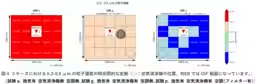
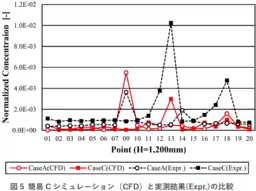
The research team, including key figures such as Toru Horitake from AIST and Takemasa Nakazawa from Daikin, carried out empirical assessments on how the placement and intensity of air conditioning units and air purifiers influence indoor particle concentrations. Utilizing a straightforward simulation method, contrast was drawn between actual measurements and simplified Computational Fluid Dynamics (CFD) results, indicating a strong correlation that underscores the potential to evaluate indoor environments cost-effectively without the need for supercomputers.
The findings are pivotal for applications tied to risk assessments concerning the spread of COVID-19 and highlight the practical implications for mitigating airborne infections in various indoor environments.
Experimental Methodology
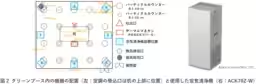
Conducted in a specialized cleanroom of 32.8m³, the tests employed thermal mannequins to simulate the dispersion of respiratory droplets, capturing particle density at 28 distinct locations throughout the room. The study meticulously analyzed 21 configurations, altering the placement of air purifiers and the operational status of air conditioning filters to closely observe their impact on airborne particle reduction.
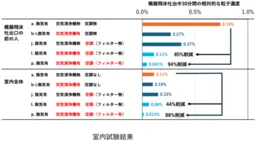
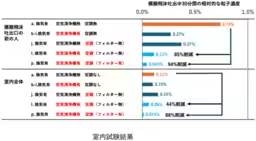
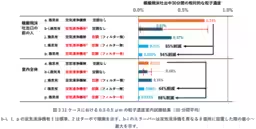
One of the compelling outcomes demonstrated that when air purifiers were positioned optimally and operated simultaneously with filter-inclusive ACs, the level of airborne particles was reduced significantly. Specifically, placements that were less optimal resulted in modest reductions, while the ideal configurations achieved up to 94% particle reduction for individuals directly exposed to droplet emissions. In contrast, scenarios with only air purifiers led to lower reductions, highlighting the necessity of combined systems for maximal impact.
Results and Findings
In practical applications without an air purifier and with non-filtered air conditioning, there was negligible change in overall particle counts. However, with the air purifier set to turbo mode and filters engaged on the AC, studies yielded impressive results—reducing overall particulates by 44% and exposure to droplets by as much as 85%. It was through optimal configurations of air purifiers and AC that the researchers achieved the remarkable 88% reduction, making a compelling case for their combined efficacy.
Implications for Public Health
This research not only provides functionality but also a roadmap for implementing such systems in public spaces, healthcare facilities, and homes, particularly where ventilation may be insufficient. As the world continues to combat airborne viruses, the strategies developed in this study will be integral in safeguarding health through improved air quality.
Future Directions
Looking ahead, the research team plans to further validate simplified simulations alongside real-world measurements, ensuring the formulas developed can adapt to various indoor settings. Collaborations with hospitals and other health institutions are also in line to substantiate optimal air quality strategies tailored to diverse environments.
For further details on the findings and to explore the full spectrum of research, feel free to check the official report and press release through AIST's website here.
Conclusion
In conclusion, integrating air purifiers effectively with filter-equipped air conditioning not only optimizes air quality but also represents a significant advancement in public health safety strategies. The ongoing efforts and findings from this research are essential for developing better air management solutions that can effectively curb airborne diseases and maintain healthy indoor environments.

Topics Health)
【About Using Articles】
You can freely use the title and article content by linking to the page where the article is posted.
※ Images cannot be used.
【About Links】
Links are free to use.