



Analyzing the Current State of Palliative Care Homes in Japan
Overview of Palliative Care Homes in Japan
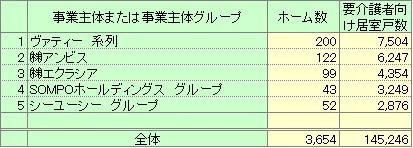
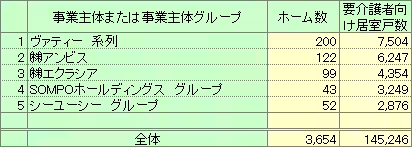
The landscape of palliative care homes, also referred to as hospice homes, has seen significant changes in recent years, particularly driven by the aging population and the rising demand for healthcare services in non-hospital settings. As of the latest report published by Tamura Planning and Operating Co., there are roughly 145,246 home care facilities, which include around 28,000 palliative care homes throughout Japan.
Current Trends in Home Care Facilities
The increasing number of elderly patients with severe health issues has led to a growing demand for nursing services outside hospitals. This has proliferated the establishment of home care facilities that offer medical services through collaboration with medical insurance-supported visiting nursing agencies. Tamura Planning identifies these facilities as 'visiting nursing set homes' and those specifically catering to patients with designated disorders, like terminal cancer or Parkinson's disease, as 'palliative care homes.' Since 2018, palliative care homes have witnessed considerable growth characterized by low rents and management costs coupled with revenue derived from medical insurance-based nursing services.
Supply and Growth
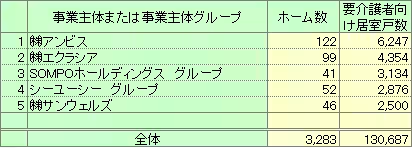
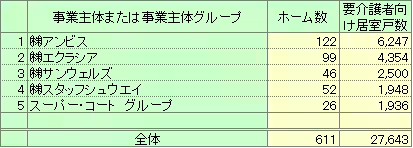
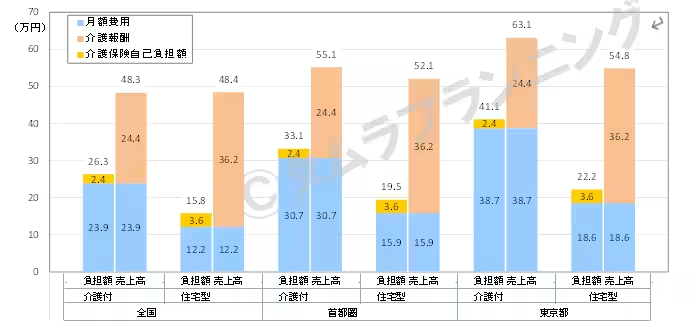
As detailed in the report, the palliative care homes affiliated with visiting nursing services have grown to 611 locations accommodating a total of 27,643 residents. Leading operators in this sector include Anbis Co. and Eclarcia Co., known for establishing numerous care homes. The financial dynamics of these homes suggest that despite lower living expenses, the revenue per resident can rival that of more expensive assisted living facilities, given the additional income from medical and nursing reimbursements.
Business Model Complexity
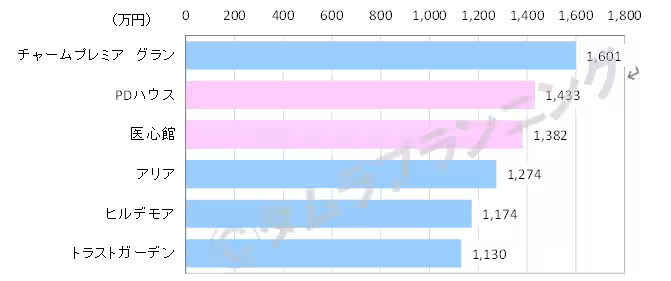
The report outlines a striking fact: the average revenue per resident in palliative care homes can reach upwards of 14 million yen annually, compatible with some of the premium assisted living facilities. The combination of rent, management costs, and reimbursements creates a robust financial structure. However, this model is not without its challenges. The recent news regarding fraudulent claims for visiting nursing services has raised alarms about compliance and could potentially jeopardize future revenue streams.
Financial Viability and Future Directions
The cost structure employed by palliative care homes, where they tend to minimize living expenses while maximizing income through reimbursements, could face scrutiny. Questions arise on sustainability as healthcare regulations tighten in response to financial misconduct within the industry. The report also indicates that the service quality and living conditions in many of these homes are subpar, with the average living space being quite small, around 14 square meters, raising ethical concerns regarding elder care.
Conclusion
The palliative care home sector represents an intriguing intersection of demand and supply within Japan's healthcare framework, driven by an aging population. However, the complexity of its business model coupled with emerging regulatory challenges indicates that stakeholders must approach the future with caution and proactive strategies. Tamura Planning's analysis delivers crucial insights for industry players, laying the groundwork for informed decision-making in this rapidly evolving market. For those interested in the complete report, it is available for purchase, and insights can also be sourced from their well-established database that covers various aspects of elderly housing and healthcare services in Japan.

Topics Health)
【About Using Articles】
You can freely use the title and article content by linking to the page where the article is posted.
※ Images cannot be used.
【About Links】
Links are free to use.