



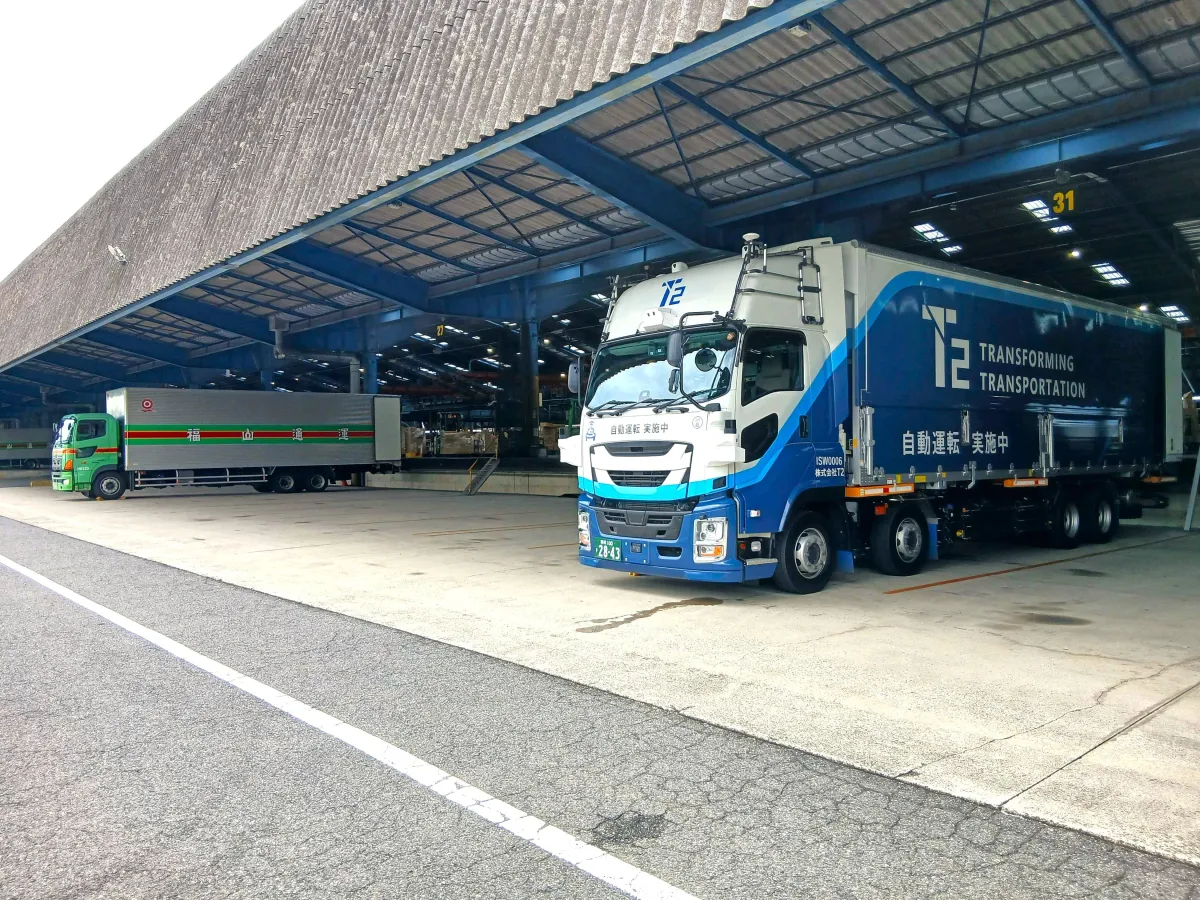
Fukuyama Transport and T2 Launch Automated Shuttle Transport in Japan
Innovative Automated Transport Between Kanto and Kyushu-Shikoku
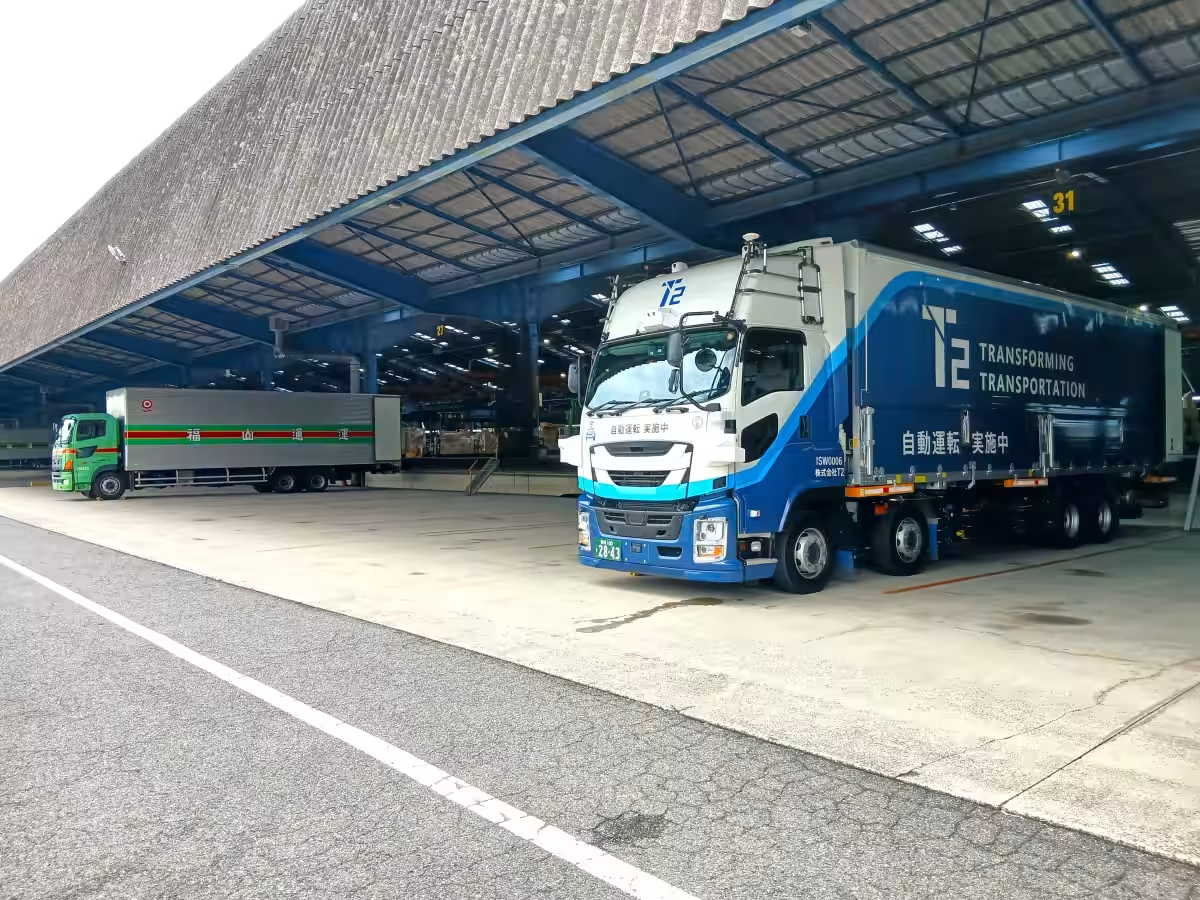
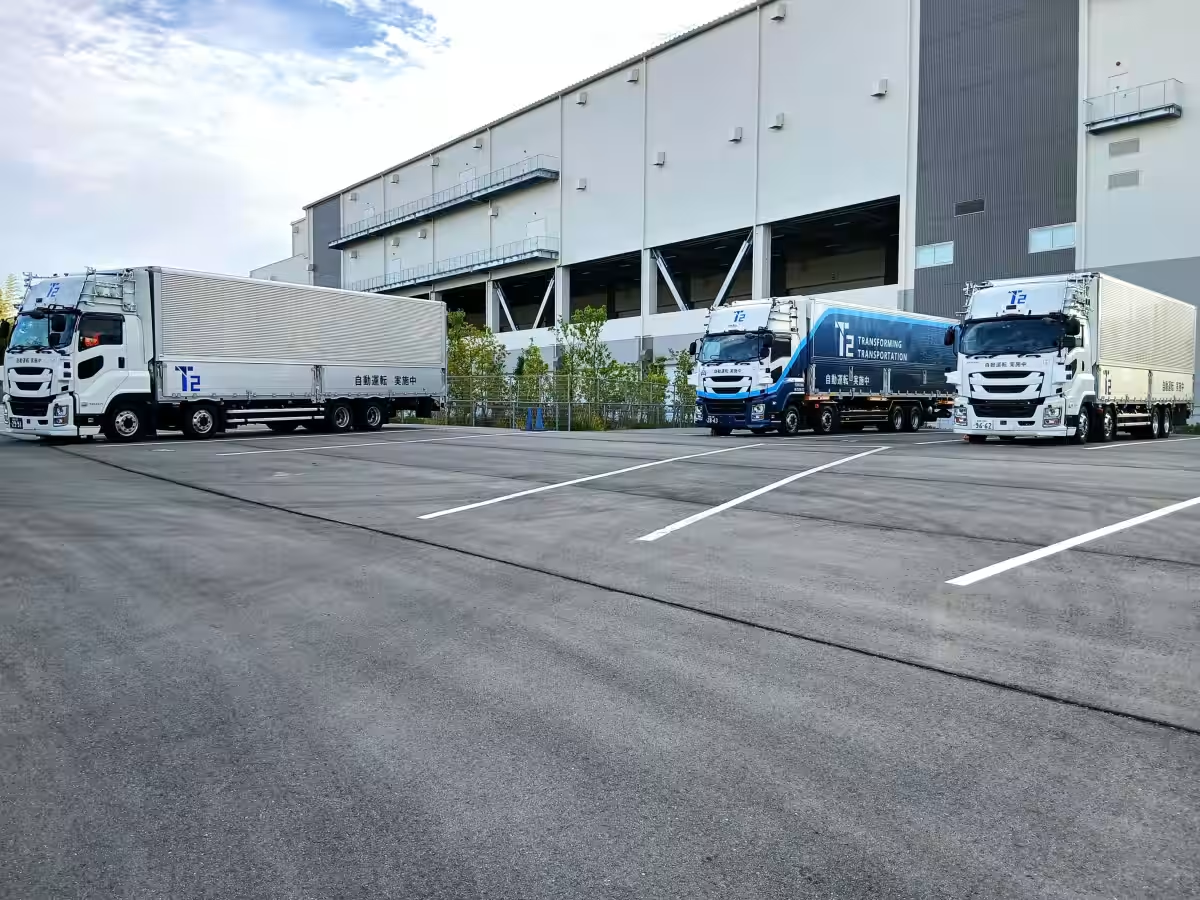
Fukuyama Transport, based in Fukuyama City, Hiroshima, has teamed up with T2, an innovator in autonomous driving technology, to start an ambitious shuttle transport service. This initiative incorporates T2's autonomous trucks into the existing Kanto-Kyushu and Chugoku-Shikoku transport routes, aiming to address the growing challenges posed by the shortage of truck drivers in Japan.
The collaboration aims at rolling out Level 4 autonomous driving trucks in long-distance freight operations by 2027. Currently, T2 has made strides by introducing Level 2 autonomous trucks, which became commercially operational in Japan in July 2025. This partnership not only marks a significant advancement in unleashing the potential of autonomous trucking but also supports the logistics industry amid increasing demands and driver shortages.
Starting August 26, 2026, the two companies will test the integration of T2's autonomous trucks over a distance of approximately 510 kilometers, connecting Fukuyama Transport's branches in Fujisawa, Kanagawa, and Kasai, Hyogo. This segment represents a critical part of the shuttle transport process that collects large volumes of goods heading to Kanto from Kyushu and Shikoku regions. The route will include a significant Level 2 autonomous driving stretch, running about 470 kilometers along the Tomei Expressway and the Chugoku Expressway.
Fukuyama and T2's strategy acknowledges the pressing issue of the 2024 Labor Shortage, aiming to demonstrate that Level 4 autonomous trucks can operate efficiently over this distance, potentially doubling transport capabilities by enabling round-trip service within a day. Currently, the operational limit with a single driver restricts this to one-way trips, but once Level 4 autonomy is realized, significantly enhanced logistics operations will be possible.
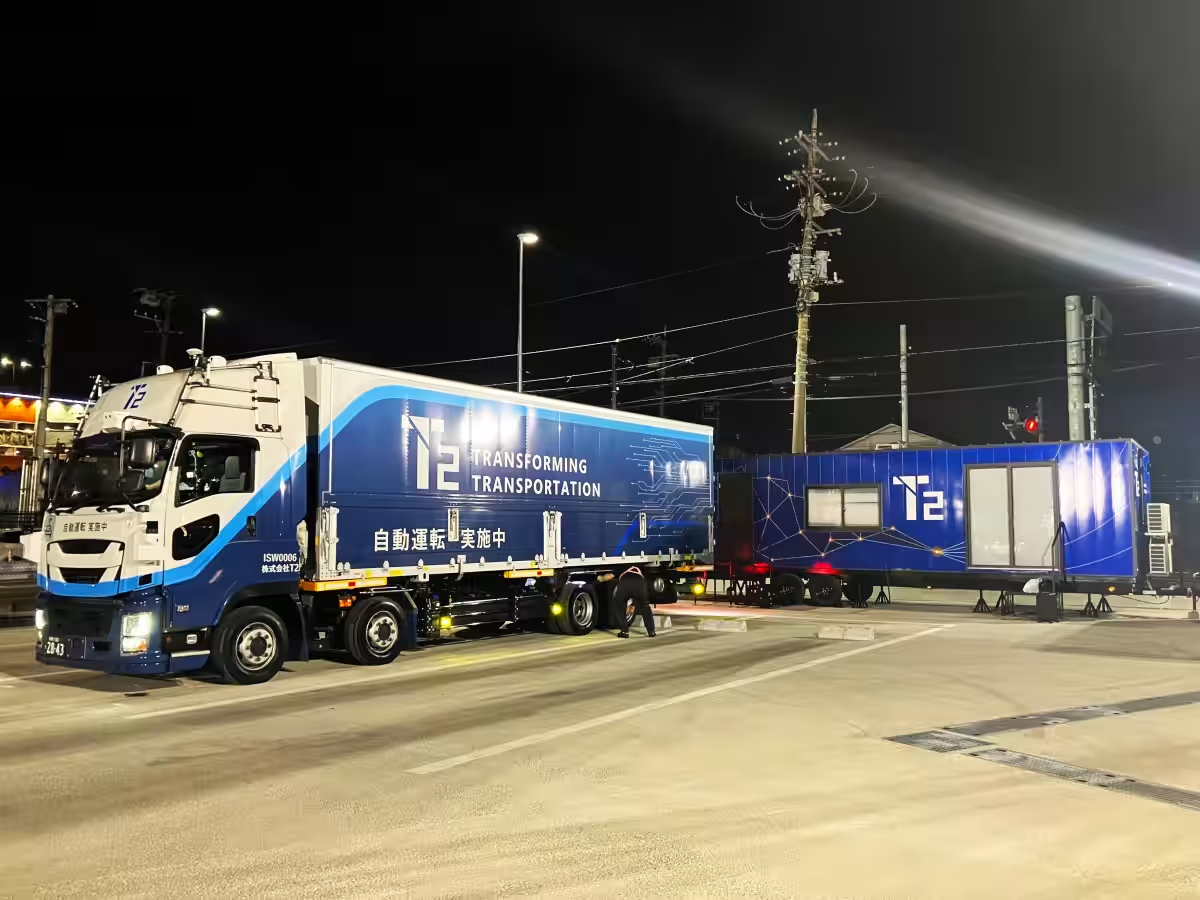
The project also involves testing operational transitions between autonomous and manual driving, facilitated by strategically placed transition hubs (or 'Transgate Ayase' and 'Transgate Nishinomiya'), enabling the drivers to switch as needed. This ensures the safety of freight operations while preparing for a future of fully autonomous logistics.
To summarize, this innovative venture between Fukuyama Transport and T2 exemplifies how partnerships in the tech and logistics sectors can address pressing industry challenges while foreshadowing a future where autonomous technology revolutionizes freight transportation. Both companies are committed to continual assessment and development, aiming for a future where autonomous transport is a reliable and regular aspect of the logistics landscape in Japan. As they work towards realizing Level 4 autonomy, the implications of their findings could very well shape the future of transportation not just in Japan but globally, paving the way for more resilient and efficient logistics networks.
Topics Consumer Products & Retail)








【About Using Articles】
You can freely use the title and article content by linking to the page where the article is posted.
※ Images cannot be used.
【About Links】
Links are free to use.