



Revolutionizing Gene Therapy with High-Efficiency HSV Amplification Techniques
Expanding the Frontiers of Gene Therapy with HSV Amplification
Recent advancements in gene therapy have spotlighted a novel manufacturing technique for the HSV amplicon vector, developed by researchers at the National Institute of Advanced Industrial Science and Technology (AIST) and the National Cancer Center. This innovation promises to enhance the efficiency of vector production significantly, potentially accelerating the development of new gene therapies for various genetic disorders.
Understanding HSV Amplicon Vectors
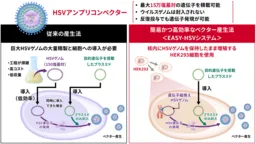
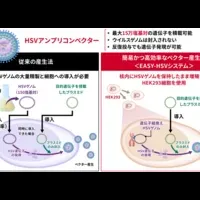
The HSV amplicon vector is a sophisticated gene delivery tool that utilizes the natural capacity of the herpes simplex virus (HSV) to transport large gene sets into cells. Unlike other viral vectors such as lentiviral and adeno-associated vectors, HSV can carry much larger genetic payloads (up to 150 kb), making it indispensable in the pursuit of advanced gene therapies for complex conditions. However, traditional methods for producing these vectors have been hampered by the difficulty in efficiently introducing the large HSV genome into production cells, leading to low yields.
Introducing the EASY-HSV System
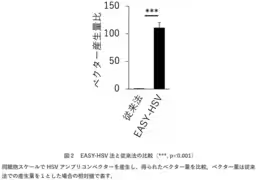
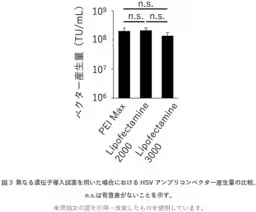
Enter the EASY-HSV (Efficient And Simple high-Yield Herpes Simplex Virus) system. Through groundbreaking research, scientists have constructed a modified HEK293 cell line that stably retains the HSV genome in a manageable form, enabling high-efficiency production (over 100 times higher than traditional methods) of HSV amplicon vectors. Such a leap in efficiency not only streamlines manufacturing processes but also promises to make potential clinical applications a reality.
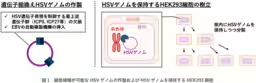
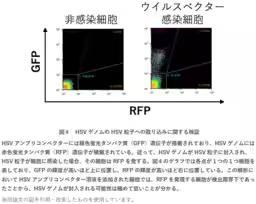
The research team, led by Fumio Maeda and Shungo Adachi, tackled two major challenges: cell toxicity from the HSV genome and the potential loss of the genome during cell division. By eliminating certain regulatory genes from the HSV genome and incorporating an Epstein-Barr virus replication mechanism, the researchers achieved a stable cell line that can maintain the HSV genome across divisions without the associated cytotoxic effects.
Impact on Gene Therapy
The implications of the EASY-HSV system on the landscape of gene therapy are immense. Many rare diseases caused by genetic abnormalities currently lack effective treatments. HSV amplicon vectors are poised to change that. With a large genetic payload capable of carrying more than ten copies of essential genes like dystrophin—often involved in conditions such as muscular dystrophy—the potential to deliver effective treatments exists.
Additionally, the ease of producing these vectors could lead to clinical trials and subsequent therapies for diseases previously deemed untreatable due to genetic complexity. As gene therapies gain traction in areas like spinal muscular atrophy, the EASY-HSV system's contributions cannot be overstated.
Future Directions
Looking ahead, the research team aims to further optimize the EASY-HSV system for even greater efficiency and cost-effectiveness. This enhanced technology will be made accessible to a wider array of researchers, which could catalyze a surge in gene therapy solutions targeted at a variety of diseases. The underlying technology and findings have already been documented in a research article set to be published in Molecular Therapy Advances by August 2026, which will further elevate the visibility and potential applications of this promising advancement.
The sophistication and robustness of the HSV amplification technique represent a critical step towards ensuring that effective gene therapies can reach those who need them most, providing hope for many who suffer from previously unmanageable genetic conditions.
Topics Health)




【About Using Articles】
You can freely use the title and article content by linking to the page where the article is posted.
※ Images cannot be used.
【About Links】
Links are free to use.