



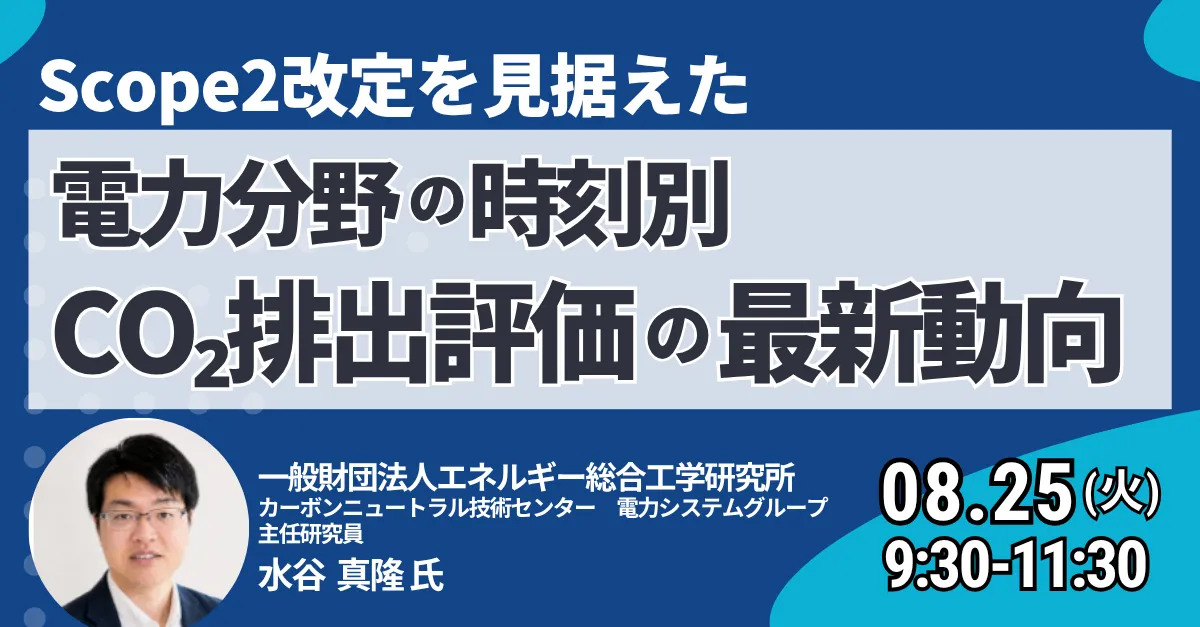
Latest Trends in Hourly CO₂ Emission Evaluation for Electricity Sector Under Scope 2 Revision
Latest Trends in Hourly CO₂ Emission Evaluation for Electricity Sector Under Scope 2 Revision
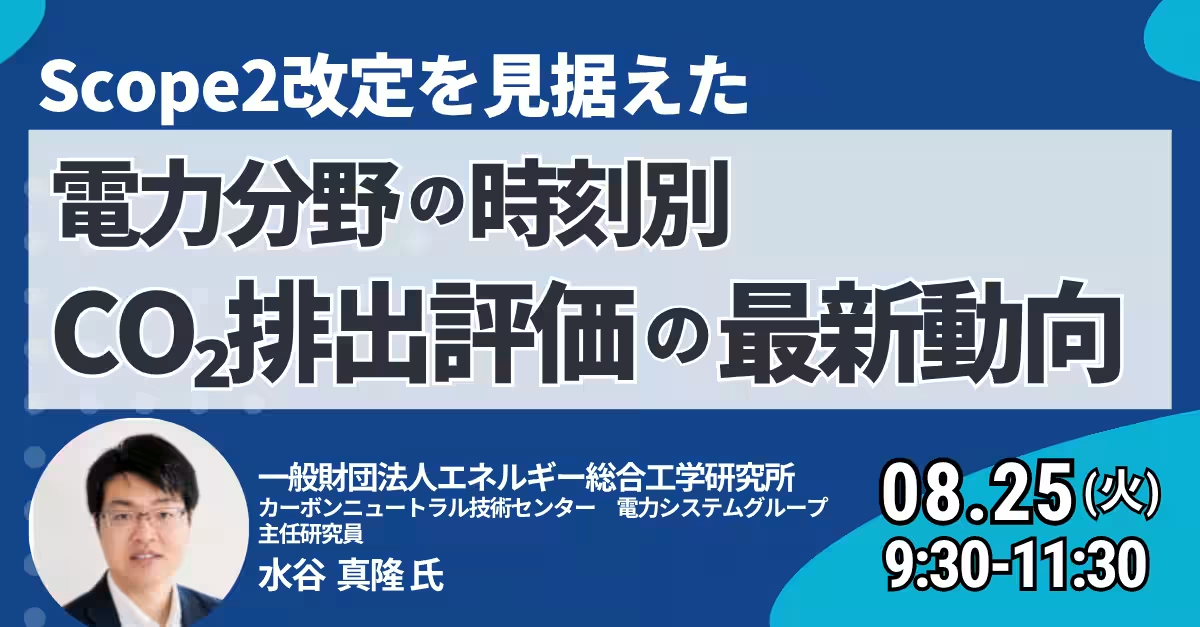
In today's rapidly evolving energy landscape, understanding hourly CO₂ emissions is becoming increasingly crucial for businesses and organizations involved in energy procurement and sustainability initiatives. The Japan Planning Institute (JPI) is set to host a seminar on August 25, 2026, featuring the expert insights of Mr. Masataka Mizutani, a chief researcher from the Carbon Neutral Technology Center of the General Incorporated Foundation for Energy Comprehensive Engineering Research. This seminar will delve into the latest developments in evaluating hourly CO₂ emissions in anticipation of the Scope 2 revisions under the GHG Protocol.
As the focus on sustainability intensifies and the integration of renewable energy sources expands, the structure of power supply has dramatically changed, leading to variations in emission factors based on time and geography. The traditional methods of annual average evaluation have proven inadequate, thereby driving increased interest in time-sensitive assessments. The discussions surrounding Scope 2 revisions will highlight critical aspects such as hourly matching and supply availability boundaries, which could significantly impact corporate strategies.
What to Expect from the Seminar
Attendees can look forward to acquiring practical knowledge and insights, including:
- - Designing criteria for renewable energy procurement based on hourly matching
- - CO₂ calculation logic that considers hourly factors and integrates AEF (Average Emission Factor) and MEF (Marginal Emission Factor)
- - Scenarios for optimizing emissions through EV charging and battery storage
The seminar caters to various sectors, including:
- - Energy Procurement Units
- - Sustainability and Decarbonization Departments
- - Corporate Planning and Investment Assessment Units
- - Power and Infrastructure Companies
Seminar Overview
The ongoing discussions regarding the Scope 2 revision of the GHG Protocol indicate potential shifts in how companies procure renewable energy and calculate CO₂ emissions. As interest in timely evaluation rises, this seminar will clarify the benefits and methodologies associated with hourly assessments.
Key Topics Covered:
1. The Need for Hourly CO₂ Emission Evaluation
- Global CO₂ emissions and the importance of evaluation in the power sector
- Understanding emission factors
- Challenges of annual average evaluations and the rising interest in hourly assessments
2. Trends in GHG Protocol Scope 2 Revisions
- Overview of GHG Protocol
- Main issues surrounding Scope 2 revisions
- Focus on hourly matching and supply availability boundaries
- Current status of Scope 2 revisions and impacts on renewable energy procurement
3. Understanding Hourly CO₂ Emission Factors
- Average Emission Factor (AEF)
- Marginal Emission Factor (MEF)
4. Examples of Hourly CO₂ Emission Factors from Around the World
- International cases
- Domestic examples
5. Case Studies on Hourly CO₂ Emission Evaluation
- Daily variations in hourly CO₂ emission factors
- Comparison of calculations using an office building model
- Hourly evaluations for EV charging
- Comparing methodologies using public data
- Effects of battery storage on CO₂ reduction
6. Future Regulatory Trends and Their Impact on Practices
- Effects on existing contracts and renewable energy procurement
- Upcoming regulatory changes
7. Summary of Key Points Discussed
8. Q&A Session for participants to engage directly with the speaker
9. Networking Opportunities for direct dialogue between the participants and speaker, fostering valuable information exchange and collaboration opportunities.
Participation Details
Participants can choose from various formats:
- - In-person Attendance (without access to archive)
- - Live Streaming Attendance (without access to archive)
- - Archive Streaming Attendance
Fees
- - Individual: 37,270 yen (tax included)
- - Group (2 or more from the same organization): 32,270 yen (tax included)
- - Special rate for local government affiliates: 11,000 yen (two tickets maximum under specific conditions)
For more details and registration, please visit JPI Seminar Page.
About JPI
The Japan Planning Institute continues to provide a vital platform for high-level management to facilitate national policy frameworks and contribute to innovative knowledge creation, maintaining its commitment to offering exclusive seminars for over 50 years.

Topics Environment)
【About Using Articles】
You can freely use the title and article content by linking to the page where the article is posted.
※ Images cannot be used.
【About Links】
Links are free to use.