



DMEGC Solar Transforms Local Hospital with Solar Energy Technology
DMEGC Solar Transforms Local Hospital with Solar Energy Technology
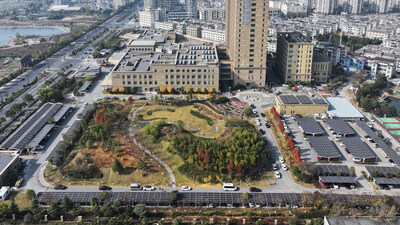
DMEGC Solar, a global leader in solar module manufacturing, announced a significant partnership with Hengdian Wenrong Hospital, the largest medical facility in its region, to facilitate their transition to renewable energy. This debut marks a critical step in the hospital's journey toward sustainability, achieved through the installation of a distributed solar energy system with a capacity of 1.2 MW.
The ambitious project employs highly efficient bifacial solar panels, with each module yielding up to 635 watts. The system is expected to generate approximately 1.32 million kWh of clean energy annually. Over its lifespan, the solar installation is projected to produce around 39.6 million kWh, substantially minimizing the hospital's dependence on traditional power sources and cutting operational costs.
In addition to the substantial economic benefits, the environmental impact is equally impressive. By integrating this solar energy solution, the hospital anticipates a yearly reduction of around 754 metric tons of carbon emissions. To put this into perspective, this is comparable to planting 29,000 trees. Such an achievement directly aligns with China's national goals for carbon neutrality, showcasing how healthcare facilities can contribute to broader environmental commitments.
A representative from DMEGC Solar emphasized the importance of seamlessly integrating solar energy into critical infrastructures. By combining rooftop installations with solar canopies, the hospital is not only reducing energy expenditures but also enhancing its functional space. The solar carports provide shaded parking for staff and visitors while maximizing previously underutilized areas.
The “self-generation, surplus to the grid” model adopted by the hospital allows it to consume most of the produced solar energy on-site, with excess electricity directed back into the local grid. This innovative approach is increasingly being embraced within the healthcare sector across China, where reducing long-term energy costs and demonstrating environmental stewardship are becoming paramount operational priorities.
The project isn't just a leap forward for the hospital; it also illustrates the growing acceptance of distributed solar solutions as a viable energy alternative in China. With rising costs and a renewed focus on sustainability, institutions are beginning to realize the potential rewards of such investments.
In summary, DMEGC Solar’s initiative with Hengdian Wenrong Hospital exemplifies the progressive changes taking place in the medical field regarding energy consumption. By harnessing the power of the sun, this partnership not only supports the healthcare sector's needs but also aligns with global trends toward sustainability and environmental responsibility. As the demand for renewable energy solutions escalates, similar projects can lead to significant contributions towards a cleaner, greener future.
In conclusion, DMEGC Solar is setting a robust example of how healthcare facilities can adopt renewable energy solutions effectively. This project not only underscores the potential of solar technology but also highlights the importance of collaborative efforts in achieving sustainability goals across various sectors.
Topics Energy)
【About Using Articles】
You can freely use the title and article content by linking to the page where the article is posted.
※ Images cannot be used.
【About Links】
Links are free to use.