



AI-Powered Sorting Feature Revolutionizes Mailroom Management at Todoker
AI-Powered Sorting Feature Revolutionizes Mailroom Management at Todoker
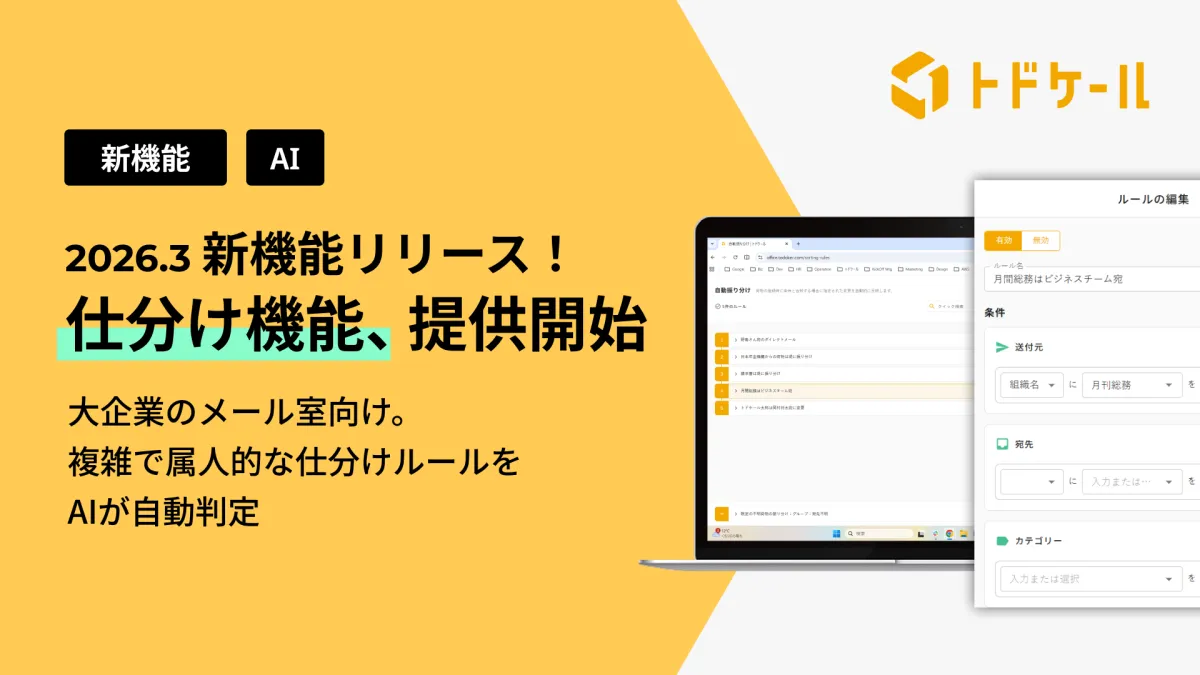
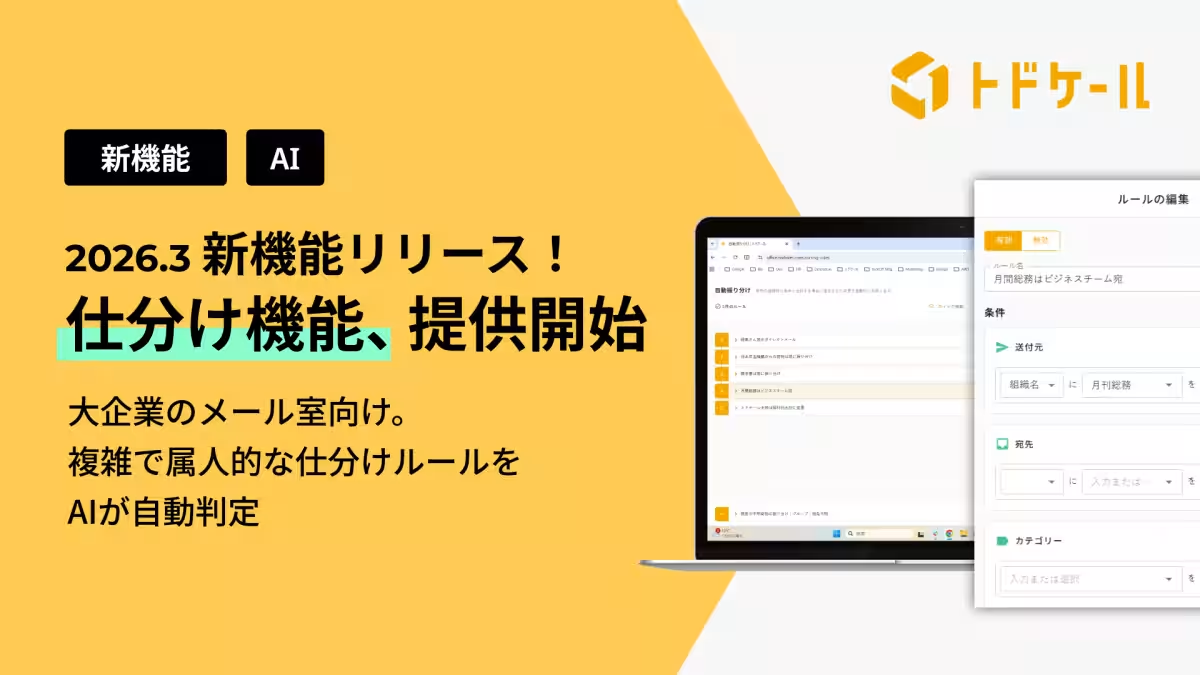
On March 16, 2026, Todoker Inc., based in Chiyoda, Tokyo, announced the launch of its innovative sorting feature for its cloud-based mail and parcel management service. This cutting-edge functionality automates the complex sorting rules that large corporate mailrooms encounter daily, achieving an impressive 99% accuracy rate. By analyzing images of mail and parcels, the AI can promptly identify the correct sorting destination based on pre-set rules, significantly minimizing the risks of information leaks and misdelivery that have traditionally plagued mailroom operations.
The Hidden Workload of Corporate Mailrooms
Sorting mail may seem like a straightforward task from the outside, yet the reality for corporate mailrooms is quite different. They face the daunting challenge of adhering to a myriad of complex sorting rules that dictate how mail should be handled. For instance, consider the following scenarios that are commonly encountered:
- - Special protocols based on rank or responsibility: Mail addressed to executives must be handed directly to their personal secretaries.
- - Sender-based rules: Packages from specific clients are directed to particular departments, regardless of the addressee.
- - Document type rules: Invoices, regardless of the name on them, should always go to the finance department.
- - Originating institution rules: All documents arriving from medical institutions must be sorted to the HR department.
These rules are not confined to a single location but intertwine with various factors such as department structure, personnel, clientele, and document types, resulting in an average of over 100 sorting rules per location according to data gathered from corporate mailrooms that have adopted Todoker's services.
Current Practices: Navigating the Complexity
Given the complexity of sorting rules, how have most mailrooms managed to operate until now? The prevalent responses can be categorized into three main practices:
1. Dependence on the experience of long-term employees: Many mailrooms have relied on the tacit knowledge of veteran staff members rather than systematically documenting sorting rules. This approach creates the risk of operational stalling if a long-time employee leaves or takes an extended leave of absence.
2. Utilizing printed instructions and manuals: Some mailrooms try to manage sorting rules with printed lists or handwritten notes. However, with over 100 rules, this strategy quickly becomes inefficient, leading to updates being missed and errors becoming commonplace.
3. Inquiries to relevant departments for on-the-spot decisions: When in doubt, staff often resort to contacting other departments for confirmation. This practice generates delays and places additional burdens on the departments being contacted. During busy periods, this can lead to mail being stalled in the mailroom for extended durations.
Thus, while large corporate mailrooms have worked diligently to maintain operations through ingenuity and effort, they have also revealed vulnerabilities inherent in their reliance on human judgment.
The Core Issue: Governance Risks from Misdelivery
The repercussions of sorting errors extend beyond mere delivery mistakes. Misdelivered items can lead to significant governance risks. In instances where items are mistakenly sorted into the wrong department, delays in action or unnoticed misdelivery can culminate in items going missing internally, particularly sensitive documents such as contracts, invoices, and medical records. Moreover, for industries characterized by stringent internal controls and compliance requirements, like finance or pharmaceuticals, a failure in mail sorting processes can expose organizations to audit complications and compliance violations.
Todoker has previously helped over 70 large corporations digitize and visualize their receipt and delivery logs. However, the core issue of ensuring mail reaches the right destination has remained unresolved—until now. The new sorting feature aims to fill this critical gap.
Overview of the New Sorting Feature
How It Works
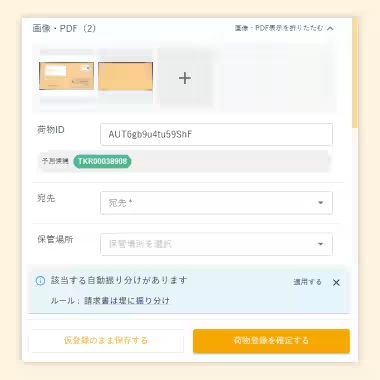
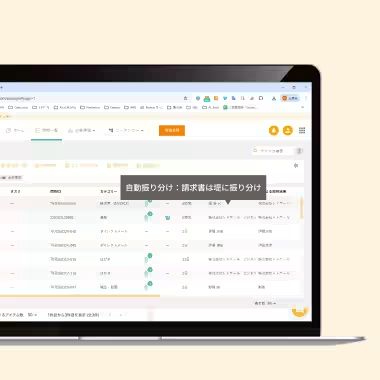
The sorting feature collaborates with Todoker's scanning and imaging workflow. When mailroom staff scan or photograph incoming items, the AI automatically extracts information such as the addressee, sender, and document type from the images. It then cross-references this data with pre-registered sorting rules and displays the designated sorting destination on the screen.
Steps of Operation
1. Capture Image: Staff members take pictures of the front-facing side of mail and parcels with a smartphone or scanner.
2. AI Recognition: The AI identifies the addressee, sender, and document types from the images.
3. Rule Comparison: The data is compared against the established database of sorting rules.
4. Display Destination: The system displays the appropriate sorting destination, e.g., “To Mr. XX in the YY department.”
5. Record Keeping: The sorting outcome is automatically logged in the system, ensuring traceability.
With a sorting accuracy of 99%, the feature promises to drastically reduce the risk of misdelivery. Once a rule is established, it remains indefinitely in the system, allowing AI to maintain sorting consistency regardless of staff turnover or peaks in mail volume.
Flexible Rule Configuration
Administrators can intuitively register and edit sorting rules via a management interface, accommodating both single and compound conditions to match real-world complexities. The feature also allows for priority settings among rules, enabling the AI to accurately assess conflicts when multiple rules apply.
Seamless Integration with Existing Workflows
As an addition to Todoker’s platform, the sorting feature easily integrates with existing mailroom processes without requiring new hardware. Companies currently utilizing Todoker can start benefiting from this feature with minimal setup.
Advantages of Implementation
1. Significant Enhancement of Sorting Accuracy: AI’s ability to significantly reduce sorting errors compared to reliance on human judgment, especially with complicated rule scenarios.
2. Reduction in Personnel Dependency and Transition Costs: Systematically documenting sorting rules minimizes knowledge gaps and permits new staff to perform sorting accurately from day one.
3. Strengthened Governance and Compliance: Systematically recording sorting decisions provides clarity and evidence for audits.
4. Decreased Inquiry Workloads: Reduces the need for staff inquiries when the sorting destination is uncertain, saving time and effort.
5. Reduced Risk of Internal Loss: Enhanced accuracy and automated record-keeping enable quick tracking in case of mail misplacement.
Future Prospects
Moving forward, Todoker aims to improve the sorting feature’s accuracy further while expanding compatibility with diverse types of documents and languages. Additionally, enhanced API integrations with major carriers will facilitate automatic matching of delivery information with sorting rules. Plans are also in place for the AI to learn from historical sorting data, suggesting new sorting patterns for consideration. As it evolves into a comprehensive platform for automating end-to-end operations in corporate mailrooms, Todoker is committed to continuous enhancement.
Upcoming Webinar
To celebrate the launch of the sorting feature, Todoker will soon host a webinar demonstrating its capabilities and operation. Participants will witness firsthand how the AI autonomously determines sorting outcomes based on complex rules. The webinar will be free and conducted online, with details on the date and registration page to be announced shortly. Stay tuned for updates by following Todoker’s official website and social media channels! Todoker Official Website
About Todoker
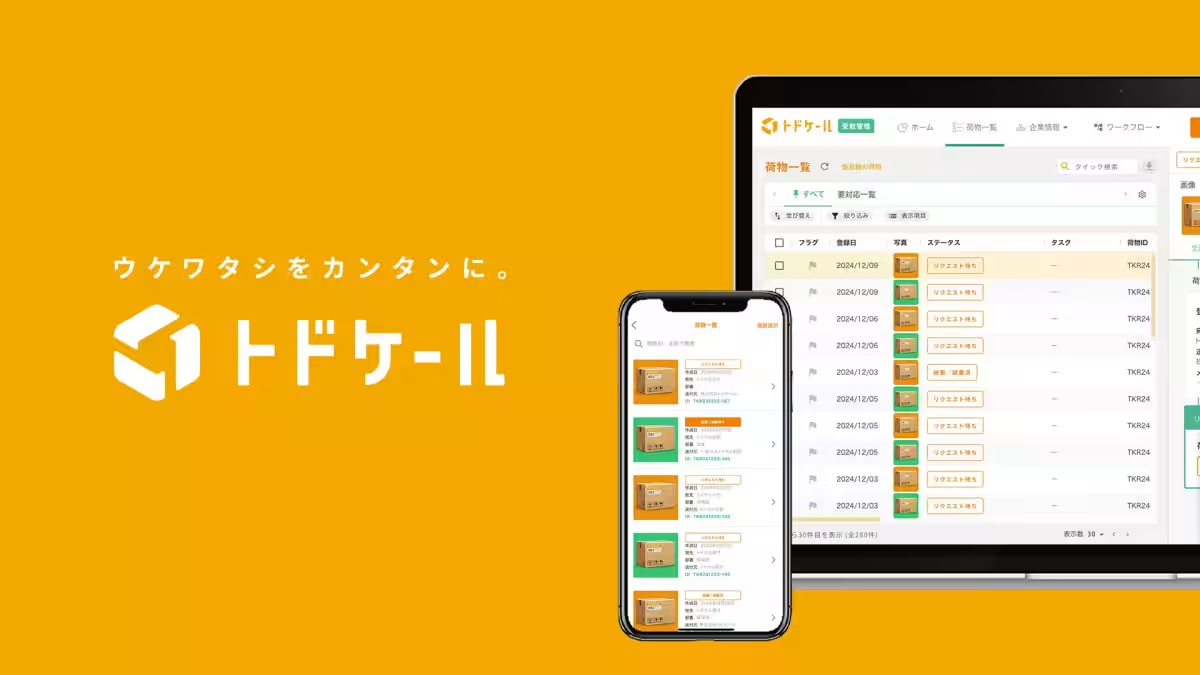
Todoker is a cloud-based mail and package management service designed specifically for the mailrooms of large corporations and sizable offices. It offers a centralized platform for comprehensive mailroom operations, ranging from digital tracking of incoming mail to delivery management and sorting control.
Company Information
- - Company Name: Todoker Inc.
- - Location: 1-3-12 Hirakawacho, Chiyoda, Tokyo
- - Established: July 24, 2018
- - CEO: Tsuyoshi Nojima
- - Business Description: Development and operation of the cloud-based mail and package management service “Todoker.” Providing a service to facilitate mailroom operations that digitizes and manages incoming mail notifications.
- - Case Studies: KOKUYO Co., Ltd., KOKUYO & Partners, Inc., KOIKEYA Co., Ltd.
- - Mascot Character: Todoker-kun, the walrus.


Topics Consumer Products & Retail)


【About Using Articles】
You can freely use the title and article content by linking to the page where the article is posted.
※ Images cannot be used.
【About Links】
Links are free to use.