



New Analytical Service for Reducing Semiconductor Packaging Defects Unveiled by Toray Research Center
Introduction
In an innovative move to advance semiconductor packaging materials, the Toray Research Center (TRC) has partnered with Sanyu Rec to launch a comprehensive analytical service. This service focuses on the curing process of epoxy resin, a common thermosetting resin used in various applications, with the aim of minimizing defects in semiconductor packaging. The new analytical method transcends the limitations of individual resins, making it applicable to a wide range of thermosetting resins.
The Need for Advanced Analysis
Thermosetting resins are crucial in the electronics industry, utilized in semiconductor packaging, adhesives for electronic components, composites, and coatings. As devices shrink and packing density increases, the behavior of resin during curing significantly impacts defects, such as warping and cracking, due to internal stresses. Understanding this behavior is vital to meet the durability and reliability demanded in semiconductor encapsulation.
The molecular interactions during curing involve complex chemical reactions that determine the material’s hardness and thermal resistance. Many practical materials contain fillers, whose surface states and interfacial characteristics with the resin influence curing dynamics and final material properties. Historically, assessing how reactions progress and the resulting structures has been challenging, often relying heavily on empirical experience. Recognizing this gap, TRC sought to develop a new approach combining experimental measures and computer simulations for a thorough analysis of thermosetting resins.
Innovative Analytical Approach
What sets this new analytical service apart is its multi-faceted view of the resin curing process. By integrating insights on how reactions progress, the molecular structures developed, and the interactions at the filler-resin interface, the service offers a holistic understanding of the curing behavior.
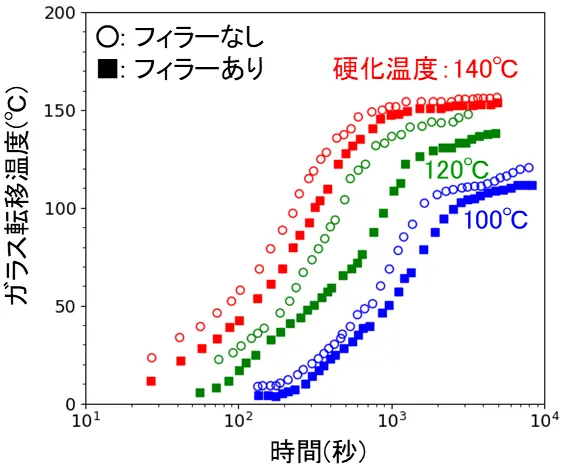
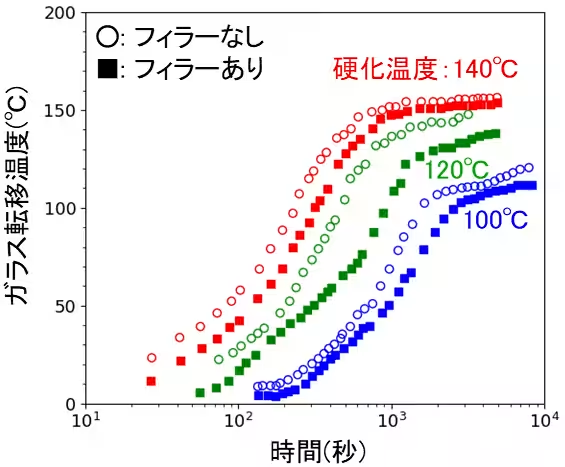
The method operates under conditions simulating actual molding processes, featuring rapid heating and cooling to inform on the speed and progression of the curing reaction, along with material property changes over time. A particular focus is placed on glass transition temperature (Tg)—a key indicator of material behavior during curing. Tracking Tg variations provides critical insights into the curing process and the emergence of material properties.
Using techniques like Fast Scanning Calorimetry (FSC), the service measures thermal changes associated with curing reactions and materials transitioning, offering a direct link to the practical molding conditions. This detailed approach allows for real-time observation of how Tg evolves, correlating it directly with factors like filler presence and curing temperature.
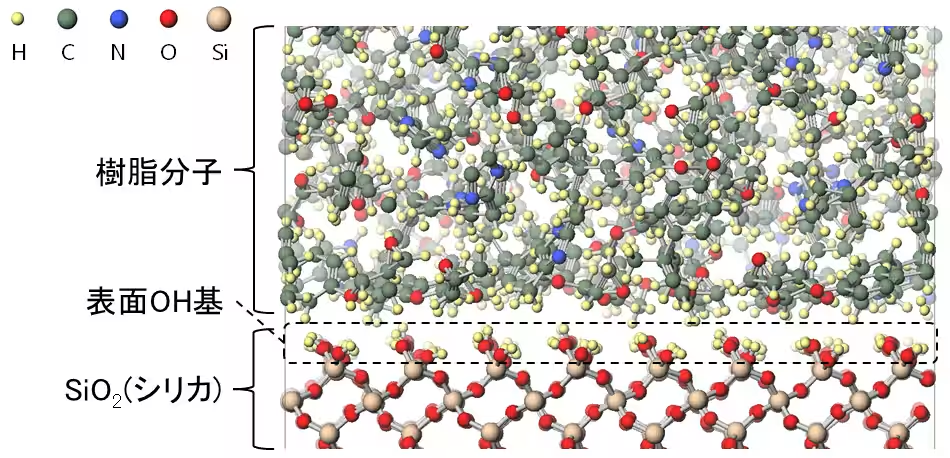
Additionally, the service delves into molecular structural changes during curing, allowing researchers to discern how specific molecular configurations relate to final properties such as Tg. The impact of fillers on curing behavior can be understood through detailed molecular dynamics (MD) simulations, shedding light on how these components influence material characteristics at the molecular level.
Recognizing Achievements
This innovative analytical service has not only been recognized for its academic contributions but has also gained industrial relevance, leading to invitations for keynote presentations at esteemed conferences such as the IMAPS Symposium 2025 and the Young Award at ICEP-IAAC 2025. These accolades underscore the value of this method in both scholarly and practical applications within the semiconductor field.
Future Prospects
Looking ahead, the implications of this analytical approach are wide-ranging:
- - Enhancing reliability of semiconductor packaging and electronic component materials.
- - Innovative material designs considering the interplay of fillers and resins.
- - Optimization of molding conditions to mitigate defects, resulting in more efficient material development processes.
By continuously advancing its analytical techniques and integrating computational science, TRC reaffirms its commitment to contribute to societal needs through its technology.
Conclusion
The launch of this new analytical service by the Toray Research Center represents a significant advance in the field of semiconductor packaging materials. By providing a comprehensive understanding of resin behavior during the curing process, this service not only aims to reduce defects but also supports the enhancement of overall product reliability and performance, paving the way for a future of better-performing electronic components.
Topics Consumer Products & Retail)
【About Using Articles】
You can freely use the title and article content by linking to the page where the article is posted.
※ Images cannot be used.
【About Links】
Links are free to use.