



Challenges in Contract Management in the Logistics Industry Revealed by Recent Survey
Introduction
The logistics industry is currently facing numerous challenges, particularly in contract and transaction management. A recent survey conducted by Logi-Tech, a subsidiary of the Camcom Group, revealed that over 55% of companies depend on outdated methods like paper and Excel for their contract management. This reliance has led to an increase in operational difficulties and legal risks, especially following the revisions to logistics-related laws enacted in April 2024.
Survey Overview
In August and September 2025, Logi-Tech undertook a comprehensive survey to assess the state of contract and transaction management within the logistics sector. This study targeted various stakeholders, including transport and warehouse operators. The research was based on quantitative methodologies and garnered 328 valid responses from industry professionals.
Key Findings
1. Heavy Dependence on Paper and Excel
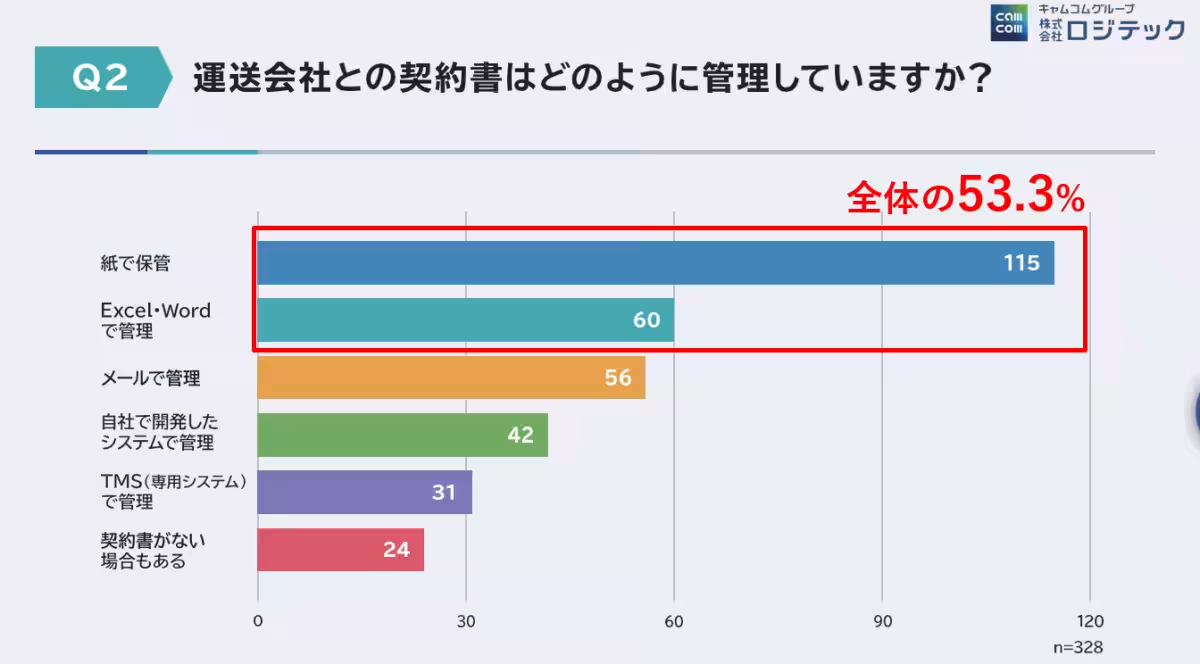
An alarming 53.3% of companies manage contracts using physical documents or Excel files, with around 35% using paper and 18% utilizing software like Word. These manual processes create significant burdens in managing amendments and audits.
2. Prevalence of Contract-Related Issues
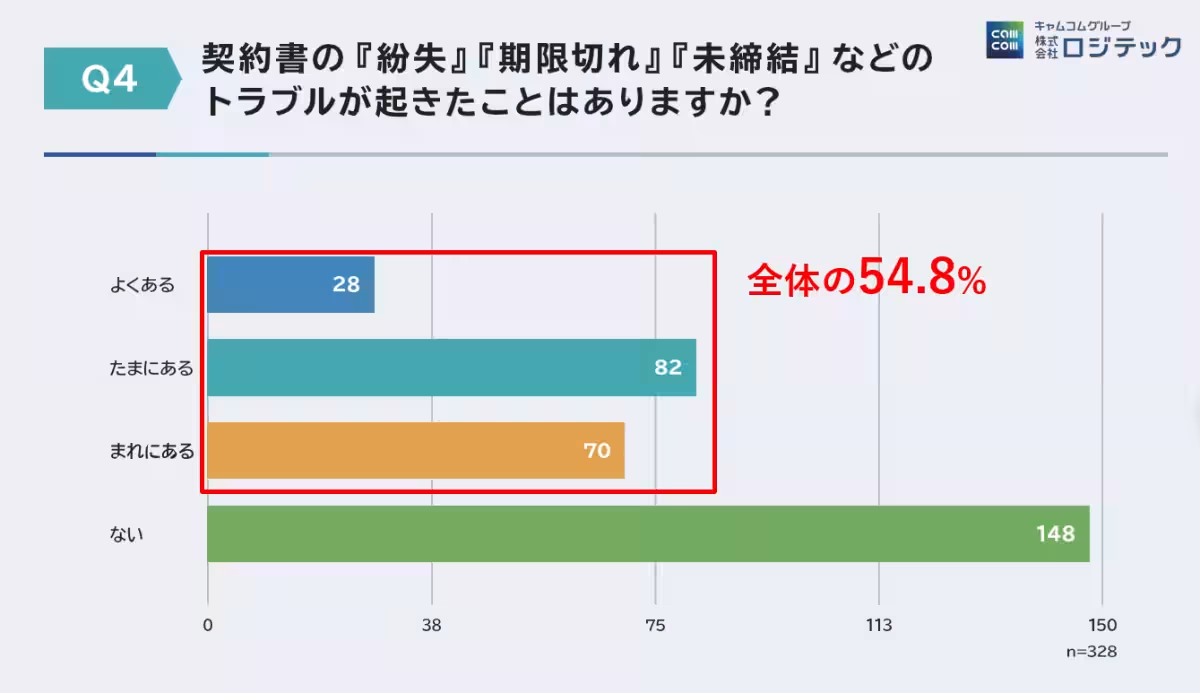
More than half of the respondents (54.8%) reported experiencing issues related to contracts, such as misunderstandings about terms, overlooked renewals, and unclear responsibilities. The survey further noted that as the number of shipments exceeds 50 per month, the likelihood of encountering problems increases substantially. This suggests a clear limitation in how contracts are personally managed.
3. Gap Between Awareness and Action Regarding Legal Revisions
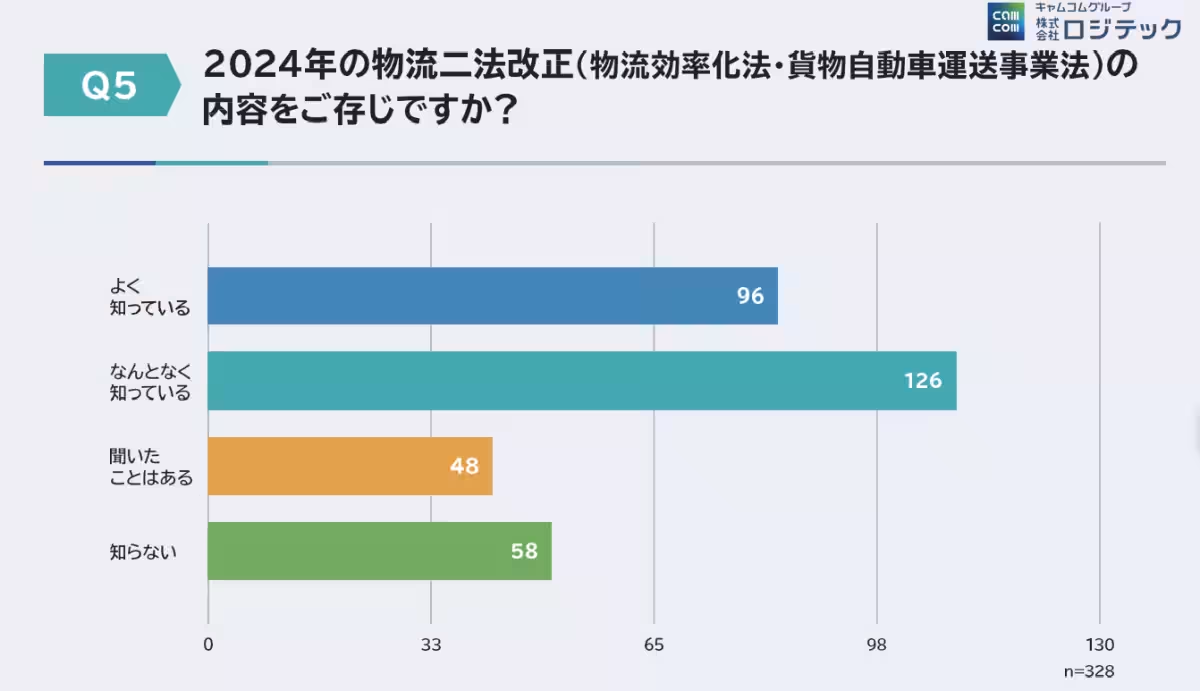
While many companies acknowledged understanding the changes brought by the revised logistics laws, very few had successfully integrated these changes into their operations. This discrepancy highlights a critical issue where companies are aware of necessary adjustments but struggle to implement them due to uncertainty about how to begin.
4. Key Considerations for System Implementation
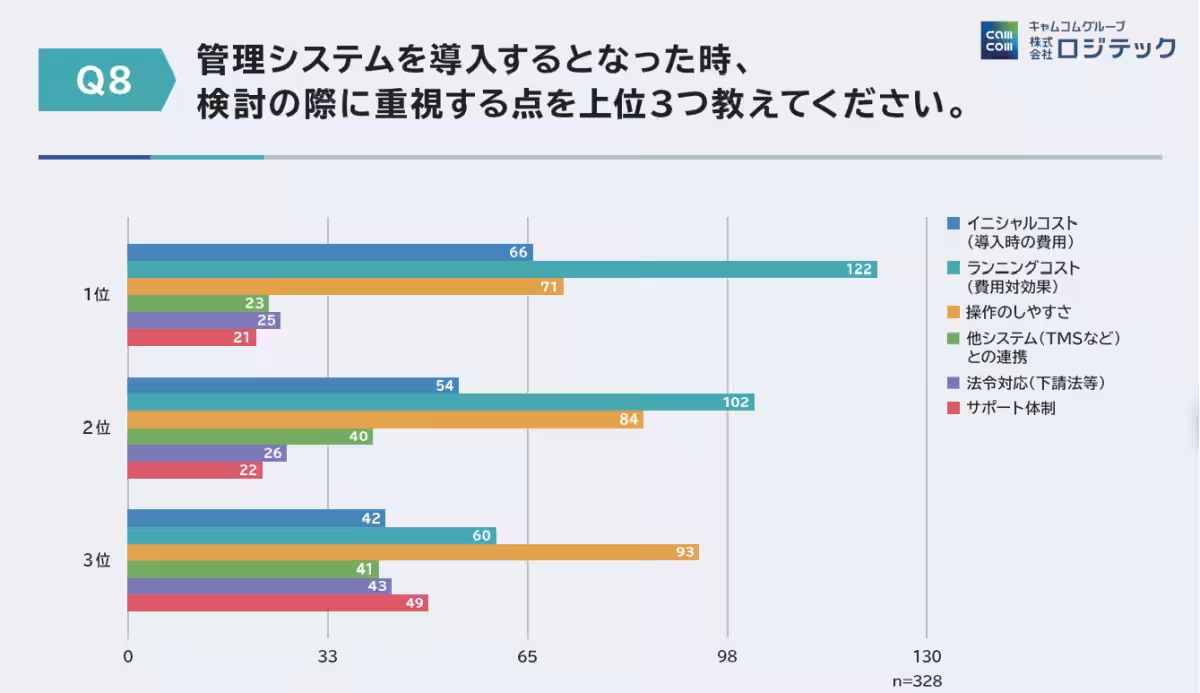
When contemplating the adoption of contract management systems, businesses prioritize initial costs, operational expense, user-friendliness, and compliance with new regulations. The findings suggest that despite the availability of advanced systems, high costs and usability challenges inhibit their implementation, indicating a need for solutions simplifying integration.
Implications for the Logistics Industry
The survey results underline that issues in contract management go beyond mere administrative inefficiencies; they present substantial business risks. As the demand for contract clarity and accountability grows, reliance on paper or simple digital tools becomes increasingly untenable.
Logi-Tech's Response and Future Direction
In light of the findings, Logi-Tech aims to promote risk reduction across the logistics sector through the standardization and digitization of contract management. Their efforts will focus on creating systems that allow centralized management of contract data, tracking amendments, and developing workflows that enhance ongoing operational capabilities.
For more detailed insights, the complete survey and its findings are available for download on Logi-Tech's website and detailed analysis can be found in the Logi-Pare Journal.
Conclusion
To minimize contract-related risks, companies must transition from obsolete methods towards a robust management framework that does not depend on individual expertise. With an increasing number of companies seeking to improve their contract management, the need for integrated digital solutions has never been more pressing.


Topics Business Technology)
【About Using Articles】
You can freely use the title and article content by linking to the page where the article is posted.
※ Images cannot be used.
【About Links】
Links are free to use.